
Hanwha Ocean contracts TMC Compressors to supply compressed air systems for two newbuild LNG carriers
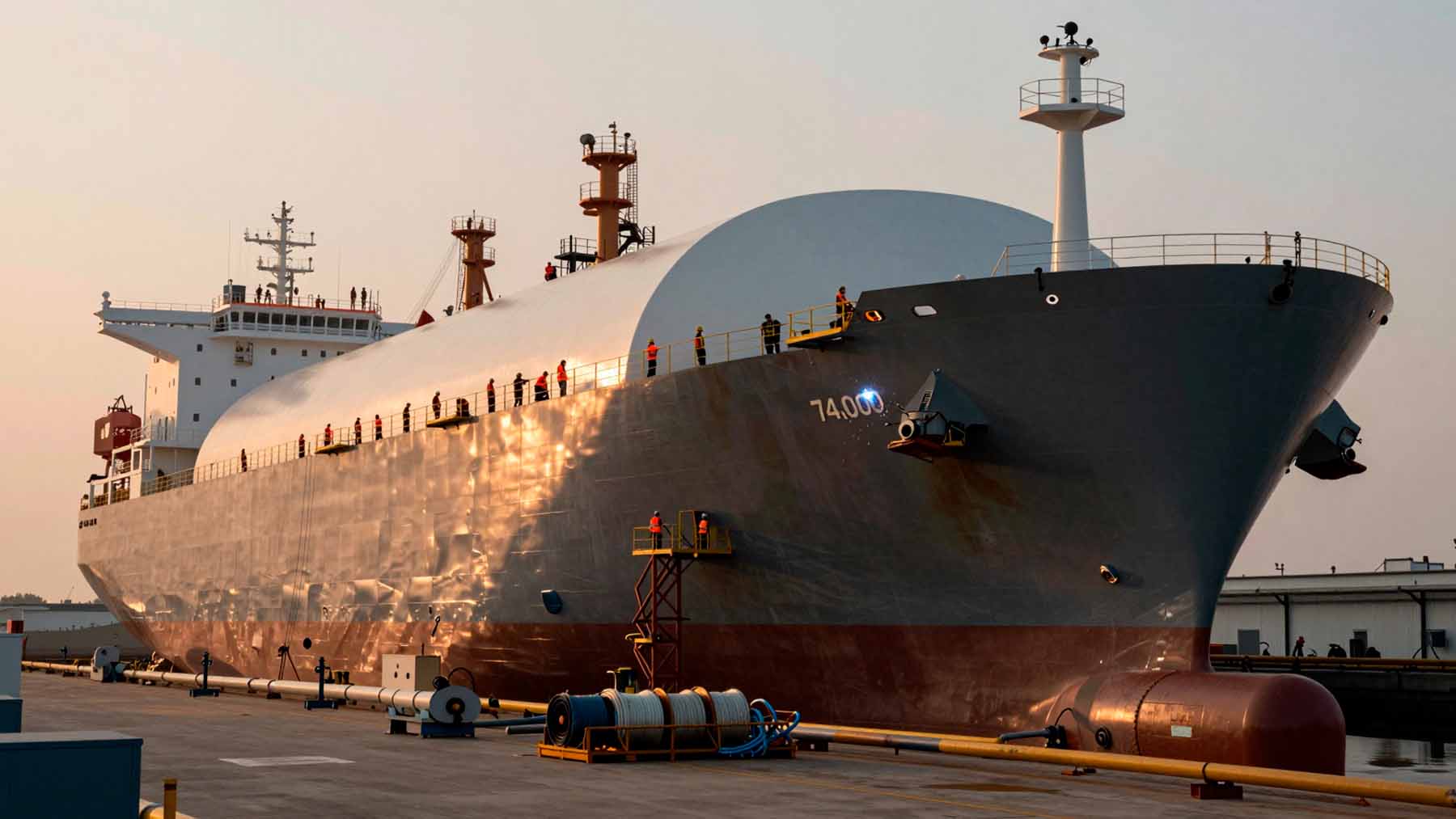 AI-made
South Korean shipbuilder Hanwha Ocean has contracted TMC Compressors to supply complete marine compressed air systems for two 174,000 m³ LNG carriers currently under construction for an undisclosed Greek shipowner. The systems will cover both service and control air functions, built on TMC’s proprietary design developed exclusively for marine and offshore applications.
Contract awarded for two LNG newbuilds
This deal brings together two well-established names in maritime. Hanwha Ocean, one of South Korea’s top shipbuilders, picked TMC Compressors to supply compressed air systems for both vessels—174,000 m³ LNG tankers, a standard capacity class for large-scale liquefied natural gas transport.
The end client is a Greek shipowner, though their identity hasn’t been made public. Greek shipping interests are a major force in the global LNG carrier market, so an undisclosed owner isn’t unusual here. TMC hasn’t disclosed the contract’s financial value, and no delivery timeline has been publicly confirmed.
Compressed air systems aren’t the biggest power consumers on a ship, but efficient design across all systems accumulates real savings over years of operation.
What TMC will deliver and why it was selected
TMC’s scope covers a complete marine compressed air system for each vessel—service air and control air compressors. These serve two distinct but complementary functions aboard an LNG carrier. Service air supports general shipboard operations, while control air feeds into instrumentation and automated systems.
The compressors are based on TMC’s own proprietary design, built exclusively for marine and offshore environments rather than adapted from land-based industrial equipment. That distinction matters on vessels facing constant vibration, salt air exposure, and punishing operational cycles.
TMC’s selection wasn’t purely about specs. Hans-Petter Tanum, the company’s Director of Sales and Business Development, pointed to Hanwha Ocean’s strict quality requirements as a meaningful benchmark in itself. TMC’s track record in this vessel class also carried weight—the company says it has previously delivered similar equipment to a three-figure number of 174,000 m³ LNG carriers. At least 100 vessels of this type. That’s genuine platform familiarity.
Reliability and energy efficiency as design priorities
Tanum was direct about what drives TMC’s engineering approach. “Reliability and energy efficiency are key for this type of marine and offshore equipment,” he said. These aren’t marketing terms—they reflect real operational pressures shipowners face across a vessel’s working life.
The compressor system is designed to be durable and straightforward to maintain. Both qualities reduce the time and cost of servicing equipment at sea, where spare parts and specialist technicians aren’t easy to come by. Downtime on a working LNG carrier is expensive, and equipment that runs reliably while staying easy to service has clear commercial value.
Minimizing client OPEX — operational expenditure — is a stated goal rooted in TMC’s founding vision. Tanum confirmed this principle applies directly to the systems being supplied to Hanwha Ocean, framing it as a consistent thread across the company’s product philosophy rather than a project-specific promise.
Energy efficiency carries particular weight in the LNG sector. Carriers operate under tight efficiency targets, and every system aboard contributes to the vessel’s overall energy profile. Compressed air systems aren’t the biggest power consumers on a ship, but efficient design across all systems accumulates real savings over years of operation.
Background: TMC’s role in the LNG carrier market
TMC Compressors is a specialist, full stop. The company focuses exclusively on compressed air systems for marine and offshore applications, directing its entire engineering and commercial effort toward a technically demanding segment.
That focus has built a significant market presence in the LNG carrier space. A three-figure delivery count across 174,000 m³ vessels puts TMC among the more experienced suppliers in this class—and the 174,000 m³ capacity has itself become something of an industry standard for large LNG transport, making it a high-volume segment for equipment suppliers.
Hanwha Ocean, on the other side of this contract, ranks among South Korea’s major shipbuilders. The country’s yards—Hanwha, HD Hyundai, and Samsung Heavy Industries among them—dominate global LNG carrier construction. Hanwha Ocean’s quality standards are well recognized across the industry, and its LNG portfolio is broad.
Tanum acknowledged that experience doesn’t eliminate complexity. “Each newbuild project brings its own set of tests and challenges,” he said, while expressing confidence in TMC’s ability to meet Hanwha Ocean’s expectations again.
Reliability, easy maintenance, energy efficiency
This contract confirms TMC Compressors as a repeat supplier to Hanwha Ocean for LNG carrier projects. The scope covers complete marine compressed air systems—service and control air—for two 174,000 m³ newbuilds ordered by an undisclosed Greek shipowner.
TMC’s selection reflects its marine-only product design alongside an established track record across a large number of vessels in this class. Reliability, ease of maintenance, energy efficiency, and low OPEX sit at the center of the company’s value proposition—and apply directly to these two builds.
The contract value remains undisclosed. Construction is ongoing at Hanwha Ocean’s South Korean facilities.
Kelly is an experienced writer with 15 years of experience exploring the big stories that shape our world, from tech breakthroughs and space exploration to climate, energy, and the fascinating quirks of science. She has a talent for turning complex ideas into sharp, memorable insights that stay with readers long after they’ve finished reading.
