
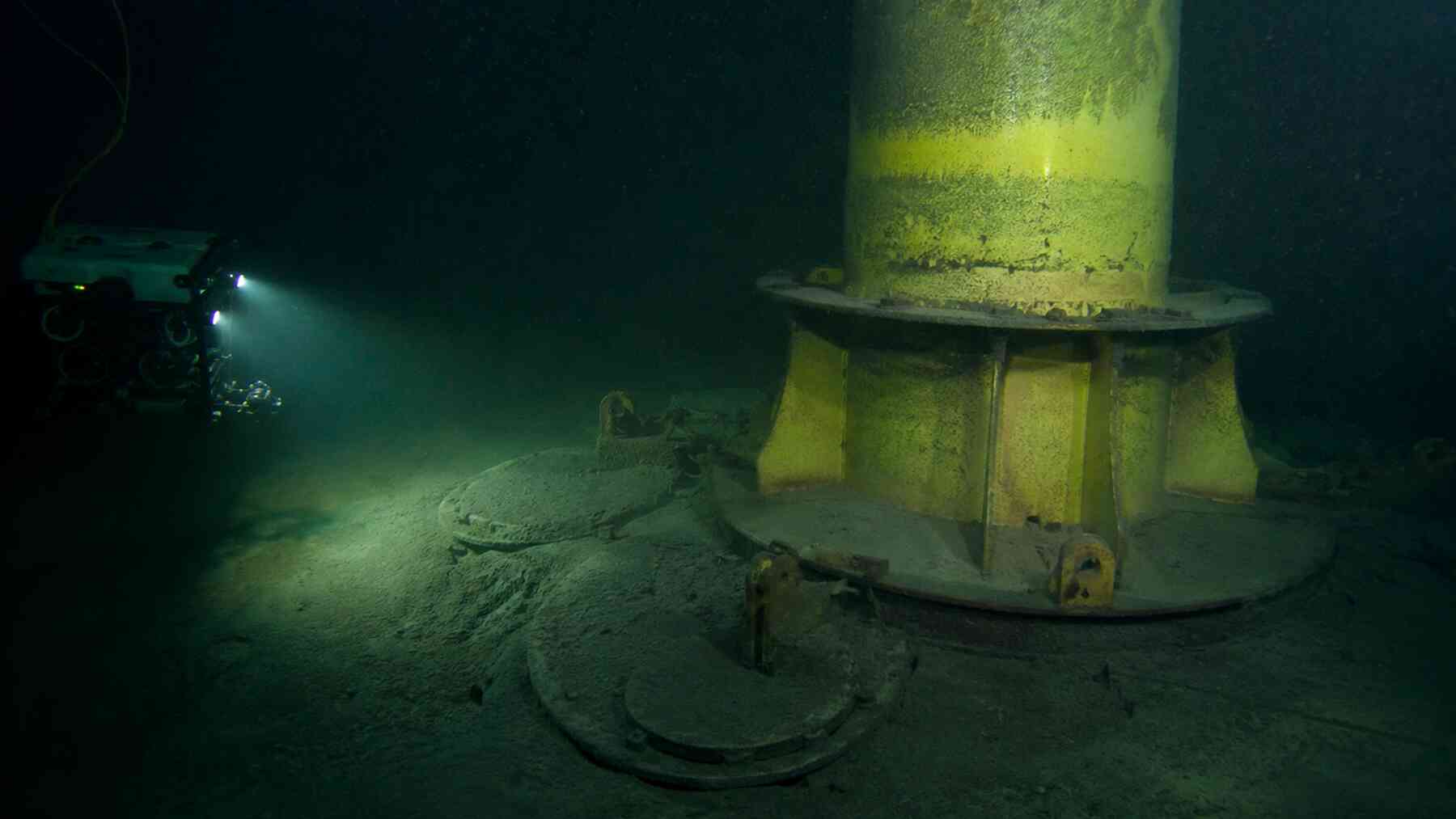
Cleveland planned to install six turbines in Lake Erie with bases that would cling to the bottom like giant suction cups, but the project was eventually put on hold
 Credits: AI-made
A freshwater offshore wind project got stalled after six turbines in Lake Erie, near Cleveland, raised some concerns.
As global electricity demand rises, nations are rapidly shifting toward renewable sources.
For many, wind energy is seen as a strategic pivot toward carbon-zero, but onshore hurdles remain.
The high production potential, zero emissions, and rapidly falling costs have made wind power vital to achieving net-zero targets worldwide.
Moving to lakes seemed like a feasible solution, yet the first project in North America did not move forward.
Why did the Lake Erie project never resume?
How green energy is being sought out to power the modern world
Society has become highly advanced thanks to rapidly evolving technologies.
Major economies are now embracing digitization, AI is becoming an everyday essential, and vehicles are undergoing an electric shift.
These changes have significantly increased electricity consumption globally.
The IEA projects that this demand will reach over 29,000 terawatt-hours.
Without intervention, this surge could raise greenhouse gas emissions.
For this reason, nations are urgently seeking clean alternatives to fossil fuels.
Wind power is currently undergoing a massive global expansion due to its high scalability.
As an infinite resource, modern turbine technology easily converts it into clean power on a massive scale.
Additionally, utility-scale wind farms have become highly cost-competitive with fossil-fuel-burning plants.
The high production potential, zero emissions, and rapidly falling costs have made wind power vital to achieving net-zero targets worldwide.
Despite these beneficial factors, wind turbines still continue to face significant opposition.
The onshore friction that led to deployment alternatives
The severe pushback of land installations is no longer a mystery to developers.
Concerns usually include visual and noise pollution caused by these towering steel structures.
Additionally, scenic landscapes lose their natural beauty while surrounding property values drop.
Furthermore, onshore wind farms need substantial land space. This often creates conflict with agriculture and leads to local habitat loss.
As new land-based developments are being increasingly blocked, developers have to explore other options.
Offshore wind deployment has taken off globally, with many turbines rising over the sea.
For many, this move helped to overcome land-based challenges.
Unfortunately, this infrastructure has been facing major obstacles in the U.S.
This is when deep-water lakes entered the picture.
Pacific Northwest National Laboratory, which operates Tethys, highlighted that turbines on lakes would have no significant impacts.
Not everyone agreed with these findings.
The Lake Erie Foundation challenged the federal environmental reviews, noting long-term consequences.
The quick fall of Cleveland’s Lake Erie turbines
The dream to build turbines on lakes is not particularly new, but the concept has struggled to take off.
The Icebreaker Wind project would have been located eight miles off Cleveland’s shoreline.
Only six turbines would have been part of the demonstration pilot.
The plan was to use “suction bucket” bases to secure the structures deep into the lakebed’s sediment.
The design would bypass loud pile driving and minimize freshwater aquatic life disruption.
Yet, the project never progressed.
A decade-long legal and regulatory battle
The first hurdle in development momentum was the state-imposed “poison pill” restriction.
Nighttime turbine shutdowns had to occur two-thirds of the year to protect migratory birds.
In 2022, the Ohio Supreme Court overturned this, but the damage was done.
High interest rates and inflation, along with supply chain delays, rendered the project too expensive.
Financial backers withdrew, and a $50 million federal grant was lost after missing milestones.
The project was officially suspended in December 2023.
This is a major setback for mainland communities that would have benefited from substantial clean power.
However, the project serves as a reminder of the balance needed between meeting green energy demand and preserving biodiversity.
Beyond risks for bats and birds, the Lake Erie Foundation cited the risk of toxic lubricant leaks into the freshwater.
To overcome the controversy these turbines face, developers must conduct transparent, in-depth ecological assessments.
Anke Maree is a writer with a clear and engaging editorial style. Her work focuses on making complex topics accessible, informative, and relevant for readers across different areas of interest.
