
Britain’s biggest offshore wind project was quietly handed back and now a race against time has begun to save the country’s clean energy future
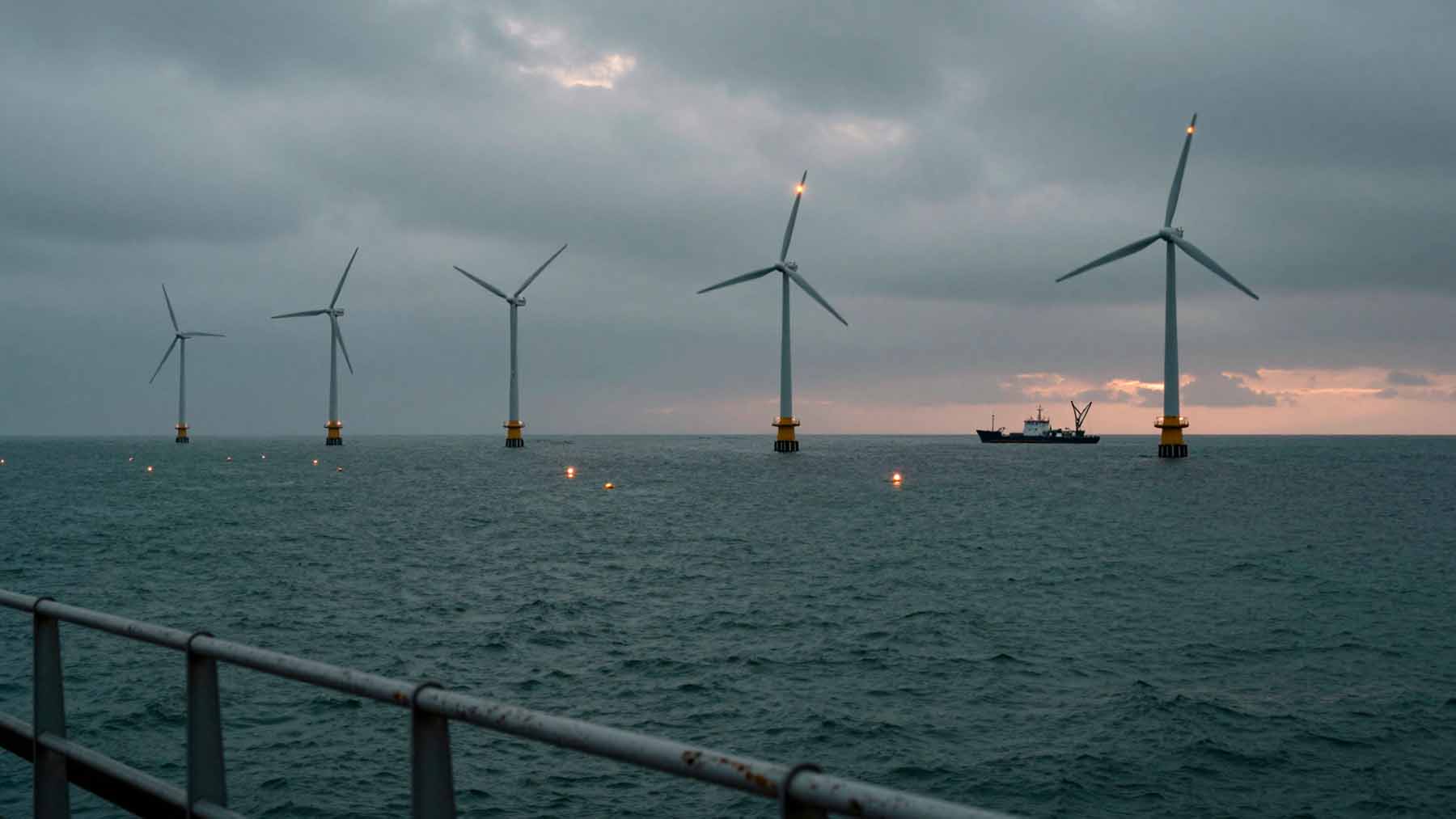 Image generated with artificial intelligence
Britain set one of the world’s boldest clean energy goals. The target? 50 gigawatts (GW) of offshore wind power by 2030.
On paper, the math still works out. The UK has over 16 GW up and running. Another 30 GW is built or locked in. On top of that, 7.2 GW is winding through the approval pipeline.
Then came January 2026. The massive Morgan joint venture suddenly fell apart. That wiped out a huge 1.5 GW chunk from the country’s plans.
Officials call it a “proportionate tender process.” It’s tailored for a site that already has years of heavy lifting completed.
The Irish Sea project sat in development for years. But it was quietly returned to the government land manager, the Crown Estate. Now, the clock is ticking fast.
A 50 GW target under pressure
The UK’s 50 GW wind goal isn’t just a political promise. It carries full legal weight. That means every single gigawatt counts.
With 16 GW active and 30 GW locked in, the country is tracking toward its target. The extra 7.2 GW in review is supposed to close the final gap. That leaves zero room for mistakes.
Losing 1.5 GW isn’t something you can easily sweep under the rug. Offshore wind relies on long lead times and tight supply chains. Losing a project this far along throws off the entire schedule.
The goal is still technically alive. But the margin for error just shrunk.
How Morgan went from awarded to abandoned
The Morgan project started back in 2021. It was a joint venture between German energy firm EnBW and JERA Nex BP. They planned to build two adjacent wind farms in the Irish Sea: Morgan and Mona. Each targeted around 1.5 GW.
The partnership didn’t last. In January 2026, the deal collapsed.
JERA Nex BP kept the Mona project. Meanwhile, the Morgan lease went straight back to the Crown Estate.
Neither company gave a public reason. Yet the split fits a clear pattern across the industry. Offshore wind projects face high inflation, rising interest rates, and soaring equipment costs.
The Crown Estate acted fast. Instead of waiting years for a standard leasing round, it launched an emergency fast-track rebid.
What the Crown Estate is doing differently this time
The new auction process cuts out red tape for incoming buyers.
Officials call it a “proportionate tender process.” It’s tailored for a site that already has years of heavy lifting completed.
The auction uses a “rising clock” bidding format. Bidders offer a lump-sum Site Exclusivity Fee paid over 20 years. Payments start when the project enters its lease. This gives developers complete upfront price clarity.
Crucially, the new owner won’t start from scratch. That makes the project far more attractive to buyers.
Bids are due in the summer of 2026. The winner will be announced by the end of the year.
Progress already banked — and why it matters
The progress already made at Morgan is massive.
A Development Consent Order passed in August 2025. That is one of the toughest regulatory hurdles in UK energy. A decision on the transmission line consent followed shortly after in September 2025.
Even better, a direct grid connection agreement is already locked in with the National Energy System Operator.
Getting grid access alone can take years. A new owner inherits all of this groundwork completely free of delay.
Gus Jaspert from the Crown Estate put it simply: “Morgan is a strategically important offshore wind project that has already achieved significant development milestones. Our priority has been to move quickly and maintain the momentum.”
A bellwether moment for UK offshore wind
This emergency re-tender runs ahead of the next standard wind leasing round set for early 2027. What happens here will reveal true investor confidence in green energy.
A successful auction proves the sector can recover from sudden failures. A weak result will confirm fears that offshore wind economics are broken.
Watch for the winning bidder announcement at the end of 2026.
That single decision will reveal the real twist: the missing 1.5 GW from the Morgan project alone generates enough electricity to power over 1.3 million homes — meaning the outcome of this single auction will literally decide whether millions of light switches stay on or go dark in the decade ahead.

Kelly is an experienced writer with 15 years of experience exploring the big stories that shape our world, from tech breakthroughs and space exploration to climate, energy, and the fascinating quirks of science. She has a talent for turning complex ideas into sharp, memorable insights that stay with readers long after they’ve finished reading.
