
Qualitas Energy begins construction of 42 MW Ingstetten wind farm repowering project in Baden-Württemberg
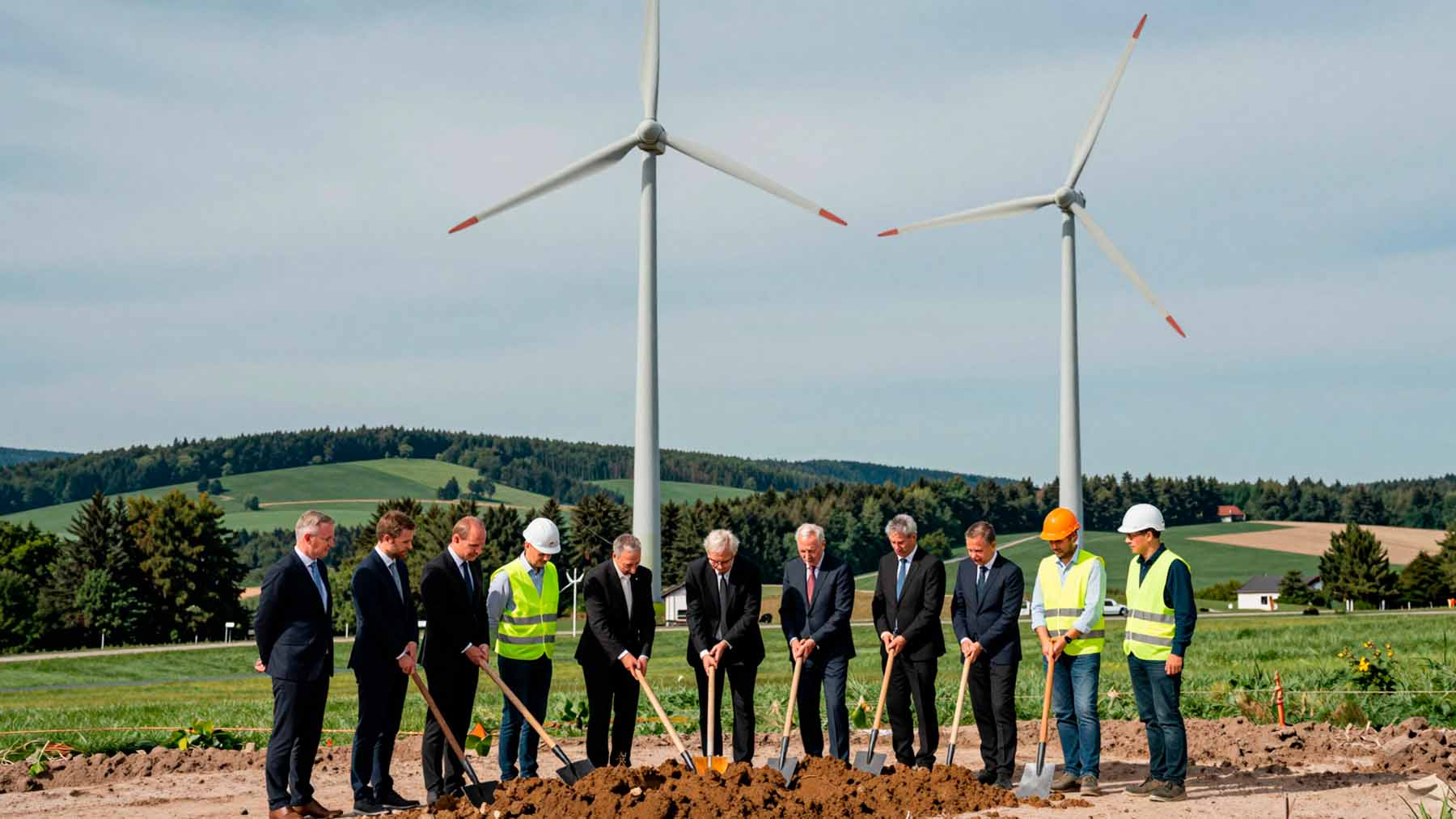 Image generated with artificial intelligence
Qualitas Energy broke ground on the Ingstetten wind farm repowering project on July 29, marking the start of construction at a site roughly 22 miles southwest of Ulm in Baden-Württemberg. The project will replace five aging NEG Micon turbines with six new Enercon E-175 units, pushing the facility’s total installed capacity to 42 MW.
Construction begins at Ingstetten
The official groundbreaking happened on July 29, and it drew a bigger crowd than you might expect for a wind farm ceremony. Regional politicians, local administrators, industry reps, and community members all showed up — a pretty clear signal of how much this project means locally.
Among the attendees: Michael Joukov, a Member of the State Parliament of Baden-Württemberg, Mayor of Ingstetten Dieter Schmucker, and Josef Schmid, representing the Mayor of Schelklingen. Representatives from the Alb-Donau District Office and construction company Stricker were also present. That kind of turnout reflects genuine regional backing. Qualitas Energy’s project team is now targeting commissioning of all six turbines by the end of 2027.
The five turbines currently running at Ingstetten are NEG Micon NM 48 units — older machines that can’t compete with what modern technology delivers.
Why the existing turbines are being replaced
The five turbines currently running at Ingstetten are NEG Micon NM 48 units — older machines that can’t compete with what modern technology delivers. And the repowering process isn’t a simple swap. It means fully dismantling the existing units down to their foundations, removing crane pads and access roads along the way.
It’s basically a full reset of the site’s infrastructure.
Six Enercon E-175 turbines take their place, each rated at 7 MW, bringing the farm’s total to 42 MW — a significant jump over what the older NEG Micon units could produce. Christopher Koller, Qualitas Energy’s project manager for Ingstetten, put it plainly. Replacing older turbines with modern, higher-capacity technology will “significantly improve the site’s efficiency, make better use of the available wind resources, strengthen regional energy supply, and support Germany’s energy transition,” he said.
Repowering is increasingly common across Germany, where many first-generation wind farms went up in the 1990s and early 2000s. Developers can extract far more energy from existing permitted locations just by upgrading the equipment — no need to break ground somewhere entirely new.
Expected output and impact on local energy supply
Once the six Enercon E-175 turbines are running, the Ingstetten wind farm is projected to generate enough renewable electricity to supply around 28,000 households per year. That’s a real contribution for a region working to build out its sustainable energy base.
The project fits directly into Germany’s Energiewende — the country’s long-running transition away from fossil fuels and toward renewables. Baden-Württemberg faces pressure to expand renewable capacity, and repowering projects like Ingstetten offer a practical path forward. Johannes Overbeck, CEO of Qualitas Energy in Germany, called the groundbreaking “another important milestone” for the company’s wind energy platform in the country, framing it as part of a broader commitment to delivering “tangible progress towards a more sustainable and secure energy system.”
Wind energy repowering isn’t just about adding megawatts. It’s about making existing infrastructure work harder in communities that have already accepted wind energy as part of their landscape.
Qualitas Energy’s broader presence in Germany
Ingstetten isn’t a one-off. Qualitas Energy describes itself as a global investment and management platform focused on funding and developing renewable energy, energy transition, and sustainable infrastructure, and Germany is clearly a core market.
The company currently holds a portfolio of more than 100 wind energy projects across the country. Its German pipeline includes over 3 GW in late-stage development, with more than 1 GW already under construction or in active operation. The company says it plans to keep growing through strategic acquisitions and targeted investments in high-potential renewable energy assets.
Projects like Ingstetten show how that plays out on the ground. Rather than waiting for greenfield opportunities, Qualitas Energy is also working with what already exists — upgrading older assets to meet modern performance standards.
3 GW in late-stage development
Here’s where things stand. Qualitas Energy broke ground at Ingstetten on July 29. Five older NEG Micon NM 48 turbines will be fully dismantled — foundations and all — and replaced with six Enercon E-175 units, each delivering 7 MW, pushing total installed capacity at the site to 42 MW.
Commissioning is targeted for the end of 2027, after which the farm is expected to power around 28,000 households annually.
Local and regional officials have voiced clear support, and the project fits into both Qualitas Energy’s growing German portfolio and Germany’s broader push to expand renewable capacity. With over 3 GW in late-stage development and more than 1 GW already under construction or in operation across Germany, the company is a significant player in the country’s wind energy buildout. Ingstetten is one data point in a much larger picture, but it’s a concrete one.
Kelly is an experienced writer with 15 years of experience exploring the big stories that shape our world, from tech breakthroughs and space exploration to climate, energy, and the fascinating quirks of science. She has a talent for turning complex ideas into sharp, memorable insights that stay with readers long after they’ve finished reading.
