
Across 50,000 acres of Moray grouse moor, 59 steel turbines earned one estate £11 million in a single year, and the court dispute nobody expected to read became the most damning audit of Scotland’s wind wealth
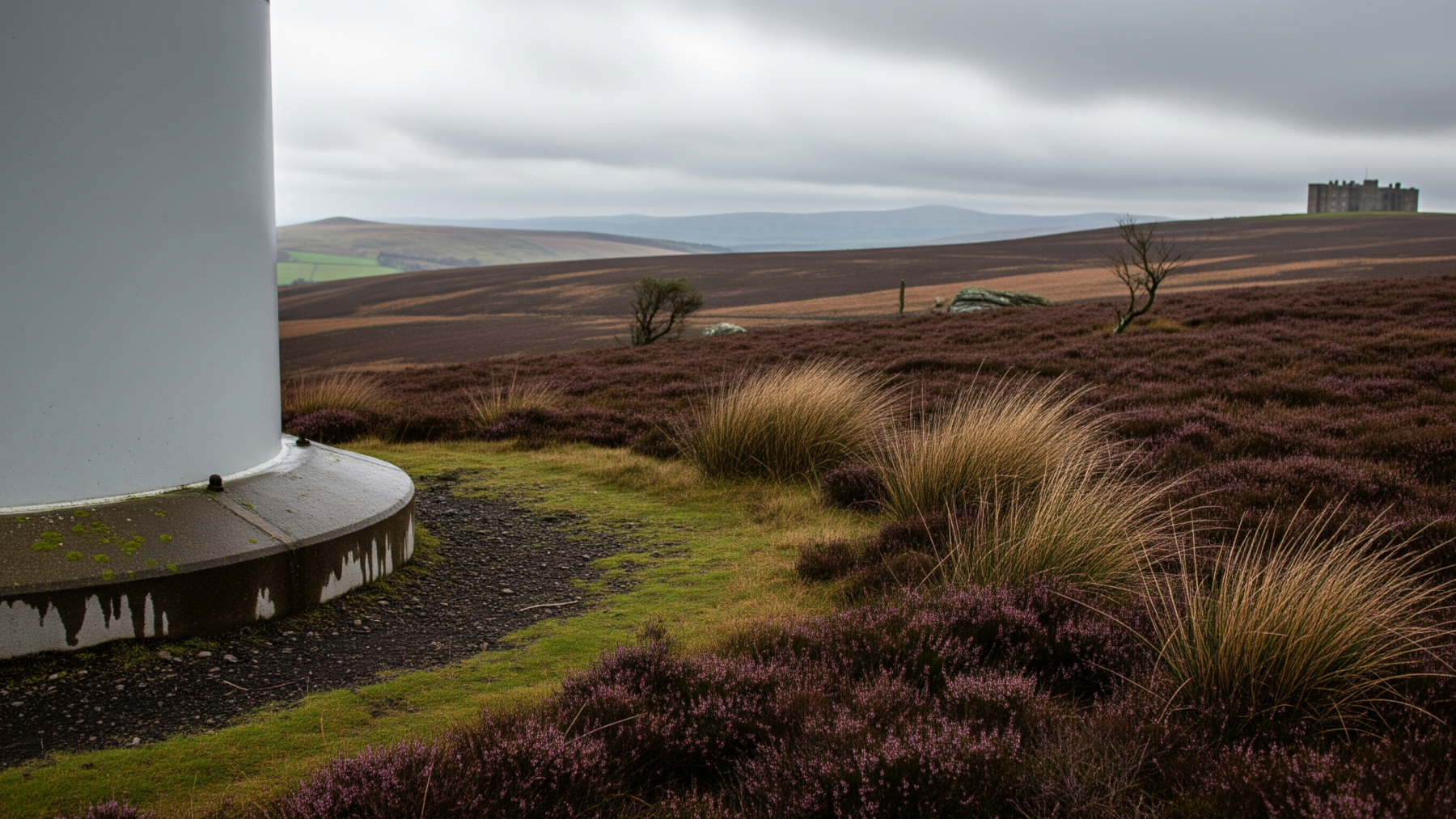
The view from the Glenfiddich Estate in Moray was once considered one of Scotland’s finest, open moorland rolling toward the Grampian Mountains, grouse moors stitched with salmon rivers, the kind of landscape that makes you believe nothing has changed for centuries.
Then, in 2019, it changed decisively.
Fifty-nine steel turbines appeared across the hills.
Meanwhile, about 2,500 residents in the surrounding villages watched the turbines climb skyward and waited to learn what the community benefit fund would bring them.
Each one stands 126 meters tall, roughly the height of a 40-story building, and together they form the Dorenell Wind Farm, one of the largest onshore wind installations in Scotland.
The turbines were licensed to generate electricity for the national grid.
They did that, and they generated something else too: a river of money whose width, until recently, almost nobody outside the legal system had ever been allowed to see.
A lease that nobody talked about
Wind farms need land.
In Scotland, land is famously concentrated: just 408 private landowners control roughly half the country’s rural acreage, according to research from the Who Owns Scotland database.
When EDF, the French state-owned energy company, wanted to build Dorenell, it turned to the Glenfiddich and Cabrach Estates, nearly 50,000 acres of Morayshire held by a London-based financier.
A lease was signed.
The specific terms stayed private, as most such leases do.
Meanwhile, about 2,500 residents in the surrounding villages watched the turbines climb skyward and waited to learn what the community benefit fund would bring them.
They had already filed around 600 planning complaints, citing noise, landscape loss, and the fear that the economic rewards would flow elsewhere.
The number that rose every year
The Dorenell turbines began operating and the payments began flowing.
Under Scotland’s standard guidance, a wind farm with Dorenell’s capacity of 177 megawatts should deliver roughly £5,000 per megawatt each year to the communities nearest its fence line.
That benchmark would have meant close to £885,000 annually for Moray villages.
What those communities actually received in the year to March 2025 was £397,252, less than half the recommended sum.
EDF defended the figure, noting the rate had been agreed before the current guidelines came into force and that the company also funds paths, a ranger service, and a visitor center.
But the deeper story was still sealed inside court documents, waiting for a legal argument to crack it open.
When two parties argue over millions
The crack came from an unexpected direction.
The estate and EDF’s Dorenell subsidiary fell into a contract dispute over how rent should be calculated when the wind farm was paid to switch off its turbines.
Scotland’s grid operators sometimes pay wind farms a “constraint payment”, essentially a fee to stop generating when the grid cannot absorb any more electricity.
In the five years since Dorenell started operating, those constraint payments alone exceeded £45 million.
The estate argued that a share of that income ought to have been folded into the rent formula.
EDF disagreed, both sides went to court, and the case notes that emerged contained details neither party had intended to make public.
What the court papers quietly revealed
The baseline lease guaranteed to the estate was £6 million per year, roughly £100,000 for each of Dorenell’s 59 turbines.
Actual payments pushed that figure higher each year, growing from roughly £8.5 million in 2023 to £11 million in 2025.
In that same year, land rents paid to the estate were 23 times the £464,625 paid to communities.
Investigative outlet The Ferret, drawing on the court papers and data from Local Energy Scotland, published the comparison in May 2026 and the 23-to-1 ratio landed hard.
A community spokesperson described the underpayment as causing “sustained consternation” among residents who had lived with the turbines for years and watched the promised benefits shrink.
A question bigger than one estate
Nobody disputes that Dorenell generates real electricity; its 177 megawatts can power roughly 106,000 homes when the wind blows.
EDF points to contributions beyond the community fund: road maintenance payments to Moray Council, a dedicated ranger, and an endowment for local causes.
But the court case turned an abstract policy debate into a set of hard numbers, and those numbers are now in public view.
Just 408 landowners own half of Scotland’s privately held rural land, while less than three percent is under community ownership.
That imbalance predates the wind industry by centuries, but offshore wind expansion is creating a new version of the same tension at a much larger scale.
Scotland’s government has pushed for greater community ownership in future projects, and newer developments are beginning to reflect that shift.
Whether Dorenell’s numbers, now impossible to unsee, will accelerate that change is the question Moray’s villages are still waiting to have answered.
The turbines keep turning, and the figure that started a legal argument between two wealthy parties has become the most precise measure yet of what the clean energy transition is actually worth to the people living closest to it.
Hugo is an engineer with strong technical expertise. Multilingual from an early age, his writing combines technical clarity with a strong interest in science and energy.
