
Stretched 444 miles beneath the Gulf of Mexico in just 11 months, a 36-inch steel spine now carries 1.3 billion cubic feet of gas a day to a corner of the continent that once ran its power plants on almost nothing
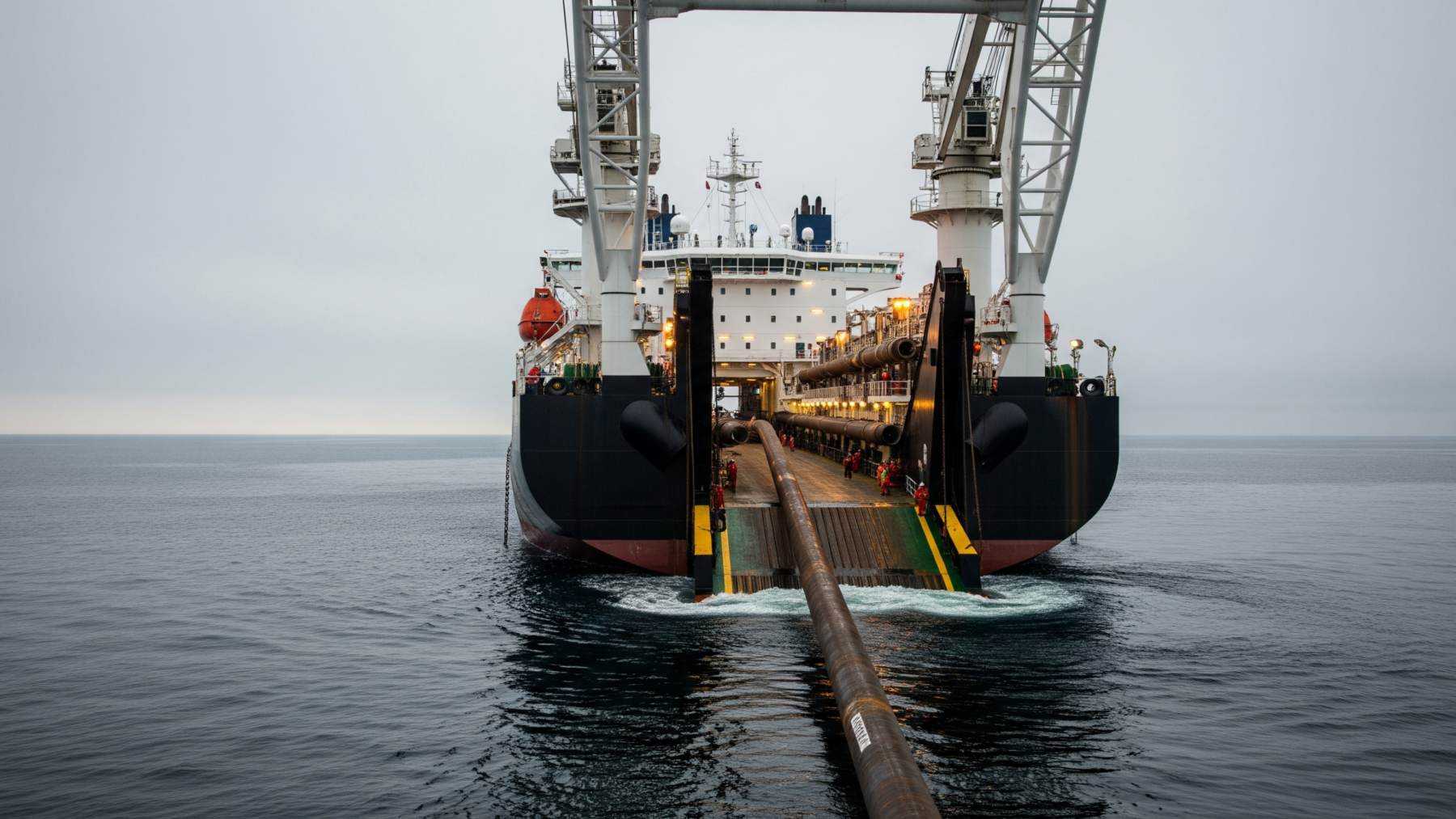
Something enormous lies on the floor of the Gulf of Mexico, and most people driving past a Pemex gas station have no idea it exists. It stretches for 444 miles, runs mostly out of sight below several hundred feet of saltwater, and it began moving gas in the spring of 2025. The number that surprises engineers the most is not its length. It is how fast a crew of ships put it there.
A corner of Mexico that kept the lights on by a thread
For decades, Mexico’s southeast has been an awkward energy outlier. The region sits directly above some of the country’s richest petrochemical and refining infrastructure, including the vast Dos Bocas terminal in Tabasco, yet its power plants depended on fuel oil and expensive diesel cargoes to keep turbines spinning. Natural gas was abundant a few hundred miles north in Texas, but no pipe connected the two places through the Gulf.
The gap was both an engineering problem and a political one. Mexico’s state power utility, the Comisión Federal de Electricidad, needed a partner willing to bet billions on a subsea route the industry had never crossed at that scale. In August 2022, CFE and TC Energy reached a final investment decision, committing to $4.5 billion and a timeline that gave builders fewer than three years to cross the Gulf.
The 715 km Southeast Gateway set the length record for offshore pipelines in 2025, surpassing every comparable structure previously laid under any ocean.
The ships that pulled off something no ocean had seen
To lay pipe at that length and speed, Allseas Group mobilized a small fleet of specialist vessels and pointed them at the Veracruz coast in early 2024. The workhorse was the Solitaire, one of the world’s largest pipelay ships, supported by the Lorelay and Tog Mor for logistics and welding support. A fourth vessel, the Pioneering Spirit, handled the tricky nearshore approach at Coatzacoalcos, where shallow water forced engineers to improvise a solution no standard stinger could provide.
Rather than halt the campaign while a conventional stinger was fitted, the crew adapted the Pioneering Spirit’s own hanging stinger transition frame into a purpose-built mini stinger, tailored precisely to the shallow-water depth at that landfall. It was the kind of field engineering that rarely makes a headline but keeps a billion-dollar schedule intact.
The geometry of a record no chart had room for
To understand the scale, picture a steel cylinder three feet wide buried under the Gulf and running continuously from Houston to the edge of Cuba, then curving south into the Yucatan. From its northern terminus in Tuxpan, Veracruz, the pipeline runs primarily offshore before making landfall at Coatzacoalcos and at Dos Bocas, Tabasco. Three separate landfalls meant three distinct engineering campaigns in the surf zone alone.
TC Energy helped Allseas validate its automated ultrasonic testing system Dolphin, which inspected more than 57,000 welds along the route, each one a potential failure point in a pipe that would never be easy to reach again. The 715 km Southeast Gateway set the length record for offshore pipelines in 2025, surpassing every comparable structure previously laid under any ocean. Its 1.3 billion cubic feet per day capacity is enough gas to heat roughly 13 million American homes simultaneously.
The twist that rewrites who powers Mexico’s southeast
Here is what the length record obscures: this is not a Mexican pipeline in the traditional sense. As TC Energy confirmed in its June 2025 announcement, the subsea line acts as an extension of the existing 2.6 Bcf/d Sur de Texas-Tuxpan pipeline, so gas produced in the Permian Basin and the Eagle Ford now flows under international waters and arrives at Mexico’s most ambitious refinery complex. For readers tracking asset deals across the hemisphere, the pipeline illustrates how deeply U.S. production has embedded itself in the region’s energy architecture.
TC Energy reported the project finished less than three years from its FID date, at a cost roughly 13 percent below the original estimate. TC Energy’s Mike Bagale, Vice President of Mexico Projects, described it as “a classic example of how large scale offshore pipelay ventures are delivered safely, environmentally compliant, and on plan.” Coming in $500 million under budget while setting a world length record is the kind of outcome the industry rarely gets to celebrate twice in the same press release.
What 1.3 billion cubic feet a day means on the ground
For communities along Mexico’s Gulf coast between Veracruz and Tabasco, the pipeline’s arrival is less an abstraction than a change in what the lights cost. Power plants that previously burned liquid fuels, expensive to ship and dirty to combust, can now dispatch cheaper, lower carbon gas on demand. The Dos Bocas terminal sits at one of the three landfall points, giving the facility a gas supply it was designed around but had not yet secured when it first opened.
The caveat worth naming is that the pipeline deepens Mexico’s reliance on U.S. gas exports at a moment when LNG infrastructure along the Texas coast is still maturing and global gas prices remain genuinely volatile. The engineers who laid the pipe did their job to a standard the industry will study for years. The harder work, managing what flows through it, is only beginning.
Hugo is an engineer with strong technical expertise. Multilingual from an early age, his writing combines technical clarity with a strong interest in science and energy.
