
Nordex Group wins 82 MW wind turbine order from EFG Energy Farming Group for two Lower Saxony projects
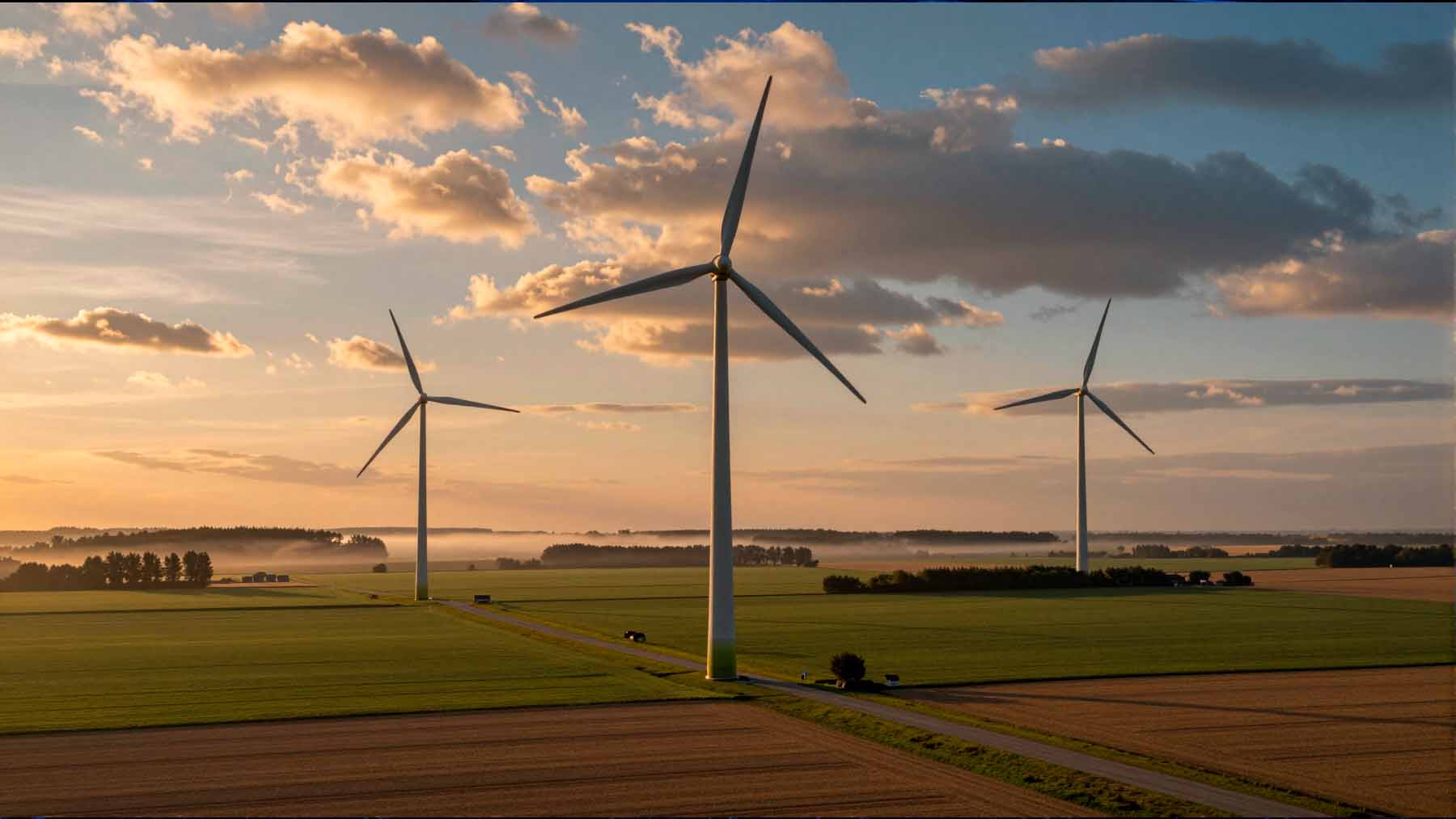 Image generated with artificial intelligence
Nordex Group just landed a pair of orders from EFG Energy Farming Group. The deal covers twelve wind turbines across two sites in Lower Saxony, Germany—the Erlte-Endel site in Vechta district and the Bad Essen cluster in Osnabrück district. Combined installed capacity comes in at around 82 MW. Both contracts include a 20-year Premium Service agreement.
Order details and turbine specifications
The twelve turbines are split across two distinct sites, each with its own setup. At Erlte-Endel, located in the municipality of Visbek in Vechta district, Nordex will supply and install five N175/6.X turbines on hybrid towers reaching a hub height of 587 feet.
Bad Essen is more involved. Seven turbines spread across four separate sub-projects: Langewiesen-Nord, Langewiesen-Süd, Rabber Wiesen, and the Wimmerbruch repowering project. Five of those are N175/6.X units on 587-foot towers, while the remaining two are N163/6.X models sitting at a slightly lower hub height of 538 feet.
“Landowners and community energy companies have been involved from the outset, ensuring that the energy transition remains firmly anchored locally.”
Both contracts carry a 20-year Premium Service agreement, covering ongoing maintenance and performance monitoring well into the 2040s. Standard for large-scale commercial wind deals—but worth noting given the investment involved.
Why EFG selected Nordex and the citizen wind model
EFG Energy Farming Group isn’t new to Nordex’s customer list. The Bad Essen-based developer has a long-standing relationship with the manufacturer, built through years of wind project development across Germany.
What sets EFG apart is how it structures ownership. Rather than developing projects and selling them off to outside investors, EFG ties site development, permitting, and implementation directly to local landowners and regional citizen wind companies. Those stakeholders are in from the start—not brought in after the fact.
Reiner Borgmeyer, Managing Director of EFG Energy-Farming Holding GmbH, put it plainly. “With the wind farms in Erlte-Endel and Bad Essen, we are implementing two projects together with Nordex that demonstrate how wind energy use and regional value creation can go hand in hand,” he said. “Landowners and community energy companies have been involved from the outset, ensuring that the energy transition remains firmly anchored locally.”
Karsten Brüggemann, Vice President Region Europe at Nordex SE, described the projects as “exemplary of the successful combination of regional commitment and modern wind energy technology,” adding they would “enable reliable and sustainable electricity generation for many years to come thanks to their high efficiency.”
For EFG, regional value creation isn’t a tagline—it’s baked into the business model. The company’s entire development pipeline runs through close cooperation with landowners, municipalities, and citizen wind companies, and that structure shapes which turbine supplier gets picked and how contracts are written.
Construction timeline and commissioning schedule
The project rolls out in phases over roughly two years. Initial infrastructure—groundworks, access roads, grid connection prep—is scheduled to kick off at the end of 2026.
Turbine installation across both Erlte-Endel and Bad Essen is planned for 2027, giving Nordex a full construction season to complete erection across all twelve units. Commissioning is targeted for spring 2028, at which point both wind farms transfer to operation by the landowners and regional citizen wind companies involved—consistent with EFG’s community-anchored ownership model.
The schedule is relatively clean for projects at this scale, though it depends on permitting staying on track and supply chains holding through 2026 and 2027. No complications have been flagged publicly so far.
Background: Nordex Group and the German wind energy market
Nordex Group is one of Europe’s major onshore wind turbine manufacturers, active across multiple European markets and operating at significant scale. Orders like this one in Lower Saxony reflect its continued focus on the German domestic market, one of its core geographies.
Lower Saxony ranks among Germany’s most active states for onshore wind development. Favorable wind conditions—especially across the northern and central regions — and a relatively permitting-friendly environment compared to some other German states make it a natural fit for developers like EFG.
Germany’s Energiewende continues to drive demand for new onshore wind capacity at the national level. Targets for renewable energy expansion push developers and manufacturers alike to accelerate both new-build projects and repowering of older sites. The Wimmerbruch sub-project within the Bad Essen cluster is a direct example of that trend—swapping out older, lower-capacity turbines for modern high-output units like the N175/6.X lets developers pull significantly more energy from already-permitted sites without needing new land.
Combined capacity of 82 MW
The Nordex-EFG deal covers twelve turbines—five N175/6.X units at Erlte-Endel and seven turbines across the four Bad Essen sub-projects—for a combined capacity of around 82 MW. Infrastructure work starts late 2026, installation follows in 2027, and commissioning is set for spring 2028.
Once commissioned, both wind farms will be operated by landowners and regional citizen wind companies, in line with EFG’s community participation model. Both contracts include a 20-year Premium Service agreement. The Wimmerbruch sub-project adds a repowering dimension to the overall package.

Kelly is an experienced writer with 15 years of experience exploring the big stories that shape our world, from tech breakthroughs and space exploration to climate, energy, and the fascinating quirks of science. She has a talent for turning complex ideas into sharp, memorable insights that stay with readers long after they’ve finished reading.
