
APA Corp. raises Permian oil production forecast after efficiency gains cut operating costs
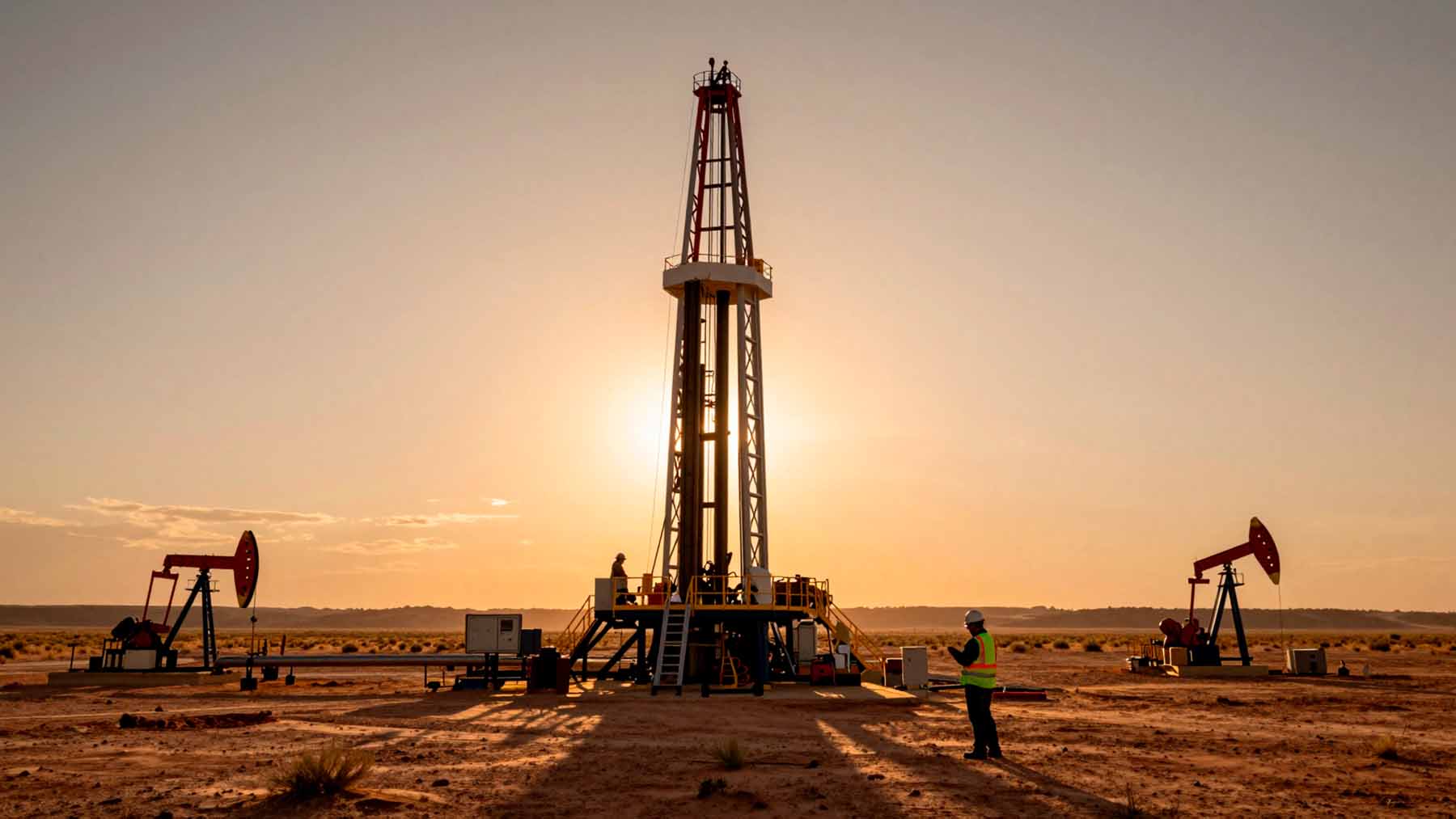 Image generated with artificial intelligence
APA Corp. is getting more oil out of the Permian Basin without spending more to do it. On August 6, the Houston-based company raised its 2026 US oil production outlook to 123,000 b/d—up from 122,000 b/d—while holding projected US capital expenditure steady at $1.3 billion. The revision follows a second quarter in which Permian output came in 2% above the company’s own internal estimates.
APA lifts US oil output forecast while holding capex steady
That 1,000 b/d increase might look small on paper. The story behind it, though, matters more than the number itself. CEO John Christmann delivered the update during an August 6 analyst call, framing it as proof that APA’s efficiency push is producing real output gains—not just spreadsheet savings.
Permian Basin oil production in Q2 came in at nearly 123,500 b/d, beating the company’s own internal estimates by 2%. That outperformance gave management the confidence to raise the full-year 2026 outlook. The US capital expenditure target stays unchanged at $1.3 billion. APA is squeezing more barrels out of the same budget.
Net profit came in at $747 million on revenues of $2.4 billion—up from $603 million a year earlier, even though revenues were actually higher then at $2.6 billion.
Christmann put the longer-term ambition plainly: “We’ve worked on adding durability and inventory life to the Permian, where we can run flat for more than 10 years. We’re obviously exceeding that with volumes and capital efficiency that we continue to have come through.” APA controls 159,000 net acres in the Delaware Basin and 287,000 net acres in the Midland Basin—a substantial footprint once efficiency gains start compounding.
Drilling and operational efficiency improvements drive the forecast revision
The production beat didn’t happen by accident. Christmann credited improvements across drilling, completions, and field operations reliability for keeping output ahead of schedule. These aren’t one-time fixes—they reflect a sustained operational discipline that’s showing up consistently in quarterly results.
Those gains are feeding directly into the cost structure. APA is on track to save $3.5 million per month in operations by year-end, a target that looked ambitious when first announced but now appears well within reach.
This is also the second consecutive quarter that APA has nudged its US oil production outlook higher. That pattern matters. One upward revision could be a one-off; two in a row suggests the efficiency improvements are durable, not situational. For investors watching capital discipline, rising output paired with flat spending is exactly what they want to see.
Higher realized prices boost Q2 financial results despite lower total volumes
APA’s second-quarter financials tell a nuanced story. Total company production fell to 410,000 boe/d from 465,000 boe/d a year earlier, driven by lower natural gas volumes and reduced international output. On the surface, that looks like a step backward.
The bottom line says otherwise. Net profit came in at $747 million on revenues of $2.4 billion—up from $603 million a year earlier, even though revenues were actually higher then at $2.6 billion. Pricing drove the swing. APA’s average realized sale price per barrel jumped to more than $98 in Q2, compared with roughly $65 in the same quarter of 2024—a gap wide enough to more than offset the volume decline.
The market took notice. APA shares popped 5% on the Q2 results and kept climbing; as of midday trading on August 13, the stock was changing hands around $39.70, up roughly 40% over the past six months. That rally pushed the company’s market cap to approximately $14 billion, a meaningful re-rating for a company methodically improving its operational profile.
Suriname’s GranMorgu project is set to reshape APA’s long-term production profile
The Permian is delivering results today. APA’s most significant growth catalyst, however, sits offshore Suriname. The GranMorgu project—a joint venture with TotalEnergies (40%) and state-owned Staatsolie (20%), with APA Corporation holding a 40% stake—is estimated to contain more than 750 million barrels, a resource base capable of reshaping the company’s production profile for years.
APA is deploying $230 million in capital at GranMorgu this year, with development drilling scheduled to begin in Q4. The first oil is targeted for 2028, and net production is expected to approach 40,000 b/d by 2029. At an average Brent price of $60 per barrel, the project is projected to generate approximately $400 million in free cash flow that year alone.
Christmann signaled that 2029 won’t be a peak—it’ll be a starting point. “We will be back in there with Total next year exploring,” he told analysts. “And we’re looking to either add to the plateau for GranMorgu or potentially more infrastructure.” The goal is to extend the production plateau, not simply reach it.
Directly rewarding shareholders
APA Corp. is executing on two parallel tracks. In the near term, Permian efficiency improvements are letting the company raise its US oil production outlook without adding capital—a combination that directly rewards shareholders. The Q2 beat of 2% against internal estimates, the second consecutive upward revision, and the on-track savings target of $3.5 million per month all point in the same direction.
Over the longer term, GranMorgu represents a material step-change in production scale. First oil is targeted for 2028, with projected free cash flow of around $400 million in 2029 at $60 Brent—a growth dimension that the Permian’s steady-state profile alone couldn’t provide. Operational discipline now, offshore growth later. That’s the core of APA’s investment case heading into the second half of the decade.
Kelly is an experienced writer with 15 years of experience exploring the big stories that shape our world, from tech breakthroughs and space exploration to climate, energy, and the fascinating quirks of science. She has a talent for turning complex ideas into sharp, memorable insights that stay with readers long after they’ve finished reading.
