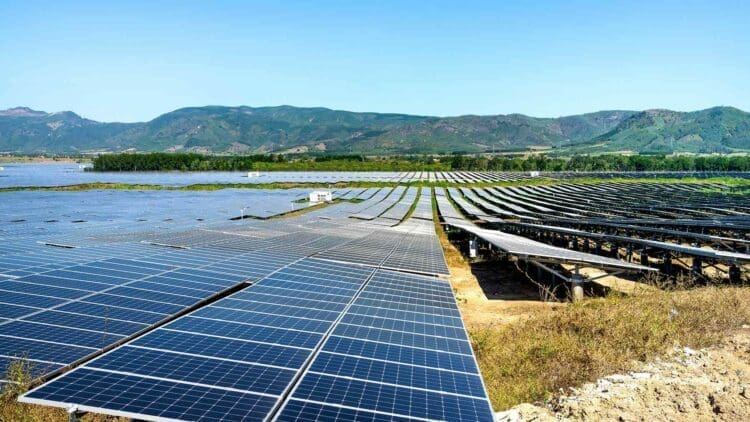

With every initiative that comes by, we are gaining more insight into the great progress that the solar energy industry is making. What is most amazing is the pace at which firms have been able to build groundbreaking facilities. This has been made possible by the integration of technological innovation and the willingness shown by the Department of Energy to approve projects. The United States, being one of the leading solar energy producers in the world, has ambitious initiatives that require all companies to play their role in advancing solar initiatives. The latest entity to do so is APA Solar Racking, which has introduced an engineered foundation system to accelerate the deployment of utility-scale solar installations.
Assessing APA Solar’s contribution to the United States solar landscape
One of the benefits of having new and veteran entities in the energy landscape is that it creates a balance whereby new companies bring fresh, technologically driven ideas, whereas older ones develop the infrastructure that is already available. APA Solar Racking is a leading provider of solar racking foundation solutions for commercial and utility-scale projects.
As of 2025, it has over 200 employees and operates in a wide range of areas, including Northwest Ohio. The company now has a reputation for specializing in ground screws for rocky soils, helical for soft soils, and utilizing its TITAN™ flagship system.


In its latest initiative, APA Solar Racking has unveiled a new engineered foundation system designed to speed up the deployment of utility-scale solar projects. The announcement is supported by major infrastructure investments aimed at enhancing innovation and domestic manufacturing capacity.
An overview of the engineered foundation system introduced by Solar Racking
At the center of this captivating initiative is a newly opened headquarters and research hub in Ohio. All combined, the developments display a larger strategy to streamline construction timelines and improve performance across large-scale solar installations. APA Solar Racking is ensuring that its engineered foundation system becomes the solution to one of the most stubborn challenges in utility-scale solar, which is installation speed and site adaptability.
The system is built to perform effectively when used across a wide range of terrain conditions, including difficult soils that often delay construction. The main intention behind integrating foundation engineering with racking and tracking technologies is to lower the number of steps required during installation.
APA Solar Racking perfectly reflects how modern entities are seeking to make solar energy advancement as easy and as replicable as possible to ensure continuity in the initiatives that are executed. The approach being used by the company is consistent with industry demand for faster project execution, which is a necessity as developers aim to bring solar capacity online at an accelerated speed to meet growing energy needs.
Unpacking the overall impacts of the engineering-centered initiative on APA Solar
When a company is involved in a project of this magnitude, there are huge expectations of what it can do for its reputation moving forward. The new system expands or capitalizes on APA’s reputation for manufacturing foundation solutions that can handle diverse environments while maintaining structural integrity.
Its designs seek to reduce on-site adjustments, ultimately lowering labor costs and shortening deployment timelines. Kevin G. Hostetler, who is the Chief Executive Officer at ARRAY, said:
“The integration of APA Solar into ARRAY has exceeded our expectations, and this investment in the Ohio campus reflects our confidence in what this team can deliver as we accelerate growth in the utility-scale market,”
The state of Ohio has been chosen as suitable for researching, innovation, and testing
The rollout of the engineered foundation system is closely associated with the opening of APA Solar’s new 30,000-square-foot headquarters in Ridgeville Corners, Ohio. The facility is regarded as a central hub for engineering and manufacturing, allowing faster partnerships and product development.
The site also includes a specific research, testing, and training center accompanied by a five-acre solar installation used for real-world product validation. Engineers will be able to test new systems under appropriate conditions.