
Florida Power & Light reaches 120 solar energy centers, saving customers over $1.3 billion in fuel costs
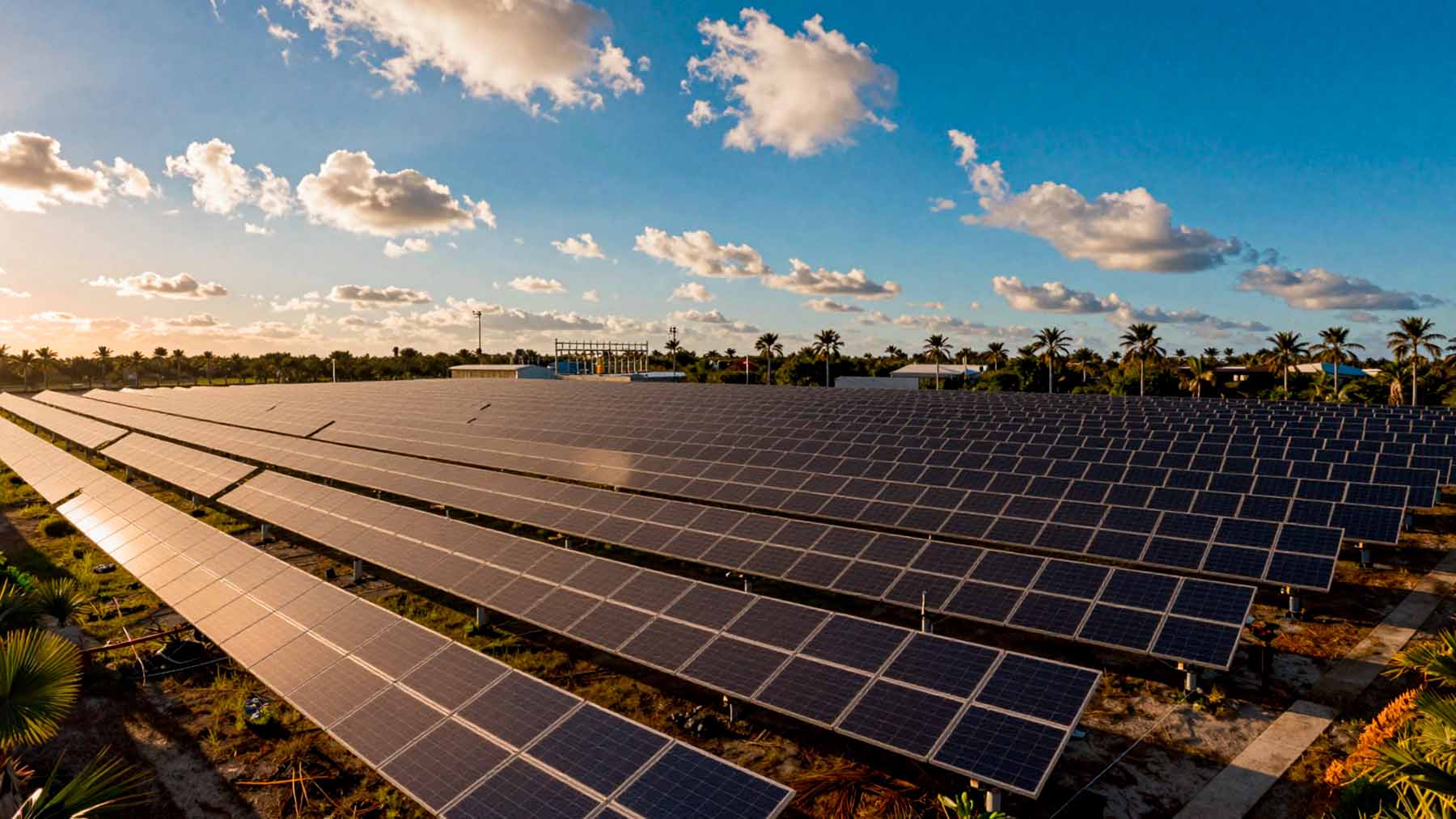 Image generated with artificial intelligence
Florida Power & Light now operates 120 solar energy centers across Florida—the largest utility-scale solar portfolio in the United States. The Juno Beach-based utility announced the milestone alongside a figure that explains why the expansion matters: customers have saved more than $1.3 billion in fuel costs since the company started building out its solar network.
Twelve new facilities came online in 2026 alone, bringing FPL’s total generation capacity to roughly 8,826 megawatts—enough to power more than 1.5 million homes.
FPL hits 120-solar-center milestone with largest US utility-scale portfolio
The most recent addition to FPL’s network is the FPL Sea Grape Solar Energy Center in St. Lucie County, one of 12 facilities completed in 2026. Each new site pushes the company further ahead of other US utilities in utility-scale solar capacity.
FPL also designs its solar sites to support native wildlife and pollinators—habitat preservation treated as a core part of site planning rather than an afterthought.
Tim Oliver, vice president of FPL Development, credited the results to a long-term investment strategy. “This milestone reflects years of smart investments on behalf of our customers,” he said. “A diverse portfolio of generation resources, including solar energy, natural gas, nuclear power and battery storage technology, allows us to optimize our system and deliver reliable electricity while helping keep customer bills as low as possible.”
That portfolio approach is central to how FPL frames its solar expansion—not as a replacement for other energy sources, but as a complement to them.
Solar investments reduce fuel costs and drive customer savings
Solar energy has a clear financial advantage: once a panel’s installed, the fuel is free. Every kilowatt-hour generated by the sun is one FPL doesn’t have to produce by burning natural gas or buying fuel on the open market, and those avoided costs add up fast.
So far, FPL’s solar buildout has helped customers avoid more than $1.3 billion in fuel costs. That’s real money that never made it onto customer bills.
The company runs solar alongside natural gas, nuclear, and battery storage—a mix designed to dispatch the lowest-cost resources at any given moment. When solar output is high and fuel prices are elevated, the grid leans on the sun. When demand spikes or solar production dips, other resources fill the gap. That kind of flexibility is something a single-source strategy simply can’t deliver.
Economic and tax benefits spread across 30 Florida counties
The impact of FPL’s solar network goes beyond electricity bills. The 120 centers operate across 30 counties statewide, spreading economic benefits well beyond the utility’s Juno Beach headquarters.
In 2025 alone, those sites contributed nearly $40 million in local property taxes across Florida—money going directly into county budgets and funding schools, roads, and public services in communities that host the facilities.
St. Lucie County, home to the newly completed Sea Grape center, has been a direct beneficiary. Benjamin Balcer, director of Planning and Development Services for the county, pointed to the broader impact. “FPL’s investment in solar has created a meaningful opportunity for communities like ours,” he said. “These projects attract investment, support local economies and help strengthen Florida’s diverse energy infrastructure.”
Beyond taxes, the projects support local jobs during construction and ongoing operations—an economic footprint that extends well past the ribbon-cutting.
Agrivoltaics and environmental stewardship expand alongside solar growth
One of the more unexpected parts of FPL’s solar story is what’s happening between the panels. At 53 of its solar sites, FPL runs agrivoltaics pilots—a dual land-use model combining electricity generation with agricultural activity.
In practice, that usually means cattle grazing. Animals roam under and around the solar arrays, feeding on grass that would otherwise need mechanical mowing. The rancher gets pasture, FPL cuts vegetation management costs, and the land pulls double duty.
Florida rancher Morgan Lott, who participates in one of the pilots, described it plainly. “This approach allows the land to serve two purposes at once, supporting both solar energy production and cattle grazing,” he said. “The cattle help manage vegetation, reducing mowing needs, and FPL has been a collaborative partner throughout the process.”
FPL also designs its solar sites to support native wildlife and pollinators—habitat preservation treated as a core part of site planning rather than an afterthought.
FPL’s 120-solar-center milestone brings together scale, savings, and geographic reach. The utility now holds the largest utility-scale solar portfolio in the United States, with roughly 8,826 MW of capacity capable of powering more than 1.5 million homes.
Customers have saved more than $1.3 billion in fuel costs as a direct result of the solar buildout, and the 30 counties hosting solar sites collected nearly $40 million in property taxes in 2025 alone.
Florida Power & Light runs solar as part of a broader generation mix that includes natural gas, nuclear, and battery storage—dispatching resources based on cost and availability. Agrivoltaics pilots at 53 sites are testing how solar and agriculture can productively share the same land.
FPL serves more than 6 million customer accounts across Florida—roughly 12 million people—which makes the cost profile of its generation fleet a matter of real consequence for a significant share of the state’s population.
Kelly is an experienced writer with 15 years of experience exploring the big stories that shape our world, from tech breakthroughs and space exploration to climate, energy, and the fascinating quirks of science. She has a talent for turning complex ideas into sharp, memorable insights that stay with readers long after they’ve finished reading.
