
Researchers tracked 12,047 night flights around two Iowa wind turbines, and the animals were 3.6 times more likely to head toward the rotor zone when the blades had stopped
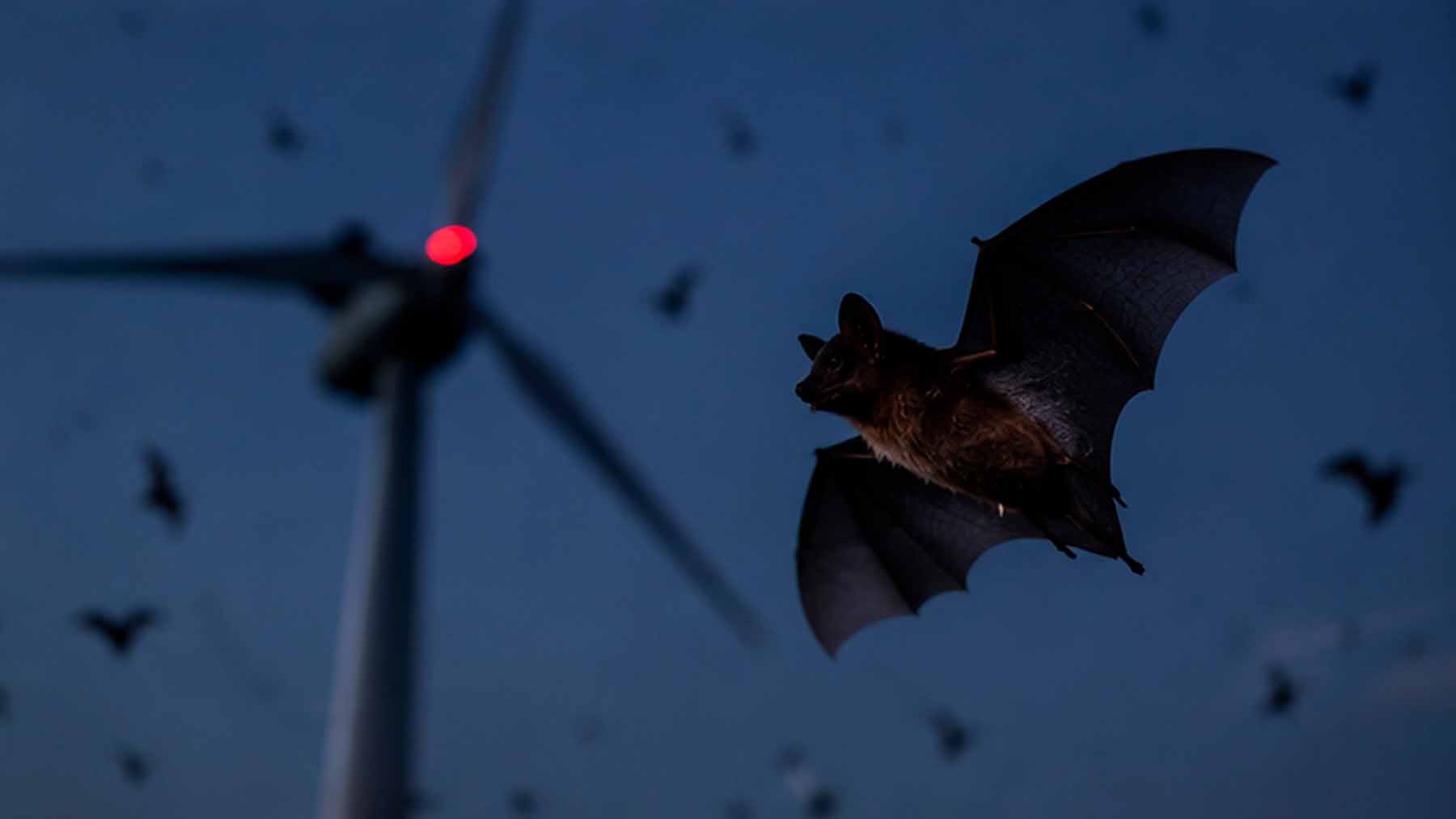
Birds are actively avoiding wind turbines at night in Iowa.
The American wind landscape is rapidly expanding with even bigger infrastructure.
This shift is essential to provide clean power to millions of homes while meeting climate regulations.
Larger turbine deployment has become central to this transition, with 3- to 6-megawatt and taller infrastructure leading modern projects.
However, it is important to understand how avian species react to this swift increase in installations.
Will the Iowa multi-technology study provide the critical insights needed to help protect wildlife around active turbines?
How the U.S. power structure is becoming greener
The United States has a leading green economy globally.
Solar and wind have played vital roles in achieving this status.
Total installed large-scale wind capacity has exceeded 160 gigawatts.
Currently, it generates over 460 terawatt-hours of clean electricity, powering tens of millions of households.
Despite this milestone, fossil fuels remain a dominant factor in the American energy mix.
Within the next few years, the nation aims to reduce overall emissions below 2005 levels.
To meet these targets, rapidly displacing these fossil fuels is vital.
However, America’s widespread adoption of digitization and industrial electrification complicates this mission.
Fossil fuel plants are often sources of backup power to meet rising national electricity demand.
As a result, developers are pressured to rapidly expand utility-scale green capacity to meet federal climate goals and energy needs.
Larger turbine deployment has become central to this transition, with 3- to 6-megawatt and taller infrastructure leading modern projects.
When environmental concerns rise with turbine tower length
Worldwide, modern wind projects are increasingly featuring taller towers.
In the U.S., these towers now have an average height of nearly 339 feet.
Accompanying these giant towers are rotor diameters surpassing 320 feet.
These bigger components enable capturing stronger winds at elevated heights, which maximizes power generation.
Consequently, this boosts average energy output by up to 2% for every 33 feet of additional height.
Yet, greater clean electricity generation presents greater environmental risks.
Scaling up turbines increases the rotor-swept zone across vital airspace.
This directly overlaps with major seasonal migration paths, which local birds and bats depend on.
This highlights a problem that the industry has dealt with for years.
Sweeping blades at greater heights often rotate at tip speeds exceeding 150 mph.
The risk of collision increases, raising ecological pressures.
However, not all species behave the same near these installations.
An Iowa turbine study explored these different behaviors at night.
The Iowa wind turbine night tracking study
Researchers are actively monitoring the impact on flying species using different high-tech setups.
At the Orient Wind Farm in Adair County, Iowa, two turbines were chosen for the study.
Observations took place over 38 nights during the fall migration season.
This spanned from late August through October 2022.
The high-tech monitoring setup consisted of:
- 3D-thermal videography
- Ultrasonic acoustic detectors
- Regional weather radar data
Inside the rotor-swept area, 12,047 flight tracks were recorded, including 2,249 bat echolocation sequences.
Discovering the majority of tracked night movements
Regional weather radar migration patterns were matched with thermal video activity.
This indicated that birds made up the majority of night movements.
They flew through high-risk heights up to 500 feet above the ground, within 650 feet of the towers.
The birds demonstrated avoidance behaviors when approaching operational turbines.
When the turbines were stationary, the birds were 3.6 times more likely to approach the rotor-swept zones.
During operation, flight paths would angle sharply away as targets drew closer.
These findings demonstrate that birds can detect and avoid spinning blades.
It offers a promising outlook for future large-scale wind projects that must balance wildlife protection with clean energy production.
The key is to use public weather radar data when choosing sites to avoid high-traffic migration pathways.
Furthermore, by using multiple high-tech monitoring systems and visual deterrent systems, vulnerable flying species are better protected.
You can review these findings by using the APA CITE: Shultz, A., Solick, D., Whitby, M., Newman, C., & Corcoran, A. (2026). Integrating 3-D thermal videography, ultrasonic acoustics, and weather radar to characterize bird and bat activity at wind turbines. PLoS One, 21(7), e0352329.
Anke Maree is a writer with a clear and engaging editorial style. Her work focuses on making complex topics accessible, informative, and relevant for readers across different areas of interest.
