
Two microphones listened to a future North Dakota wind farm for seven months, and software counted 10 little brown bats until biologists checked the recordings and cut the number in half
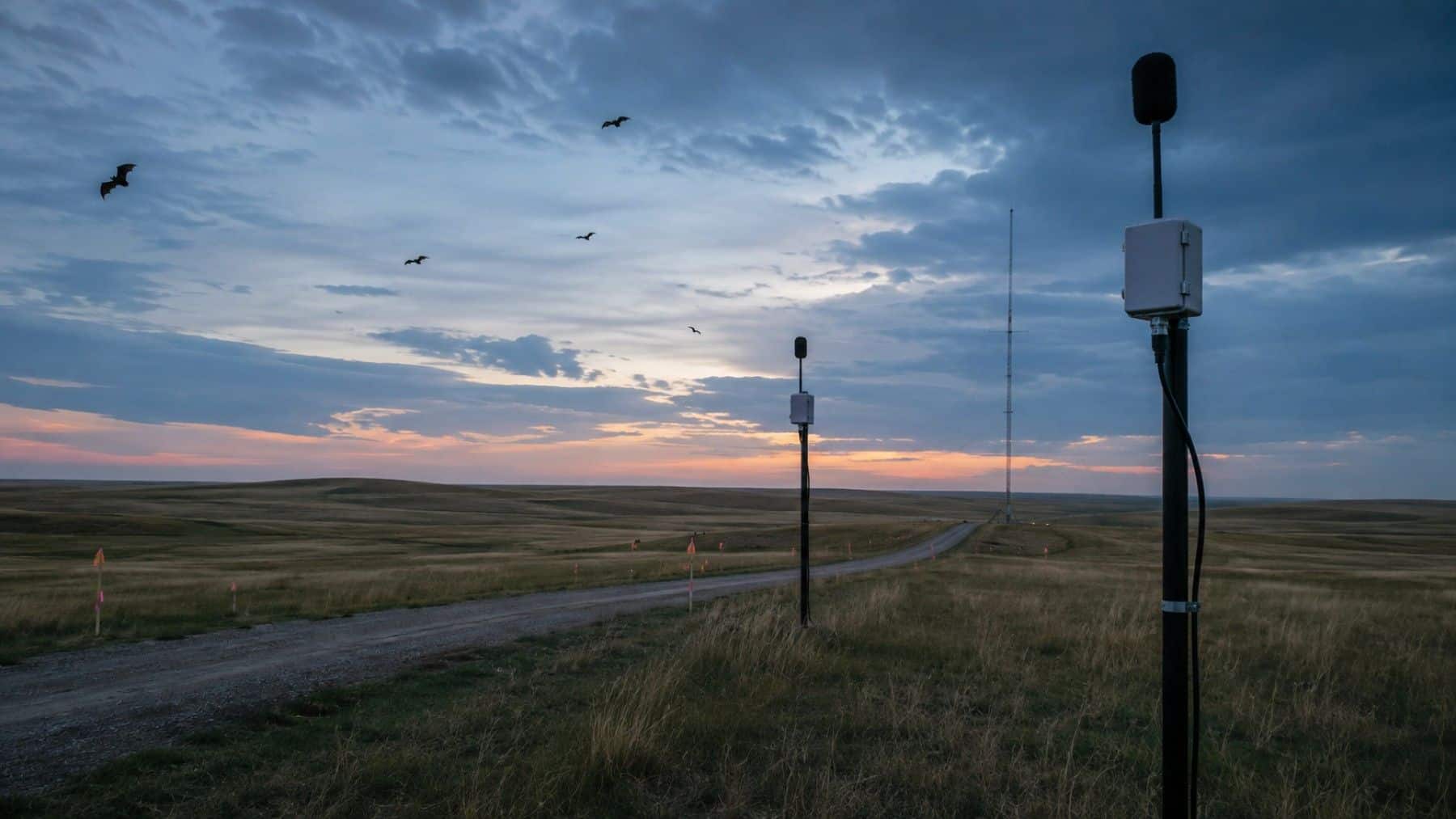
North Dakota wants to expand its wind capacity, but an automated acoustic survey delivered mixed results.
Renewable energy infrastructure must rapidly scale globally to meet high electricity demands.
In the United States, wind power is key to addressing these needs, but ecological risks must be assessed first.
Until these discrepancies in automated algorithms are fixed, manual review remains vital for future wind environmental impact assessments.
A proposed project in North Dakota initially flagged protected species, but discrepancies were revealed.
It raises the question: Is automated wildlife tracking truly reliable for green infrastructure development?
How the green shift has become more crucial in the digital age
The world has evolved significantly over different eras.
Presently, the digital age revolves around smart devices, unlimited internet access, and generative cloud computing.
These advancements have opened the world to highly streamlined international operations.
However, the infrastructure that maintains these operations is highly energy-intensive.
Large-scale cooling systems, AI, and data centers are key drivers of this.
Electricity demand is predicted to surpass 30,000 terawatt-hours by 2027.
For context, AI queries require up to 10 times more energy than conventional internet searches.
The high demands of the digital era must be met without further accelerating climate change.
Renewable energy sources are fundamental to achieving this.
Currently, green energy produces over 30% of the world’s electricity.
Yet new clean power generation worldwide is being outpaced by power consumption.
Wind facilities must increase at an annual rate of 8% or more globally to keep up with digital electrification.
But this is easier said than done.
The role of wind power in the U.S. grid
Wind power is the cornerstone of the American renewable energy transition.
More than 10% of the nation’s total power is generated by wind, supplying almost 46 million homes.
A federal target entails achieving a 100% carbon-free grid by 2035.
Presently, installed wind capacity is roughly 160 GW nationwide.
However, up to 40 GW of new capacity must be added annually through 2030 to stay on track.
Despite the distinct benefits and urgency of capacity growth, scaling up has become challenging.
The U.S. wind sector has faced significant regulatory hurdles, delaying development.
Supply chain delays and lengthy timelines for transmission interconnection further slow progress.
But one of the most difficult challenges to overcome is environmental compliance.
Under federal law, developers must provide proof that proposed projects will not harm protected wildlife.
In North Dakota, a formal report to the North Dakota Public Service Commission demonstrated that automated monitoring can be unreliable.
Detecting the presence of protected species
North Dakota is one of the top 10 wind-producing states in the U.S.
In Morton County, North Dakota, another project has been proposed, which will span roughly 25,933 acres.
The majority of the area consists of cultivated crops and grassland.
Despite limited tree cover for roosting bats, an ecological consulting company, WEST, had to conduct an acoustic survey.
The survey occurred from April 7 to November 2, 2025.
Automated acoustic bat monitoring
Proposed turbine locations received two full-spectrum ultrasound detectors to track echolocation across spring, summer, and fall.
High-frequency ultrasonic pulses were recorded each night from 6 PM to 8 AM.
All raw audio files were initially processed with Kaleidoscope Pro.
The automated bioacoustic software matched call frequencies with specific species.
Ten passes of the little brown bat were flagged. They are high-frequency bats under review for federal listing.
However, a manual audit confirmed only 5 little brown bat passes across the seven-month monitoring period.
Automated algorithms struggle with environmental static, distorted echolocation, or acoustic overlap. This caused five false positives.
Automated acoustic surveys are becoming more popular due to convenience.
However, it is essential to maintain expert oversight to eliminate false positives and prevent regulatory delays.
This helped the $780 million Longspur Wind Farm achieve approval.
Until these discrepancies in automated algorithms are fixed, manual review remains vital for future wind environmental impact assessments.
Ultimately, developers are advised to adopt hybrid workflows during mandatory biological reviews.
Anke Maree is a writer with a clear and engaging editorial style. Her work focuses on making complex topics accessible, informative, and relevant for readers across different areas of interest.
