
GE Vernova launches medium-voltage UPS system to deliver stable power protection for AI data centers and energy-intensive facilities
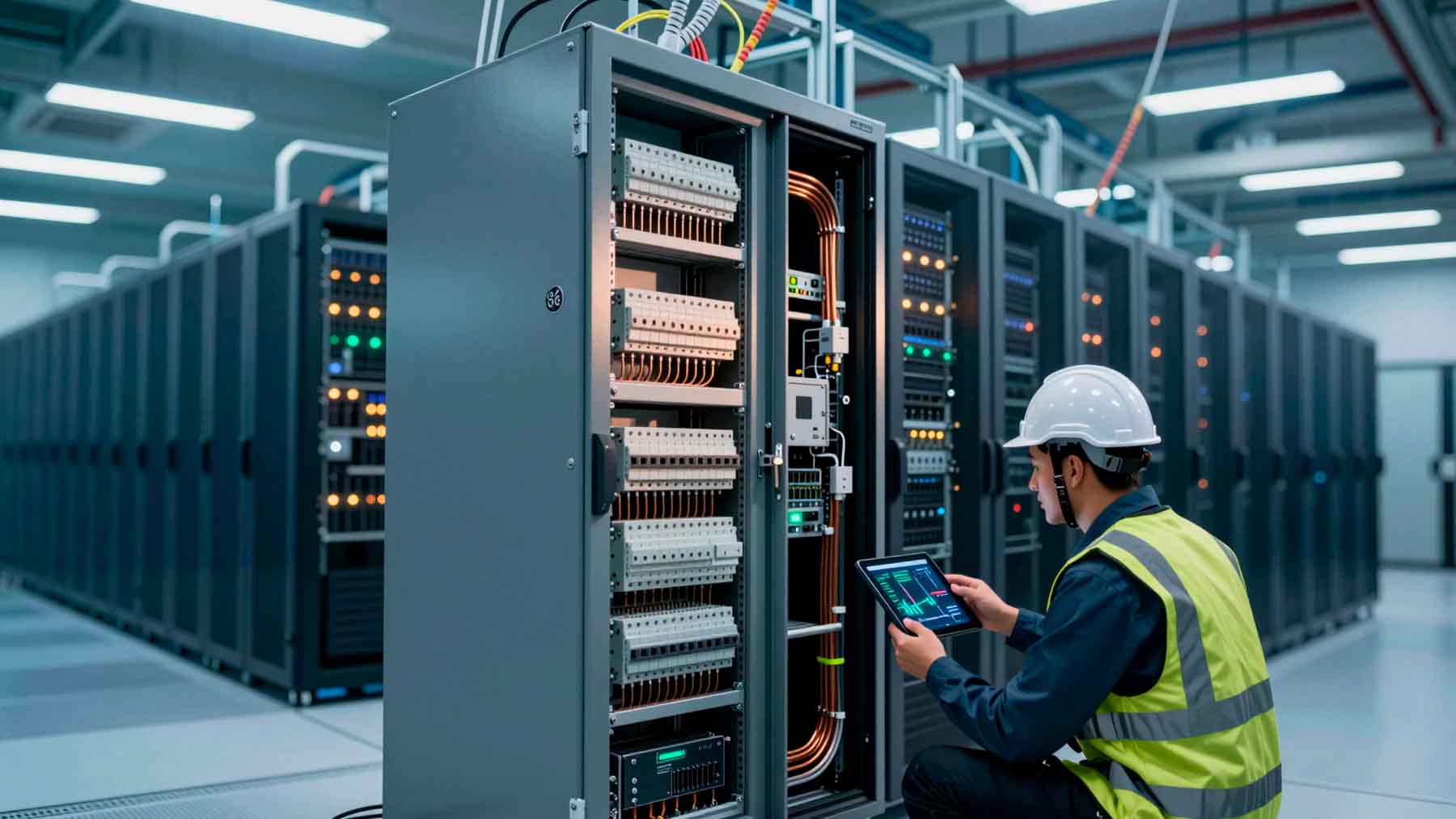 Image generated with artificial intelligence
GE Vernova (NYSE: GEV) announced on August 24, 2026, in Paris, a new medium-voltage uninterruptible power supply—the MV-UPS—designed to deliver continuous, stable power protection for AI data centers, AI factories, and other energy-intensive facilities.
The system moves power protection to medium voltage, letting a single coordinated setup cover much larger portions of a facility than conventional low-voltage configurations can. GE Vernova expects to start shipping the MV-UPS in mid-2027.
GE Vernova unveils MV-UPS for AI data centers and industrial facilities
GE Vernova made the announcement on August 24, 2026, at an event in Paris. The MV-UPS is built to keep critical operations running on stable, continuous, high-quality power around the clock—even when the incoming supply gets disrupted.
AI data centers and AI factories are the primary focus, but the product also aims at other energy-intensive industries where power continuity isn’t optional.
The target markets are broad. AI data centers and AI factories are the primary focus, but the product also aims at other energy-intensive industries where power continuity isn’t optional. First shipments are expected in mid-2027, with the first project energization planned for late 2027.
Why existing low-voltage UPS systems fall short for modern AI workloads
To understand why the MV-UPS matters, it helps to know how conventional power protection works—and where it breaks down.
Today, UPS protection is typically applied at low voltage, after electricity has already been stepped down from the grid. Individual, smaller sections of a facility each get protected separately. It’s a fragmented approach, and it leaves a real gap.
The problem is what happens upstream. When AI workloads shift suddenly—ramping up or down in seconds—those sharp swings in electricity demand get passed directly back to the grid or to on-site generation, creating strain. As AI data centers grow in scale and complexity, that strain only gets worse.
Electricity demand from AI facilities is accelerating fast, and even brief electrical disturbances can interrupt critical workloads. Scale, sensitivity, and volatility together make the limits of low-voltage protection increasingly hard to work around.
How the MV-UPS works and what it changes
The MV-UPS takes a fundamentally different approach by moving protection upstream, to the medium-voltage level.
Installed on a facility’s medium-voltage network—positioned between the power supply and the critical loads it serves—the system combines power-conversion technology, advanced controls, and integrated energy storage to maintain stable voltage and frequency. That upstream position is what makes the difference. Protection happens before electricity steps down, so one coordinated system can cover much larger blocks of critical load. Each downstream section no longer needs its own separate protection.
The MV-UPS also acts as a buffer, absorbing sudden shifts in facility demand before they can reach the grid or onsite generation. That improves grid stability and makes large AI loads easier to connect and manage. GE Vernova says the design helps customers meet power-quality and grid-connection requirements, enables more flexible use of energy storage, and can simplify downstream electrical infrastructure—potentially speeding up the build process.
Product fits into GE Vernova’s broader data center power portfolio
The MV-UPS doesn’t stand alone. GE Vernova positions it as a new building block within its existing end-to-end data center offering—what the company calls its power-to-rack approach.
That portfolio already spans a wide range of infrastructure: gas turbines for power generation, substations, high- and medium-voltage transformers, switchgear, and gas-insulated switchgear for grid connection. Energy management systems coordinate power supply with changing facility demand, while power-conversion technologies manage and deliver electricity inside the data center.
The MV-UPS adds a medium-voltage stability layer to that stack—a piece that was previously missing. Philippe Piron, CEO of GE Vernova’s Electrification segment, described the product as “the true end-to-end medium-voltage power stability solution for energy-intensive industries, including data centers,” and said it applies proven power-conversion and energy-storage technologies in a new way to meet the scale these load profiles now require.
GE Vernova is also developing solid-state transformer technology, designed to support more compact and efficient power conversion closer to the rack. Together with the MV-UPS, these technologies are intended to strengthen the company’s ability to meet the growing reliability, scale, and electrical-efficiency demands of AI data centers.
Integrated energy storage
Here’s what to keep in mind from this announcement.
GE Vernova introduced the MV-UPS on August 24, 2026, targeting AI data centers, AI factories, and energy-intensive industrial facilities. Moving power protection to medium voltage lets a single coordinated system protect much larger portions of a facility than conventional low-voltage setups can.
The system combines power-conversion technology, advanced controls, and integrated energy storage. By buffering sudden demand swings before they reach the grid or onsite generation, it aims to improve both facility reliability and broader grid stability.
First shipments are expected in mid-2027, with the first project energization in late 2027. The MV-UPS expands GE Vernova’s existing data center portfolio—which already includes gas turbines, transformers, switchgear, and energy management systems—and complements solid-state transformer technology currently in development. Additional technical specifications are available on GE Vernova’s website.

Kelly is an experienced writer with 15 years of experience exploring the big stories that shape our world, from tech breakthroughs and space exploration to climate, energy, and the fascinating quirks of science. She has a talent for turning complex ideas into sharp, memorable insights that stay with readers long after they’ve finished reading.
