
NVIDIA partners with Lancium and makes strategic investment to deploy AI infrastructure across 15+ GW campus pipeline
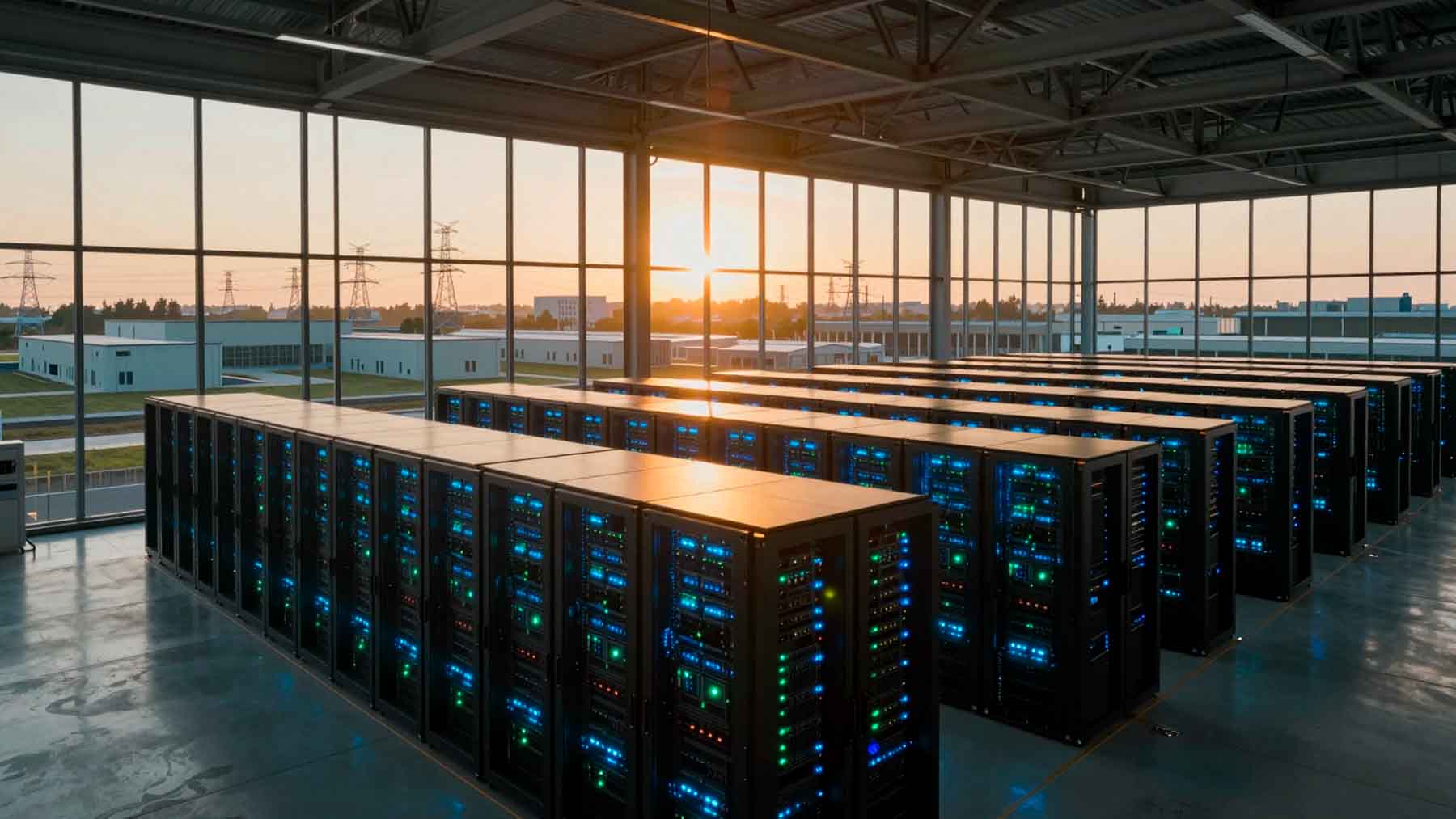 Image generated with artificial intelligence
NVIDIA just made a strategic investment in Lancium—and announced a collaboration to deploy its full-stack AI factory platform across Lancium’s power-ready campuses. The deal covers 4 gigawatts of leased capacity already in place, plus a development pipeline exceeding 15 gigawatts of powered land. That scale would put Lancium among the largest AI infrastructure deployment sites tied to NVIDIA’s accelerated computing, networking, and software stack.
NVIDIA invests in Lancium to scale AI factory deployments
With this investment, Lancium’s campuses become official strategic deployment sites for NVIDIA’s full-stack AI factory platform—accelerated computing, networking, and software included. Lancium is a portfolio company backed by Blackstone Energy Transition Partners (BETP) and Blackstone Multi-Asset Investing (BXMA), two of Blackstone’s largest investment vehicles.
The 4 GW of leased capacity already in place is significant on its own. What sets this apart, though, is the development pipeline—exceeding 15 GW of powered land—which puts Lancium in a different category from most AI infrastructure players entirely.
At this size, even small inefficiencies or outages translate into significant costs and delays, so that reliability isn’t incidental—it’s foundational.
The arrangement gives NVIDIA customers and partners direct access to large-scale, power-ready capacity built specifically for demanding AI workloads. That kind of ready-to-go infrastructure is genuinely hard to find right now.
Why the partnership was formed: Matching compute demand with power-ready infrastructure
The core problem isn’t complicated: demand for large-scale AI infrastructure has outpaced available capacity. Cloud partners and AI-native companies need power-ready sites fast, and finding them has become a real bottleneck.
Lancium spent years working on exactly that. The company assembled land, power access, and infrastructure expertise with gigawatt-scale deployment in mind—not something you build overnight, and precisely what made them attractive to NVIDIA.
Blackstone’s backing gave Lancium the capital to pull this off. Without that financial muscle, assembling 15+ GW of powered land simply wouldn’t be feasible. Michael McNamara, CEO and Co-Founder of Lancium, put it plainly: “We have spent years assembling the power, the land, and the infrastructure expertise needed to deliver AI data center capacity at a scale the world has never seen.” NVIDIA needed a partner with proven grid-responsive campus capabilities—somewhere its computing stack could be deployed quickly and reliably. Lancium fit that profile.
Technical approach: NVIDIA DSX tools to improve efficiency and GPU density
This partnership isn’t just about land and power. A specific technical framework guides how deployments will actually work.
The two companies will use NVIDIA DSX reference designs to speed up rollouts while improving performance per megawatt—a metric that matters enormously at this scale, since squeezing more compute out of every megawatt directly affects both profitability and deployment timelines.
One key piece is NVIDIA DSX MaxLPS, which lets Lancium fit up to 40% more GPUs within the same power budget. That’s a meaningful efficiency gain that could shift the economics of running large AI workloads across Lancium’s campuses. The other tool, NVIDIA DSX Flex, allows dynamic adjustment of AI factory power consumption in response to real-time grid conditions—making the “grid-responsive” label a technical capability rather than marketing language. Together, these tools target improvements in time to first token, revenue potential, and cost per token.
Expected effects: faster deployment and broader access for NVIDIA customers
The practical outcome is faster, more efficient access to NVIDIA’s full computing stack for a wide range of customers—cloud partners, AI-native companies, and AI infrastructure developers alike.
Grid-responsive campus design supports more reliable operations at gigawatt scale. At this size, even small inefficiencies or outages translate into significant costs and delays, so that reliability isn’t incidental—it’s foundational.
NVIDIA executives were direct about the ambition. Nico Caprez, vice president of global AI infrastructure growth at NVIDIA, said the partnership is “enabling a new generation of gigawatt-scale, power-ready AI factories,” allowing partners to “turn energy into intelligence at unprecedented scale.” The goal is to cut both deployment timelines and operational costs for NVIDIA’s growing customer base.
Background: Lancium, Blackstone, and the AI infrastructure investment landscape
Lancium sits at the intersection of two industries converging fast: energy infrastructure and AI compute. Blackstone—one of the world’s largest alternative asset managers—has backed Lancium through both its Energy Transition Partners and Multi-Asset Investing funds, a signal of how seriously the firm views this space.
Bilal Khan, Senior Managing Director at Blackstone, called the NVIDIA partnership “a strong testament to Lancium’s position at the epicenter of energy and AI infrastructure—two of Blackstone’s highest conviction investment themes.”
The deal fits a broader industry pattern as well. Energy-focused infrastructure companies are increasingly positioning themselves as essential partners for AI compute buildout, not just power suppliers. On NVIDIA’s side, taking a strategic stake in an infrastructure company reflects a broader effort by the chipmaker to secure capacity for its customers by getting closer to the physical infrastructure that runs its hardware.
What this deal means going forward
Scale, speed, and technical integration are what define this deal. Lancium brings 4 GW of leased, power-ready capacity plus a 15+ GW development pipeline; NVIDIA contributes its full-stack platform and DSX tooling to maximize efficiency within that infrastructure; Blackstone provides the capital backing to sustain development at this level.
For cloud providers, AI-native companies, and infrastructure developers, the practical benefit is faster access to large-scale compute capacity that’s already power-ready. The DSX tools—particularly MaxLPS and Flex—add efficiency and grid responsiveness that could meaningfully improve the economics of running AI workloads at gigawatt scale.
Kelly is an experienced writer with 15 years of experience exploring the big stories that shape our world, from tech breakthroughs and space exploration to climate, energy, and the fascinating quirks of science. She has a talent for turning complex ideas into sharp, memorable insights that stay with readers long after they’ve finished reading.
