
Duke University built a carbon-neutral campus over 18 years, then broke ground on a data center its own faculty say could end that record by 2026
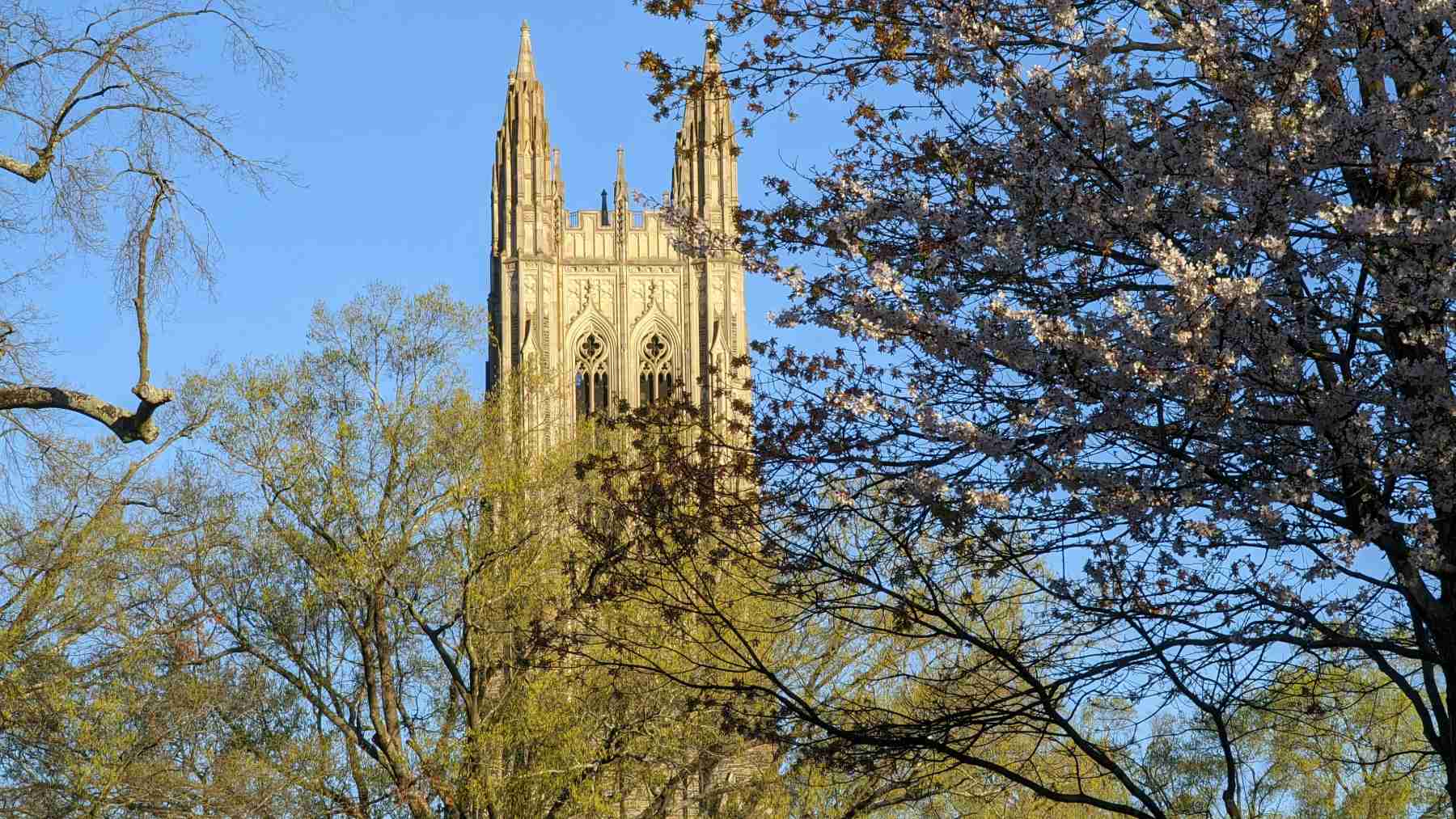
Duke University spent 18 years working toward carbon neutrality — and celebrated hitting that milestone in 2024 and 2025. Now contractors are preparing a 12-acre site on Central Campus in Durham, N.C., for a new data center, and some of the university’s own faculty are asking an uncomfortable question: will the school’s AI ambitions quietly undo what took nearly two decades to build?
The $23 million facility is modest by industry standards. But Duke has signaled it could be the first of several, and the energy and water demands of even small data centers add up fast — particularly in a region already facing extreme drought.
A campus milestone — and a new construction site
Duke’s path to carbon neutrality was neither quick nor simple. Between 2007 and 2025, the university cut its greenhouse gas emissions by 31 percent — even as campus population grew by 24 percent and three million square feet of new buildings were added. That combination of growth and reduced emissions is genuinely rare in higher education.
Duke’s main campus already consumes energy equivalent to 10,000 to 40,000 typical residential homes, split roughly evenly between electricity and natural gas.
The new data center, permitted on April 8 and currently in site preparation, occupies 12 acres along Yearby Avenue, near the university’s electric substation and water chiller plant. At 1.5 megawatts, with potential expansion to 3 MW, it’s a fraction of the scale of facilities built by Amazon or Google. University officials have described it as a model of “environmental responsibility and sustainability” — language that some faculty find optimistic given what the numbers actually show.
The energy and water math behind a ‘small’ data center
Duke’s main campus already consumes energy equivalent to 10,000 to 40,000 typical residential homes, split roughly evenly between electricity and natural gas. Adding a data center expected to increase total energy consumption by 2 to 3 percent at peak load may sound marginal — but if the university follows through on its vision of multiple nodes across campus and affiliated sites, those percentages compound quickly.
Water is the other variable that isn’t adding up comfortably. Data centers require significant cooling, and Durham is currently in extreme drought — one of 67 North Carolina counties in that category. City data suggests Durham has just over four months of easily accessible water remaining. The city’s Department of Water Management told Inside Climate News it has received no projected usage figures from Duke, a notable gap between active construction and a water authority with no consumption estimates in hand.
Carbon offsets, neutrality claims, and a looming deadline
Duke’s carbon neutrality achievement carries an asterisk worth examining. According to the university’s own climate commitment report, 65 percent of the benchmark was met through purchased carbon offsets rather than direct emissions reductions. Those offsets included manure digesters at dairy farms in Washington state, a landfill gas-to-electricity project in Montana, and refrigerant-destruction projects in the U.S. and Thailand.
Offsets are a legitimate tool in emissions accounting, but they’re also finite and sometimes contested. Faculty were informed at the March Academic Council meeting that Duke will no longer be carbon neutral after 2025. Prasad Kasibhatla, a professor of environmental chemistry at the Nicholas School of the Environment, said he suspected “most people don’t know that.” President Vincent Price acknowledged the tension directly: “There’s no retreat from our carbon neutrality goals,” pointing to 2050 as the university’s binding target.
Community concerns and the moratorium question
The site’s surroundings add another layer of complexity. Within a quarter mile sit Carolina Friends Early School, which serves children ages three to six; the Friends Meeting House; Ronald McDonald House; and Duke Gardens, which draws roughly 600,000 visitors annually. The head of school at Carolina Friends told Inside Climate News that Duke “has not shared any proposed development plans” with them.
Durham’s City Council adopted a 60-day moratorium on hyperscale data centers earlier this month, with a two-year moratorium planned for later this summer. Duke’s facility is exempt — the permit predates the moratorium, and state law bars local governments from imposing development moratoriums on projects with valid permits or substantial prior expenditures.
Community organizer Leslie St. Dre, founder of Community Land and Power, framed the exemption as a structural problem. “Twenty data centers that are 5 megawatts — that’s still 100 megawatts,” St. Dre said. The concern isn’t Duke alone. It’s the cumulative logic of treating each small facility as individually insignificant while the aggregate impact grows unchecked.
Duke’s bet: AI infrastructure as a sustainability laboratory
Duke’s provost, Alec Gallimore, has put forward a more optimistic framing — treating data centers not as energy liabilities but as distributed nodes sited deliberately near hot-water needs and renewable energy sources. Waste heat recovery is central to that argument: rather than venting hot air into the atmosphere, the design would channel hot water into the university’s existing heating plant, serving both campus buildings and the health system.
Duke’s AI steering committee has also recommended using the data center as a research platform, studying energy consumption, carbon intensity, and environmental impact in ways that could inform how other institutions build similar infrastructure. Emissions will be tracked on a public dashboard. The university is exploring renewable energy to power the facility, though specifics haven’t been announced.
What Duke is navigating isn’t unique to one university or one city. Institutions everywhere are being asked to expand AI capabilities at the same moment they’ve made binding climate commitments — and the two goals are pulling in opposite directions. Duke’s case stands out because the tension is so visible: a celebrated milestone, a construction permit, and faculty asking out loud whether the math still works. The honest answer, for now, is that nobody fully knows.

Carlos is an engineer with strong expertise in technical and industrial topics. He previously worked at international companies such as Siemens and is multilingual.
