
Philadelphia historic sites add solar, heat pumps, geothermal systems and recycled hot water
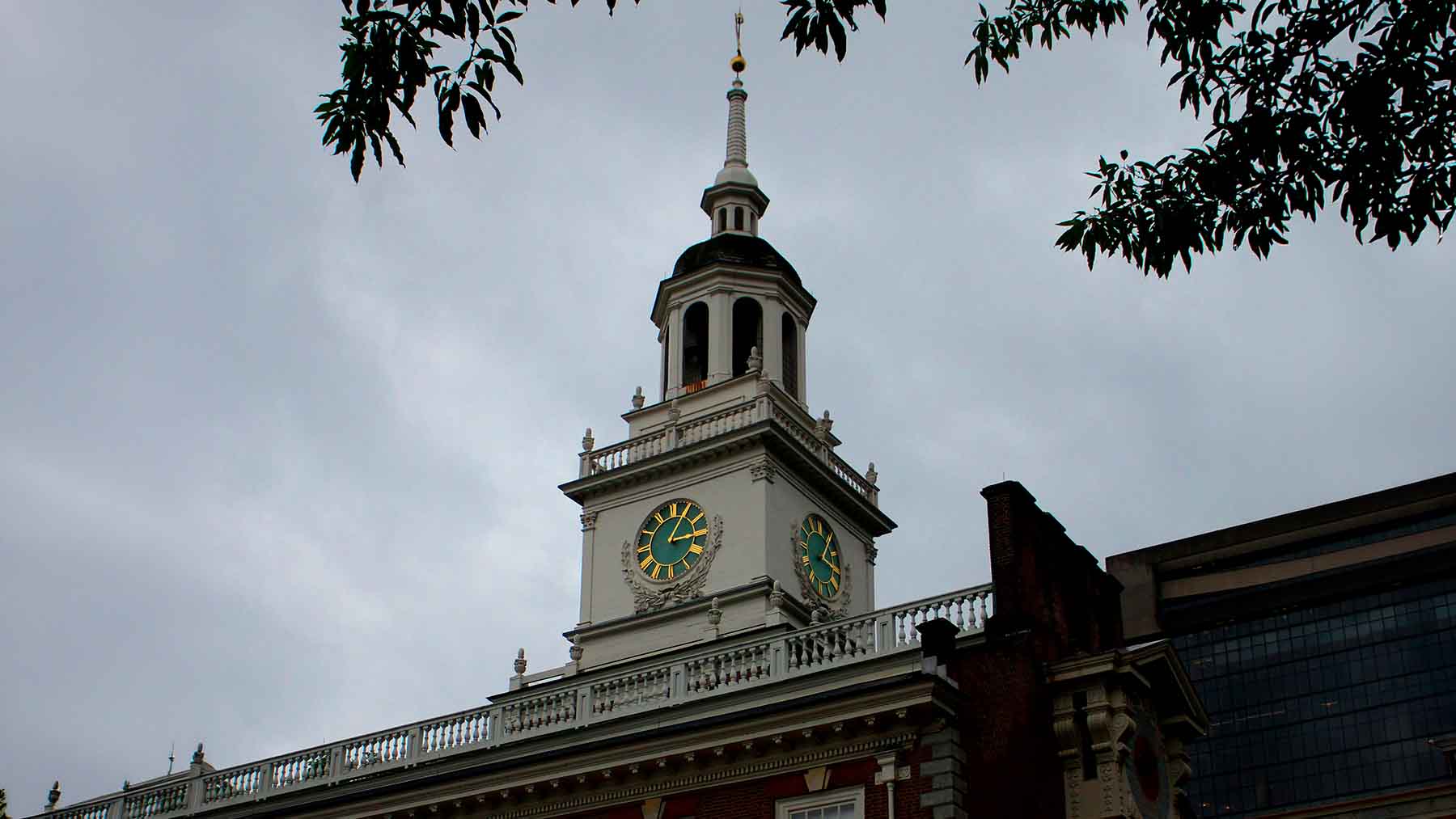 File Image
The Liberty Bell is among the historic landmarks receiving energy-efficient upgrades such as solar panels.
The United States is racing to meet ambitious national and global climate targets.
While modern infrastructure is easily deployed with advanced clean energy technologies, aging buildings are more challenging.
Additionally, fragile, old buildings cannot easily support heavy structures, modern wiring, or complex ductwork without risking irreversible damage.
Without these crucial changes, these monuments will prevent the nation from achieving its decarbonization goals.
Can Philadelphia’s modern upgrades boost sustainability while protecting centuries-old architectural treasures?
How America is prioritizing climate ambitions
With climate change accelerating, meeting strict decarbonization regulations has become vital.
Despite the urgency, several nations still struggle to offset carbon emissions.
The United States is among them, emitting approximately 6.2 billion tons of greenhouse gases each year.
This massive carbon footprint has anchored the US as one of the world’s largest carbon contributors.
Naturally, this directly conflicts with national and global climate commitments.
The nation has set federal targets requiring lowering greenhouse gas emissions by 50 to 52% below 2005 levels. This must be achieved by 2030.
Furthermore, the U.S. has also committed to the 2050 goal, which mandates economy-wide net-zero emissions.
By prioritizing these targets, the nation is actively contributing to limit global warming and prevent environmental degradation.
The rapid deployment of renewable energy infrastructure has become central to this mission.
However, these milestones cannot be achieved by updating modern industrial sectors alone.
When energy efficiency hits an invisible wall
Despite America’s lingering attachments to oil, the nation has achieved major milestones in clean energy deployment.
This is attributed to historic investments in a diverse mix of renewable energy sources.
Large-scale wind, solar, and energy storage systems drove the dramatic expansion of the U.S.’s green capacity.
Clean energy sources now account for almost 31.5% of the total utility-scale generation capacity.
However, despite these major achievements, America is still far from fulfilling long-term climate ambitions.
The main challenge lies with the nation’s legacy infrastructure.
Many heritage sites are not energy-efficient. Transforming them faces unique engineering barriers.
There are strict historic preservation regulations in place that limit exterior alterations.
Additionally, fragile, old buildings cannot easily support heavy structures, modern wiring, or complex ductwork without risking irreversible damage.
Yet the National Park Service is spearheading a $14 million modernization project that still meets strict conservation standards.
These upgrades are taking place while accommodating millions of visitors.
Philadelphia’s historic core solar upgrades and many more
Philadelphia has been heavily investing in clean energy, with the Independence National Historical Park being specifically targeted.
The Great American Outdoors Act funded this comprehensive modernization project.
The goal is to tackle aging heating and cooling infrastructure that is over five decades old.
An inefficient high-pressure steam line is being replaced with a closed-loop hot water network.
This upgrade will be made across multiple historic sites.
Individual buildings are also replacing fossil fuels.
Source heat pumps are being added to the Free Quaker Meeting House and Edgar Allan Poe National Historic Site.
The Declaration House will be installing an electric boiler.
Leviton is playing a significant role in the transformation of the Liberty Bell Center.
Special focus centering on the Liberty Bell Center
The facility will install solar panels for onsite clean power generation.
Leviton will supply specialized electrical and lighting controls, such as:
- Advanced solar cells
- Modular dimming lights
- Precision pushbutton stations
These controls will manage interior lighting and daylight harvesting for efficient artifact display.
The multi-million-dollar project at Independence National Historical Park is still underway.
The solar installations and infrastructure upgrades are complete.
The project’s proven success will serve as a critical framework for thousands of other national historical monuments. Ultimately, the U.S. can finally actively reduce carbon emissions without affecting structural integrity or the visitor experience.
Anke Maree is a writer with a clear and engaging editorial style. Her work focuses on making complex topics accessible, informative, and relevant for readers across different areas of interest.
