
Westinghouse signs conditional purchase orders with four Polish suppliers for safety-related modules at Lubiatowo-Kopalino AP1000 nuclear plant
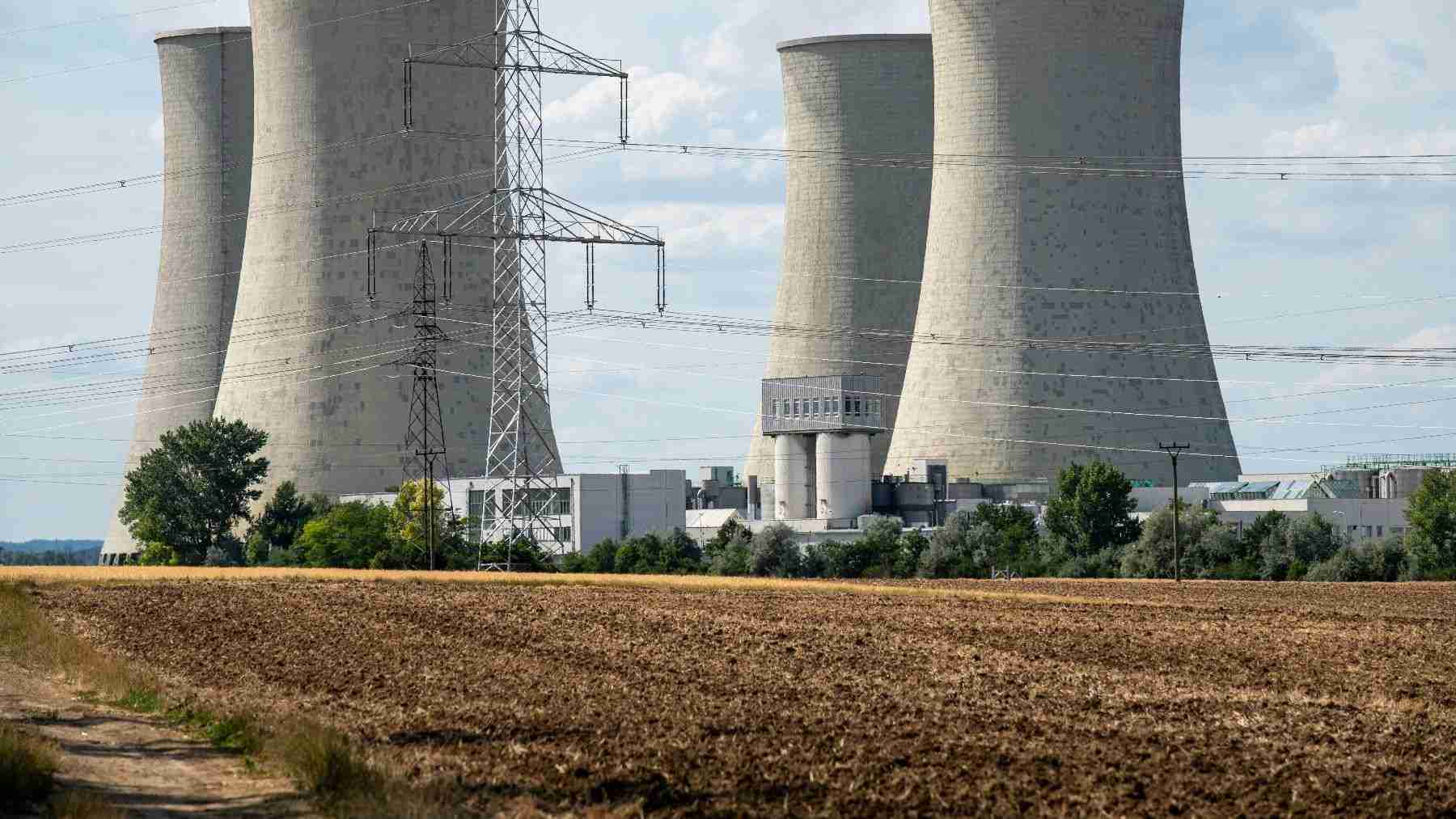
On October 13, 2026, at the 4th Nuclear Power Industry Congress in Warsaw, Westinghouse Electric Company placed conditional purchase orders with four Polish industrial firms — Energomontaż-Północ Gdynia, FAMAK, Mostostal Kielce, and Mostostal Krakow — to manufacture safety-related structural modules for Unit 1 of Poland’s first nuclear power plant at Lubiatowo-Kopalino.
The orders mark a concrete step toward localizing part of the AP1000 supply chain in Poland, signaling that domestic industry may play a direct role in building the country’s nuclear future.
Westinghouse awards conditional orders to four Polish firms
The signing took place during the 4th Nuclear Power Industry Congress organized by IGEOS in Warsaw — a fitting venue for an announcement that ties Polish industrial capacity directly to the country’s first nuclear project.
The mockup fabrication requirement goes further: suppliers must prove they can actually produce the components before receiving the full scope.
Each of the four companies received a distinct scope. Energomontaż-Północ Gdynia (EPG) was awarded the CA03 module scope, while FAMAK received the CA20 floors module scope. Mostostal Kielce took on the CA02 walls module scope, and Mostostal Krakow was assigned the CA05 walls module scope. Together, these cover critical structural elements inside the AP1000 reactor unit.
The word “conditional” carries real weight. Full project scope is only awarded once each supplier achieves NQA-1 nuclear quality assurance certification and successfully fabricates pre-production qualification mockups — proof that a company can handle safety-related nuclear manufacturing not just in theory, but on the shop floor.
The orders fall under Polskie Elektrownie Jądrowe’s (PEJ) broader program to develop Poland’s first nuclear power plant at the Lubiatowo-Kopalino site in Pomerania.
Why local suppliers were selected and what the conditions require
Westinghouse didn’t land on these four companies by chance. Its ongoing supplier development program has been actively guiding each firm toward NQA-1 compliance — a rigorous quality assurance standard specific to nuclear safety-related work. These conditional orders reflect where each company currently stands on that path.
Dan Lipman, President of Global Business Initiatives at Westinghouse, said the company has been “very impressed with the technical capabilities of Polish industry.” That assessment drove the decision to establish manufacturing partnerships for safety-related modules — components that leave zero room for quality shortcuts.
The conditions attached to the orders function as a structured readiness test. NQA-1 certification confirms a supplier’s quality management system meets nuclear standards. The mockup fabrication requirement goes further: suppliers must prove they can actually produce the components before receiving the full scope.
PEJ President Marek Woszczyk framed the orders as evidence of forward momentum, noting that the progress EPG, FAMAK, Mostostal Kielce, and Mostostal Krakow have made toward NQA-1 requirements reflects both the strength of Polish industry and its potential to enter the global AP1000 supply chain.
What each module does inside the AP1000 reactor unit
Understanding what these modules actually do helps clarify why manufacturing quality is so tightly controlled.
The CA02 and CA03 modules both form part of the in-containment refueling water storage tank, located inside the containment building. This tank plays a role in the reactor’s passive safety systems, storing water used during refueling and certain safety responses. It’s not a peripheral component — it sits at the heart of how the AP1000 manages emergencies without active intervention.
The CA05 walls module is made up of reinforced steel plates, creating the walls that separate different rooms inside the containment building and helping isolate systems and manage the internal layout of the unit.
Built from reinforced concrete slabs placed on steel plates, the CA20 floors module forms the floors of the larger CA20 structure, which houses plant equipment inside the unit. Getting the geometry and structural integrity right on these components matters enormously during construction. Modular fabrication is one of the AP1000’s defining design features — building large structural modules off-site in parallel with civil work is intended to compress the overall schedule, which is part of why supplier readiness and the mockup requirement are taken so seriously.
Context: AP1000 technology and Poland’s nuclear program
Westinghouse describes the AP1000 as the only operating Generation III+ reactor with fully passive safety systems, a modular construction design, and the smallest footprint per megawatt-electric on the market. Those characteristics have made it a competitive option for countries building new nuclear capacity.
Six AP1000 reactors are currently in operation worldwide, with fourteen more under construction and five additional units under contract. The technology has been selected for nuclear energy programs in Poland, Bulgaria, and Ukraine, and is under consideration at other sites across Europe, the Middle East, and North America.
For the Polish suppliers involved, the stakes extend well beyond a single project. Lipman noted that the experience these companies gain could position them to participate in additional AP1000 projects both in Poland and internationally — clearing the NQA-1 bar now could open doors across a growing global pipeline.
What this means for Poland’s nuclear timeline
These conditional purchase orders represent a measurable step forward in Poland’s nuclear buildout. Not a final commitment, but a structured path toward one. Four Polish companies now have a defined target: achieve NQA-1 certification, demonstrate manufacturing readiness through qualification mockups, and earn the full scope.
Westinghouse Nuclear‘s supplier development program continues running alongside that process. PEJ’s project at Lubiatowo-Kopalino remains the anchor, but the broader AP1000 expansion gives Polish suppliers a wider stage to perform on — if they clear the qualification hurdles ahead.
Kelly is an experienced writer with 15 years of experience exploring the big stories that shape our world, from tech breakthroughs and space exploration to climate, energy, and the fascinating quirks of science. She has a talent for turning complex ideas into sharp, memorable insights that stay with readers long after they’ve finished reading.
