
Scientists found a solar cell ingredient that “wakes up” in sunlight and keeps the panel from falling apart
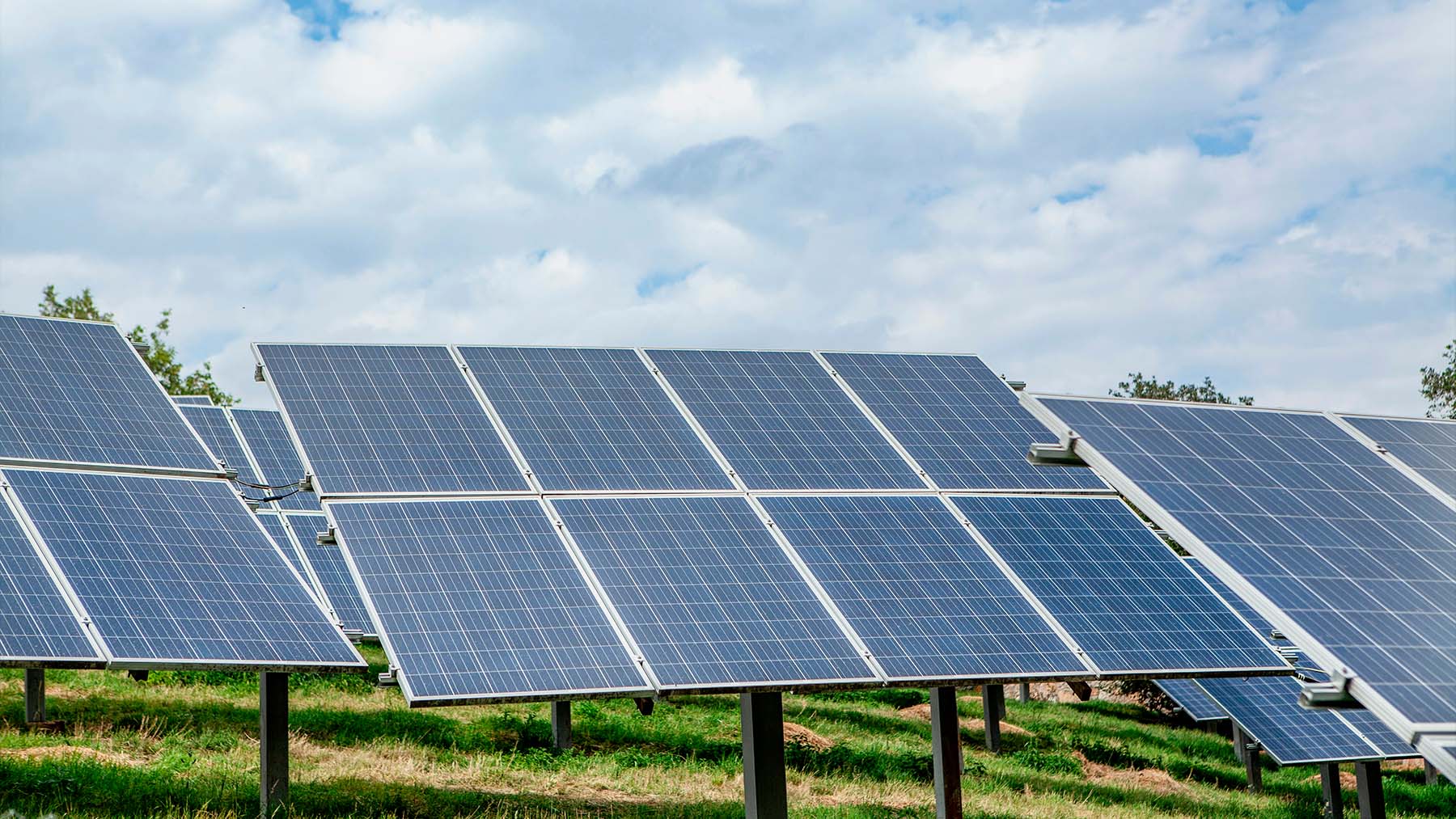
Perovskite solar cells carry one of the most frustrating contradictions in renewable energy: the same sunlight they’re built to harvest also causes them to fall apart. These materials absorb light with remarkable efficiency, yet exposure to illumination triggers a chemical instability that quietly erodes performance over time.
Tandem solar cells — which stack two light-absorbing layers to capture a broader slice of the solar spectrum — amplify both the promise and the problem. Researchers say they’ve found a chemical additive that changes its own behavior once light hits it, potentially turning that instability into something manageable.
The self-defeating problem inside perovskite solar cells
Tandem solar cells use a front layer made of wide-bandgap mixed-halide perovskites — materials engineered with high bromine content to absorb high-energy light that a rear organic layer can’t reach. Each layer handles a different slice of the solar spectrum, squeezing more energy out of the same patch of sunlight.
It also accelerates halide mixing during annealing — the heat treatment that finalizes the film’s structure — producing a more homogeneous starting material.
The trouble starts during manufacturing. When the perovskite film forms, bromine-rich phases precipitate too quickly, leaving halide ions unevenly distributed. Once the cell is running, light-induced halide segregation kicks in: iodide and bromide ions begin to separate, creating defects that trap charge carriers and allow ions to migrate — both of which bleed away efficiency and accelerate degradation. Together, these two failure modes have capped what perovskite–organic tandems can achieve and cut short their useful lives.
A molecule that changes its own shape in sunlight
The additive at the center of this research is called TDB, short for 4-[3-(trifluoromethyl)-3H-diazirin-3-yl]benzylamine. Its defining feature is unusual: TDB is photo-transformable. When light hits it, the molecule physically converts into a new species that bonds more strongly to perovskite grain-boundary surfaces than its original form ever could.
Grain boundaries are the weak points in a perovskite film — interfaces between crystalline regions where defects accumulate and ions migrate freely. Most chemical additives used in solar research are static, doing their job during fabrication and then sitting inert. TDB adapts. Its most consequential work begins at the exact moment the cell starts operating.
Two problems, one two-stage fix
During crystallization, TDB works in its original form, suppressing rapid precipitation of the bromine-rich phase responsible for uneven halide distribution. It also accelerates halide mixing during annealing — the heat treatment that finalizes the film’s structure — producing a more homogeneous starting material.
Stage two begins when the cell turns on. Light transforms TDB into a new molecular species that binds tightly to grain-boundary surfaces and inhibits iodide-related defect formation. Carrier trapping is suppressed — electrons and holes flow out as current rather than getting stuck at defect sites — and ion migration, which disrupts the cell’s internal structure over time, is curtailed. One additive handles two distinct failure modes without requiring any changes to the rest of the cell’s design.
Record numbers on the scoreboard
The results are measurable and specific. The wide-bandgap perovskite sub-cell achieved a power conversion efficiency of 20.01%, an open-circuit voltage of 1.42 V, and a fill factor of 85.13% — strong figures for a front-layer cell operating at a bandgap of 1.88 eV.
The full perovskite–organic tandem reached 28.80% PCE, with a certified steady-state efficiency of 28.04% from independent verification. Conventional silicon solar panels typically convert sunlight at 20–22% efficiency in commercial products, which puts these numbers in sharper relief. The cell also retained 90% of its initial efficiency after 625 hours of continuous illumination under the ISOS-L-1 stability protocol.
What comes next for tandem solar technology
Six hundred and twenty-five hours is a promising start — not a commercial lifetime. Real-world solar panels are expected to operate for 25 years or more, and the gap between laboratory stability tests and field deployment remains one of the field’s most stubborn challenges.
Large-area fabrication is another open question. Achieving uniform film quality across small lab-scale samples is far easier than reproducing it across panels sized for rooftops or solar farms. Even so, the photo-transformable additive strategy opens a conceptual door; similar approaches may prove useful for other perovskite designs facing related instability problems.
The certified 28.04% result makes perovskite–organic tandems harder to dismiss. Silicon has a theoretical efficiency ceiling that practical engineering rarely approaches, and tandem architectures offer a credible path past it. This research suggests that path is getting clearer.
Discover more here: Wu, R., Qin, S., Zou, T. et al. Perovskite–organic tandem solar cells with a photo-transformable stabilizer. Nature 656, 616–623 (2026). https://doi.org/10.1038/s41586-026-10869-x
Daniel García is an Editor-in-Chief with strong expertise in structural work and engineering principles. He combines this technical foundation with deep knowledge of energy, spatial design, and emerging technologies, bringing a forward-thinking and analytical approach to editorial leadership.
