
Hengyi Industries awards Honeywell contract to more than double Brunei refinery capacity by 2029
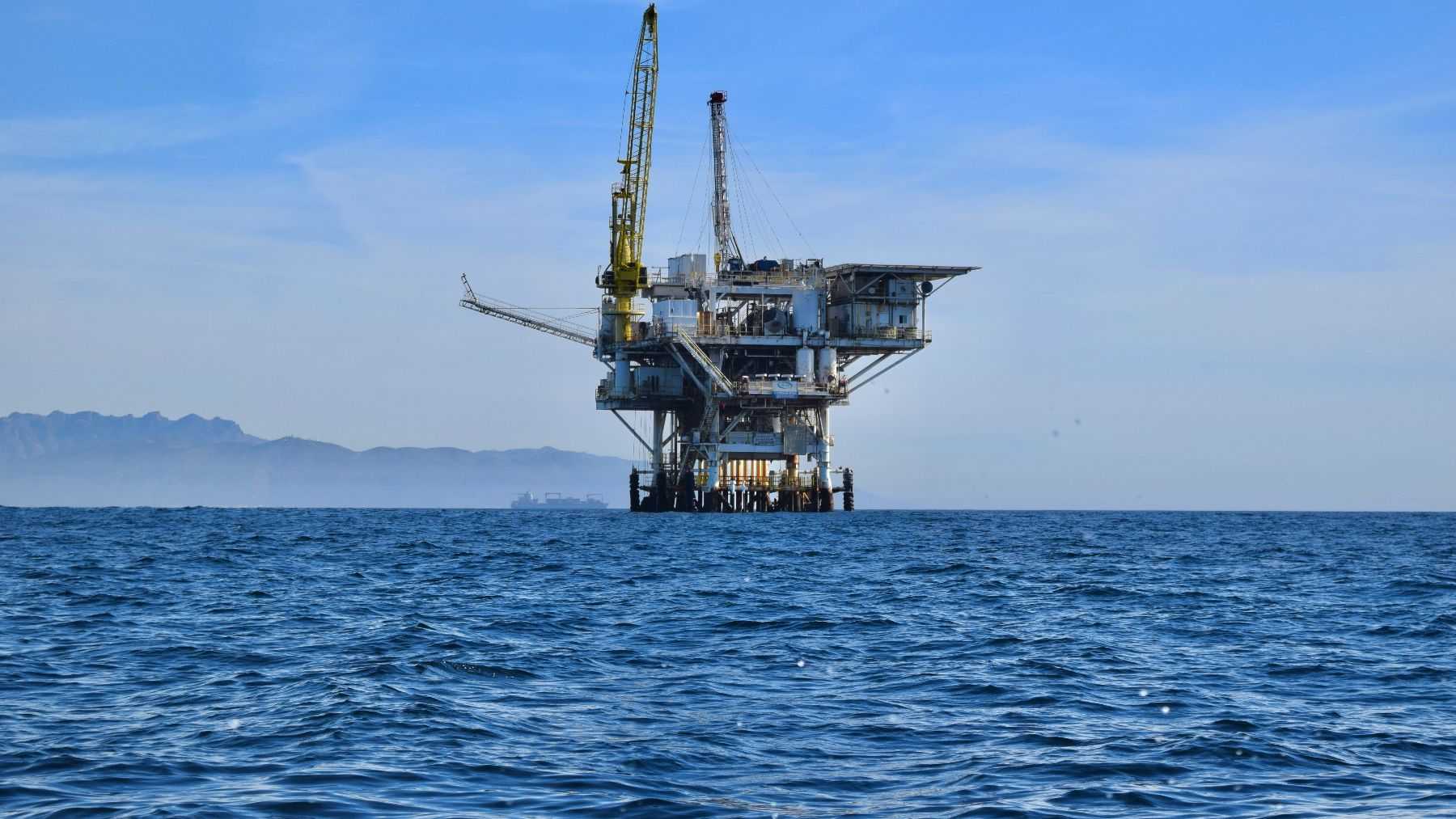
Hengyi Industries handed Honeywell Technologies a contract to supply process technologies and services for the Phase II expansion of its Pulau Muara Besar integrated refining and petrochemical complex in Brunei. The companies announced the deal on October 14. The goal: more than double the facility’s crude processing capacity — from roughly 8–9 million metric tons per year today to approximately 20 million metric tons per year — by early 2029.
Hengyi awards Honeywell contract for Brunei refinery Phase II
Hengyi Industries Sdn. Bhd. is a subsidiary of China’s Zhejiang Hengyi Group Co. Ltd. The parent company runs significant petrochemical operations across Asia, and its Brunei arm has been steadily building out the PMB complex as a major downstream hub. This contract brings Honeywell in as the primary technology provider for the site’s next major growth phase.
Under the agreement, Honeywell will deliver technology licensing, engineering, proprietary equipment, catalysts, and technical support. The processes covered are substantial in scope: CCR Platforming, Unicracking, Unionfining, Butamer, and C4 Oleflex, plus an aromatics complex built around Honeywell’s light desorbent Parex technology. Together, these units span the full range of refining and petrochemical conversion processes needed to pull higher-value products out of crude oil.
Brunei has long leaned on oil and gas exports as the backbone of its economy, but raw commodity exports leave significant value on the table.
Why Hengyi is expanding: Brunei’s downstream ambitions and capacity constraints
The numbers tell a clear story. The PMB complex currently processes between 8 and 9 million metric tons of crude per year. Phase II pushes that figure to approximately 20 million metric tons — more than doubling throughput at a single integrated site.
That kind of capacity jump doesn’t happen in a vacuum. Brunei has long leaned on oil and gas exports as the backbone of its economy, but raw commodity exports leave significant value on the table. Phase II ties directly to the country’s broader strategy of capturing more of that value at home — converting crude into refined products and petrochemicals rather than shipping it out unprocessed.
Expanding downstream also means growing Brunei’s petrochemical industry more broadly. Higher-value outputs — from aromatics to specialty fuels — generate more economic activity and more jobs than crude exports alone. For a small nation with substantial hydrocarbon reserves, that’s a meaningful shift in economic positioning.
Honeywell noted that its technology is intended to improve the complex’s overall efficiency and reliability, not just add raw capacity. That dual focus — more throughput alongside better performance — suggests Hengyi is thinking about long-term competitiveness rather than near-term volume targets alone.
Project timeline and scale of new installations
Hengyi has set mechanical completion of the Phase II expansion for the end of 2028, with startup anticipated in early 2029. That’s a tight window for a project of this scale, but the timeline reflects the ambition behind it.
When the new units come online, they’ll be hard to ignore globally. Honeywell said the planned hydrocracking, aromatics, and dehydrogenation installations will rank among the largest of their kind anywhere in the world — a notable claim that underscores how significant this expansion is, not just for Brunei, but for the broader refining and petrochemical industry.
Honeywell didn’t disclose the contract’s financial value or the individual capacities of the units being added. Those details remain under wraps for now. What’s clear is that the combined effect — improved efficiency, greater reliability, and a much larger production base for higher-value petrochemicals — positions the PMB complex as a genuinely major player in the regional downstream landscape.
Background: PMB complex and the project SINAR solar initiative
The Pulau Muara Besar complex sits within the Pulau Muara Besar Industrial Park in Brunei. It’s an integrated refining and petrochemical site, meaning crude oil enters at one end and a range of refined products and chemical feedstocks come out the other. Phase II builds on an already substantial operation.
Earlier in 2026, Hengyi made a different kind of announcement for the same site. The company commissioned Project SINAR — short for Sustainable Integration of Natural and Renewable Energy — integrating solar power directly into refinery operations. It’s a notable step for an industry not typically associated with renewable energy adoption.
Stage 1 of Project SINAR can generate up to 84,000 MWh per year, covering roughly 7% of the complex’s total energy requirements. A meaningful slice, even if the majority of demand still comes from conventional sources. Hengyi also projected the solar project would cut annual carbon emissions by up to 137,180 metric tons per year — a material reduction for a refinery of this size, and a signal that sustainability is starting to factor into the company’s operational planning.
What this deal means for the PMB complex going forward
Taken together, the Honeywell contract and Project SINAR paint a picture of a facility in active transformation. Hengyi is simultaneously scaling up capacity and taking initial steps to reduce its environmental footprint — two tracks that don’t always run in parallel in this industry.
The Phase II expansion is the bigger story here, with Honeywell supplying CCR Platforming, Unicracking, Unionfining, Butamer, C4 Oleflex, and Parex aromatics technology across the site. Mechanical completion is targeted for late 2028, startup expected shortly after. If the timeline holds, the PMB complex will emerge as one of the world’s largest integrated refining and petrochemical sites, anchoring Brunei’s push well beyond crude exports and into higher-value downstream production.
Kelly is an experienced writer with 15 years of experience exploring the big stories that shape our world, from tech breakthroughs and space exploration to climate, energy, and the fascinating quirks of science. She has a talent for turning complex ideas into sharp, memorable insights that stay with readers long after they’ve finished reading.
