
Wind farms hide a “shadow” problem and scientists finally caught the wrong culprit solving it
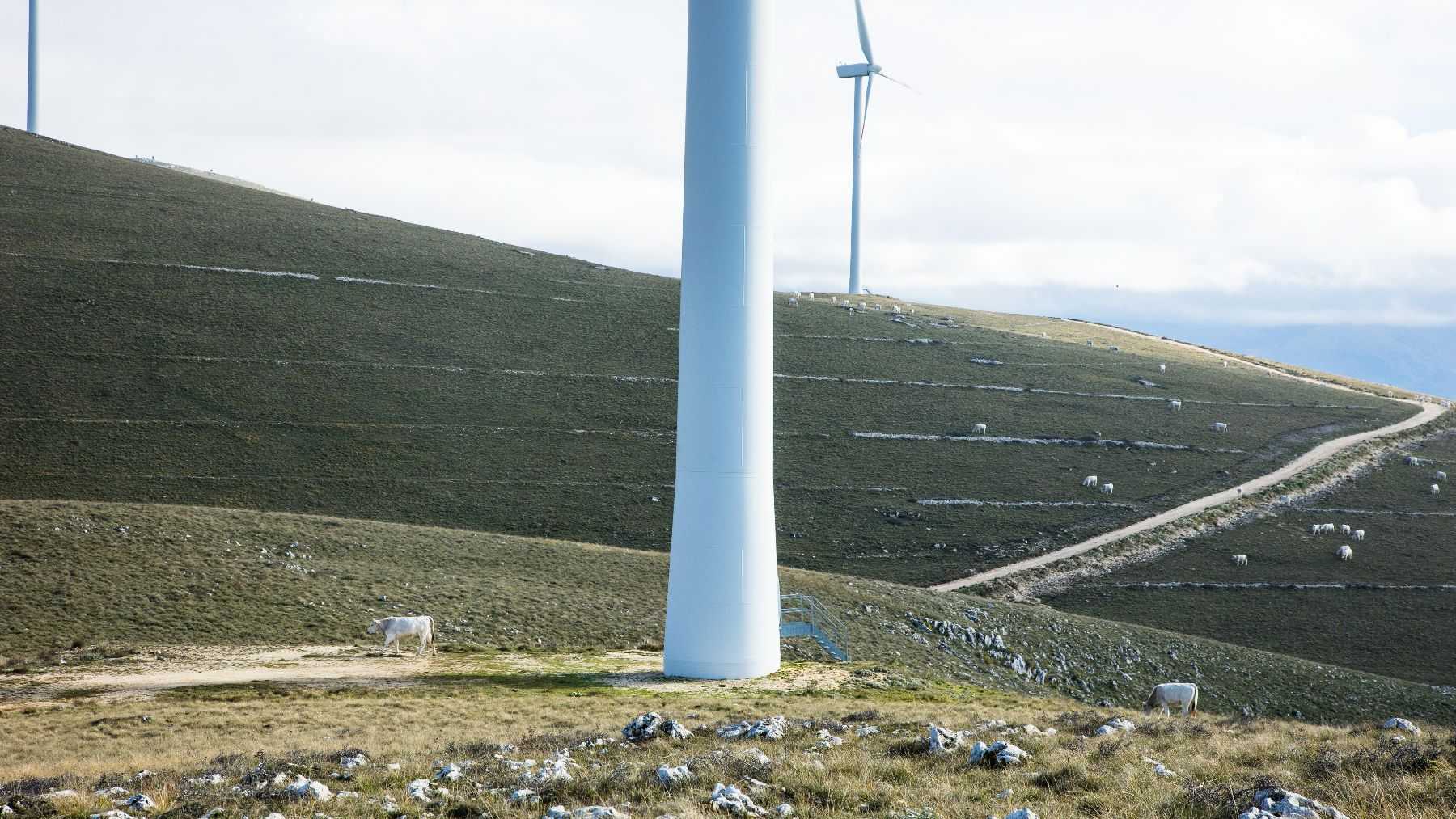
Wind farms lose a surprising share of their potential output to a simple problem: each turbine carves a corridor of depleted, slower-moving air — called a wake — that weakens the turbines lined up behind it. For years, scientists believed turbulent airflow was the key to solving this, mixing fresh energy back into the wake and speeding its recovery.
A new laboratory study of a miniature vertical axis wind turbine suggests that explanation may be fundamentally wrong.
The wake problem at the heart of wind farm efficiency
When a turbine spins, it pulls energy from the wind moving through it. What’s left downstream is a wake — a region of slower, more chaotic air that can significantly cut the output of any turbine sitting in its path. In large wind farms, where turbines are arranged in rows, this effect compounds fast, and downstream machines may operate in persistently degraded conditions, dragging down the farm’s overall yield.
Many of those models credit turbulent mixing as a meaningful recovery driver, and if that assumption is wrong, they may be systematically miscalibrated.
Vertical axis wind turbines, or VAWTs, handle this differently than the familiar three-blade horizontal axis designs. Their twin-rotor configuration rotates around a vertical shaft, and research suggests their wakes recover faster — meaning the depleted air behind them regains energy more quickly, so downstream turbines encounter better wind conditions sooner.
The long-standing explanation for this faster recovery has centered on turbulence. The assumption: turbulent inflow — already-chaotic air arriving at the turbine — accelerates wake recovery by mixing energetic air from outside the wake back into the depleted zone. It’s an intuitive idea. And it may be wrong.
A miniature turbine in a water tank — and what it revealed
To test this assumption directly, researchers built a 1/450-scale model of a twin-rotor VAWT and submerged it in a flume tank — a controlled channel of flowing water that mimics wind behavior at small scale. Water, being denser than air, allows fine-grained measurements at manageable speeds.
Velocity measurements were taken using laser Doppler velocimetry, or LDV — a technique that uses laser beams to detect the speed of tiny particles suspended in the fluid, precise enough to capture subtle variations in flow across the wake region.
The experiment ran under two conditions: low inflow turbulence and meaningfully higher inflow turbulence. Researchers used the momentum budget equation — a physics framework accounting for every mechanism contributing to momentum transport — to determine exactly which processes were doing the work. Comparing the two conditions let them isolate turbulence’s effect on wake recovery.
Turbulent mixing: a popular explanation that doesn’t hold up
Here’s where the results get interesting. When researchers examined the momentum budget terms, the turbulent transport terms — the mathematical quantities representing turbulent mixing — weren’t a significant contributor to wake replenishment under either condition.
This directly contradicts the prevailing assumption. Scientific literature has frequently pointed to turbulent mixing as the explanation for why wakes recover faster under turbulent inflow. The data from this experiment don’t support that story. What makes the finding harder to dismiss is that the two test conditions weren’t marginally different — inflow turbulence levels were meaningfully distinct between them. If turbulent mixing were truly driving faster recovery, its fingerprint should have appeared clearly in the momentum budget. It didn’t.
Vertical advection: the mechanism wake recovery actually runs on
What the momentum budget did identify as dominant was vertical advection — the downward transport of faster-moving air from above the rotor height into the slower wake region below. Think of it as a natural replenishment mechanism: higher-energy air aloft gets pulled down into the energy deficit the turbine leaves behind.
This finding aligns with prior research pointing to vertical advection as a key mechanism, but the new study adds an important layer. Under turbulent inflow conditions, vertical advection doesn’t intensify — it simply begins earlier in the wake. The onset shifts upstream.
The study also examines the role of the vertical turbulence gradient in triggering this earlier onset. That gradient — the way turbulence intensity varies with height — appears to influence when and where the downward transport of momentum kicks in, rather than contributing a separate mixing effect of its own.
What this means for how we design and model wind farms
The practical stakes are real. Wind farm layout optimization relies on wake models to predict how turbines interact and where to place them for maximum output. Many of those models credit turbulent mixing as a meaningful recovery driver, and if that assumption is wrong, they may be systematically miscalibrated.
Misattributing the mechanism could lead to suboptimal spacing decisions — placing turbines too close or too far apart based on a flawed picture of how wakes actually heal. Correcting the underlying physics could improve layout choices and, ultimately, energy yield.
VAWTs are attracting renewed interest for offshore and urban deployments, where space constraints and variable wind conditions make wake behavior especially consequential. Follow-up studies at full scale and in real atmospheric conditions will be needed to confirm whether these laboratory findings hold outside a flume tank — but the direction is clearer. The field’s focus on turbulent mixing as the primary recovery driver may have been pulling the wrong handle all along.
You can check the full study here: Querat, S., Augier, B., Träsch, M., Grégory, G., Barre, S., Delon, A., and Matthieu, M.: Effect of inflow turbulence on the wake replenishment mechanisms of twin rotor vertical axis wind turbine, Wind Energ. Sci. Discuss. [preprint], https://doi.org/10.5194/wes-2026-160, in review, 2026.

Daniel García is an Editor-in-Chief with strong expertise in structural work and engineering principles. He combines this technical foundation with deep knowledge of energy, spatial design, and emerging technologies, bringing a forward-thinking and analytical approach to editorial leadership.
