
At Idaho National Laboratory, a reactor built in a factory went critical at 1 a.m. on the Fourth of July, and it did so without a single poured foundation
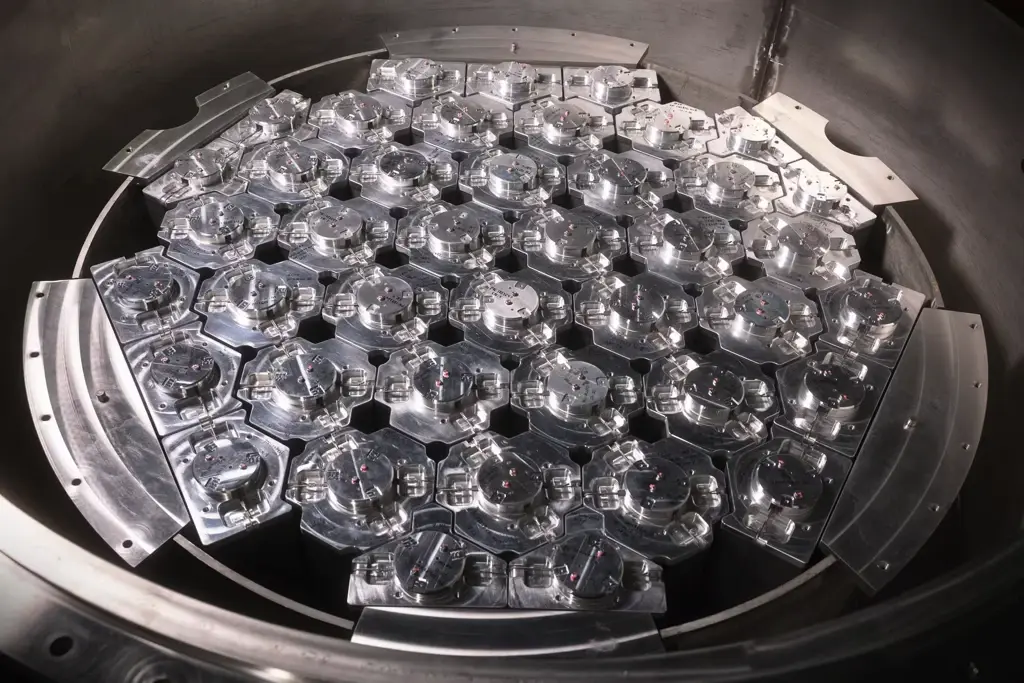
At one in the morning on the Fourth of July, a control room lit up with a single number crossing one.
That number meant a nuclear chain reaction had started sustaining itself.
No crane had lowered a reactor vessel into a freshly poured basemat.
The unit itself is a research scale machine, built to validate Aalo’s reactor physics and manufacturing approach rather than to generate commercial power.
No concrete had cured for months beforehand.
The machine that went critical that night had arrived largely assembled, the way a shipping container arrives on a flatbed truck.
That detail is the whole story, and it is also the question the first section has to answer.
Why building it like a product instead of a building made the difference
The reactor, built by Austin based Aalo Atomics, is what the industry calls a factory fabricated microreactor, meaning its core components were manufactured, wired and pressure tested at a plant before ever reaching the test site. Traditional reactors are built in place, poured and welded over years on the exact patch of ground where they will run.
Aalo’s approach treats the reactor more like a modular industrial skid than a civil engineering project. A conventional plant’s schedule is dominated by site specific civil works, the foundations, containment structures and cooling infrastructure poured and cured over many seasons.
Aalo’s Critical Test Reactor needed none of that scale of groundwork, because the pieces were already built correctly before they arrived. So the milestone on the Fourth of July was not really about the physics of fission, which has not changed in seventy years.
It was a demonstration that the manufacturing sequence itself can be compressed into something closer to an assembly line delivery, and the reactor still performed exactly as modeled once put together.
What stood at Idaho National Laboratory in the hours before dawn
The Critical Test Reactor sits inside the Department of Energy’s Reactor Pilot Program at Idaho National Laboratory, a sprawling federal site in the high desert east of Idaho Falls that has hosted reactor experiments since the earliest days of the nuclear age. The unit itself is a research scale machine, built to validate Aalo’s reactor physics and manufacturing approach rather than to generate commercial power.
Engineers worked through the overnight shift, watching neutron counts climb as control rods were withdrawn in careful increments. What was unusual was everything that had happened in the months before that control room, not the control room itself.
Aalo had broken ground on the site only months earlier, a timeline the Reactor Pilot Program was explicitly designed to test. The federal initiative set a blunt target, pushing multiple companies to build and achieve criticality in reactors authorized outside the normal national laboratory process within roughly a year, treating construction less like a decade long megaproject and more like a product launch with a hard ship date.
How the Fourth of July reactor fits a summer of five criticalities
Aalo’s reactor was not the only machine to cross that threshold this year. Antares Nuclear’s Mark-0 reactor reached initial criticality in early June, followed closely by Valar Atomics’ Ward 250 reactor, and Deployable Energy’s Unity demonstration reactor went critical on July 1, just three days before Aalo’s unit.
Oklo’s Groves Isotope Test Reactor followed in early August, built on private land in Texas rather than federal ground, and that Lockhart build closed the gap in under a year.
The Department of Energy’s Office of Nuclear Energy called Aalo’s reactor one of five advanced designs authorized under the pilot program to achieve criticality that summer, a run of milestones officials framed as evidence that the program’s regulatory shortcuts were working as intended. Oklo cofounder and chief executive Jacob DeWitte, whose own company’s reactor crossed the same threshold a month later, called the pace achieved under the program an incredible milestone for the teams involved.
Where the comparison to a finished power plant still breaks down
None of this means a factory built reactor is ready to sell electricity. The Critical Test Reactor is a low power research unit, and Aalo has been candid that a commercial, grid connected version remains a separate and much larger undertaking.
That gap is where skepticism about the whole Reactor Pilot Program tends to concentrate. Critics of the compressed federal timeline have noted that criticality, while a genuine physics milestone, is also one of the earliest steps in a reactor’s life, well short of the licensing, fuel cycle and grid integration work a commercial plant still has to clear.
Even so, the manufacturing lesson travels regardless of how long commercialization takes. According to the trade outlet World Nuclear News, the reactor reached criticality in the early hours of Saturday morning, making it the fourth microreactor to clear the federal deadline. If a reactor’s core components can be built, tested and shipped from a factory floor, the bottleneck shifts away from pouring concrete on site and toward building enough factory capacity to make reactors the way shipbuilders already make complex machines.
What a desert sunrise after criticality actually settles
The sun came up over Idaho National Laboratory a few hours after Aalo’s reactor crossed into a self sustaining reaction, and the Fourth of July continued as a federal holiday for almost everyone else on site.
What the milestone settles, carefully, is that a factory assembled core can behave exactly as its designers modeled once connected and brought to power, a narrower claim than proving a new industry has arrived. What remains open is whether that same manufacturing logic holds up at the larger scale a genuine power reactor requires.
For an industry whose last major wave of plants took decades to permit and build, five criticalities in one season is a real data point rather than a promise. That next test, whether at a gigawatt project in Indiana or at a federal test site in the desert, will decide if this summer’s pace was the start of something durable.

Hugo is an engineer with strong technical expertise. Multilingual from an early age, his writing combines technical clarity with a strong interest in science and energy.
