
Robots at a Spanish solar farm learn to clean panels, cut vegetation and inspect equipment while a central computer assigns their tasks
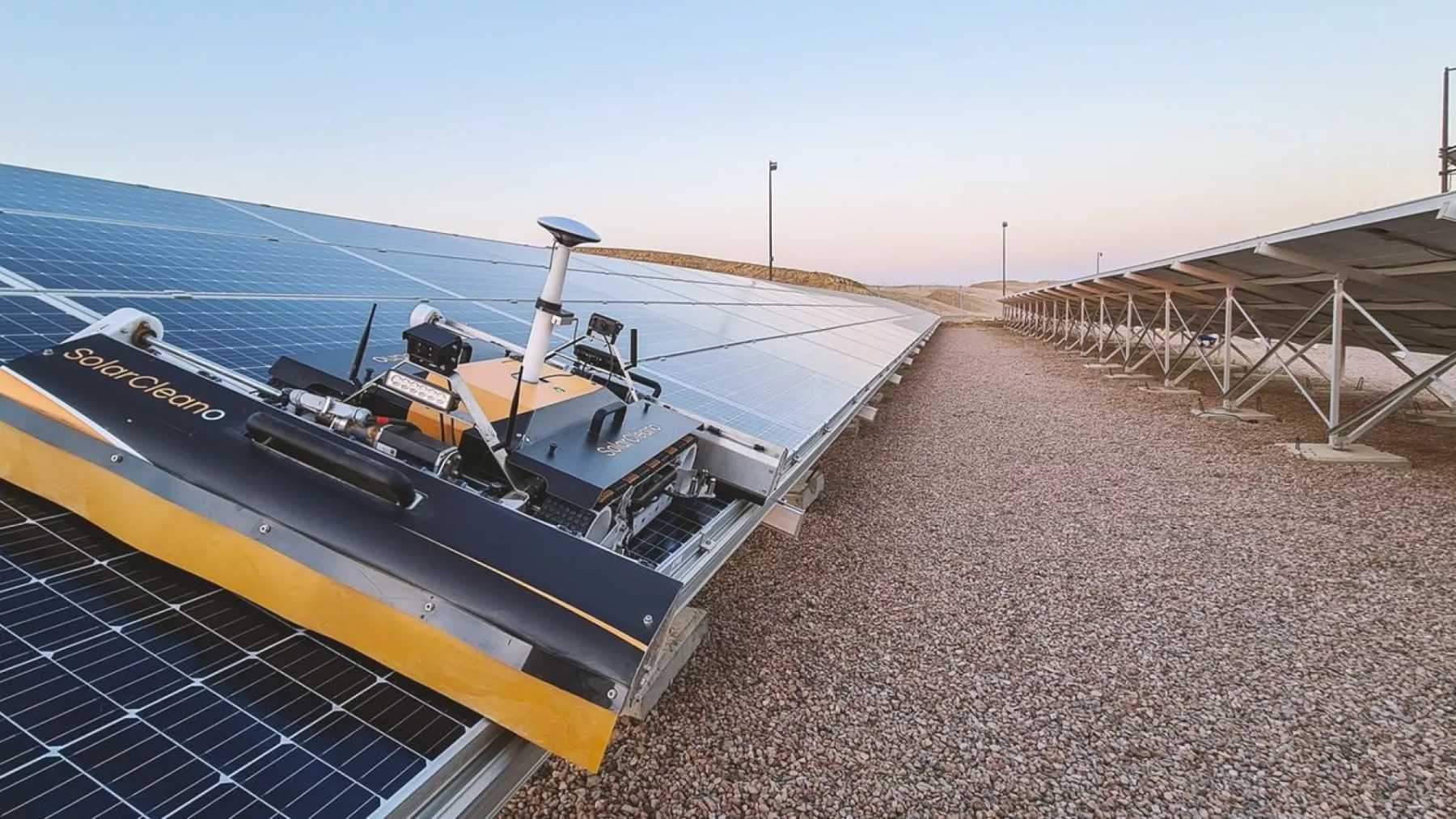
Robotic automation is entering the renewable energy space in a big way.
When it comes to mechanical tasks, robots can work faster than human beings, and that is exactly what they are doing in a Spanish solar farm.
EDP’s Scale Up O&M project is using robots to autonomously clean and perform vegetation-cutting tasks on solar park grounds.
The only way to meet this challenge is to significantly increase productivity by leveraging technology,
Can robots be the new way forward to cutting costs and increasing efficiency in renewable energy generation?
Using robots to clean and perform vegetation-cutting tasks
The Scale Up O&M project was piloted at the Cruz de Hierro/Villacastín solar park in Spain.
It is the first intelligent digital automation platform of its kind for operating and maintaining solar parks.
With the rising need for renewable energy sources, getting skilled labor has been a problem.
In addition, solar farms are usually located in remote, hard-to-reach places, and the surrounding environment is not usually friendly to humans.
Therefore, the rapidly increasing demand for solar has created labor shortages and high operational expenses, especially in remote locations.
On average, panel cleaning and vegetation cutting account for a significant portion of operational expenses in solar farms.
In fact, these tasks are estimated to represent more than one-fifth of total maintenance costs.
Cutting operations and maintenance costs by up to 80%.
The Scale Up O&M pilot project officially launched in July 2025.
It marked the first time EDP tested robotic automation within a solar park.
EDP, a global leader in the renewable energy sector, was facing an increasingly evident challenge.
The more the renewables sector grew, the more the demand for green energy sources increased.
“The only way to meet this challenge is to significantly increase productivity by leveraging technology,” said Ana Paula Marques.
Marques is an executive board member of EDP and head of the platform managing the company’s renewable energy assets.
She believes that the project is more than just a pilot.
Rather, it is a practical response to the challenges of efficiency, scale, and safety in operations.
EDP’s investment in automation was to make renewable energy more accessible and more competitive in the future
EDP’s proprietary intelligent digital automation platform
To get the pilot project off the ground, EDP invested in its own proprietary intelligent digital automation platform.
The platform consists of five different components that are integrated to work together.
The first part starts with AI-fitted drones. The drones use AI software to do aerial inspections of panels that need cleaning.
They also identify overgrown vegetation that could hinder energy production of the panels.
The data collected is then fed to EDP’s proprietary IoT platform for analysis.
The system forecasts the next seven days before deploying the robots to do the work.
Once the analysis and forecasts are concluded, the cleaning robots are assigned specific tasks.
Then, the vegetation cutting robots are also assigned certain tasks to perform on the solar farm.
For the whole ecosystem to work, EDP has installed a communications infrastructure in each solar farm.
For remote locations, making sure that the system stays connected to the internet is critical.
What makes EDP’s platform outstanding is its accuracy and precision.
The robots do not perform general tasks.
They only perform tasks that are assigned to them based on the aerial data analysis and forecasts.
Robots are increasing efficiency in renewable energy generation
Robotic automation is set to increase efficiency in all sectors of the economy, and renewable energy is no different.
EDP’s Scale Up O&M project showed that robots not only work faster, but also work with more precision.
The success of the pilot project proves that robots are the new way forward in renewable energy generation.
Ultimately, they offer a proven way to reduce operational costs while increasing overall efficiency.

