
A Permian oil well lifts almost 5 barrels of produced water for every barrel of crude and the cheapest place to put that water is a hole in the ground, but the hole has been building pressure
A steel line at a Permian well pad runs full, and what moves through it is salt water.
The crude is in there somewhere. It is the smaller share and it has been for years.
In the Delaware Basin almost five barrels of water come up for every barrel of oil.
Injection in the basin has been tied to surface deformation and to blowouts, and a salt water geyser ran on a Reeves County site for weeks before it was plugged.
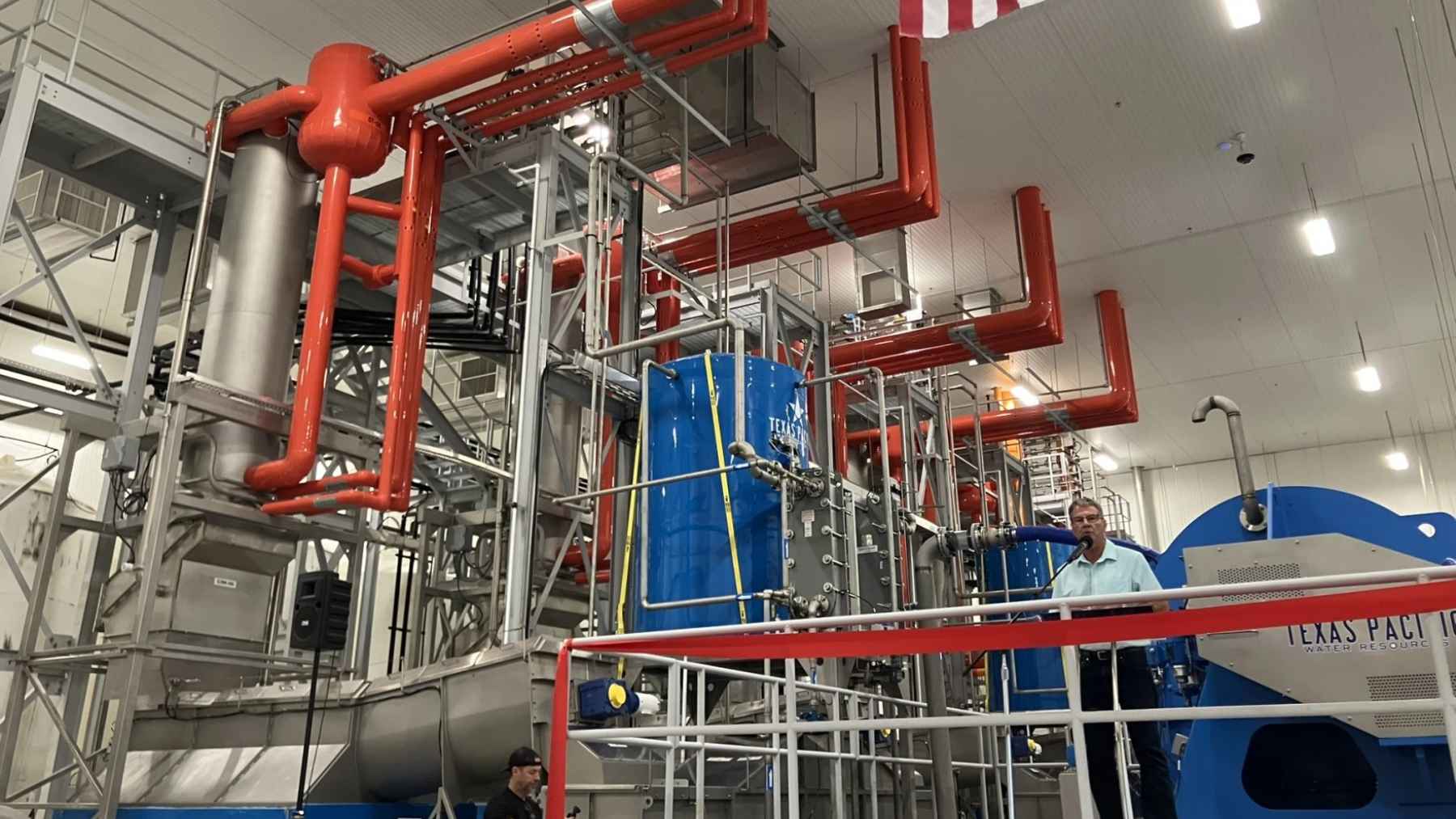
A plant that can clean that water opened near Orla on the tenth of August, 2026.
The permit that would let the clean water leave the oilfield does not exist. Texas has issued none.
Which leaves one question. Why can nobody just turn the water off?
Why 1 barrel of oil decides nothing
Because the water is not a decision anyone makes.
It sits in the formation with the hydrocarbons and it comes up the same hole under the same pressure. An operator can choose how many wells to drill. The ratio that arrives at the surface belongs to the rock.
That ratio also moves in one direction. Across a twenty or thirty year well life the hydrocarbon share falls and the water share climbs, so an aging field makes more water every year while making less oil.
Then look at where it goes. Injection puts it back into a formation that has no outlet, which means every barrel adds to the pressure the next barrel has to be pushed against.
Nothing about that changes when the oil price does. A field can stop drilling tomorrow and the wells already online keep lifting water for decades, so the volume arriving at the disposal pumps is set by a decision taken years ago.
A disposal well is not a drain. It is a closed container.
500 psi above the Wolfcamp
The consequence shows up as pressure, and then as motion.
Reinjection into the shallower zones above the Wolfcamp Shale has built localized pressures as high as 500 psi in some areas, and those areas have had seismic events.
Regulators answered with seismic response areas, districts where deep disposal permits are restricted and injection volumes have been pulled back.
That rule has a side effect nobody designed. Water barred from the deep zones goes into the shallow ones, which sit closer to the old wellbores and closer to the groundwater, so a seismic fix moves the risk rather than removing it.
Pressure that cannot go sideways goes up. Injection in the basin has been tied to surface deformation and to blowouts, and a salt water geyser ran on a Reeves County site for weeks before it was plugged.
That is the part a cost table misses. The cheap sink is not infinite.
10,000 barrels a day and 5.5 megawatts
So the water gets cleaned instead, and the hardware for that is specific.
The facility near Orla in Reeves County treats up to 10,000 barrels a day, which is 420,000 gallons, and it draws 5.5 megawatts to do it.
The feedstock is not brackish. Raw water there averages around 130,000 parts per million of total dissolved solids, roughly four times seawater, and the process brings the product down into the hundreds.
The separation is done by freezing rather than by a membrane, because a membrane at that salinity is a losing fight.
Freezing works on a property that salt cannot argue with. Water crystallizes clean and pushes the dissolved solids out ahead of the ice front, so the separation does not care how loaded the feed is.
And the yield is the number that matters. About half the treated volume comes out usable. The other half leaves as concentrated brine.
What 60 cents a barrel buys
Here is where the economics stop cooperating.
Injection runs about 60 cents a barrel while beneficial reuse runs about $1.50, in the way that a reuse pilot or a treatment pond turns into a solved problem.
The buyer side is worse than that spread suggests, because groundwater for irrigation costs a farmer only cents a barrel, and the conference account carries both figures.
Then there is the permit. The state environmental agency took over discharge permitting in 2021 and began accepting applications two years later, and the August report found it had issued none.
One application has been waiting more than two years.
Where the next barrel has to go
Strip the permits away and the arithmetic is simple.
Unconventional Permian wells already lift about 12 million barrels of water a day, roughly 504 million gallons, and a state analysis puts that figure at 15 million by 2042.
Against that, the usable half of a 10,000 barrel plant is a rounding error, and the state does not even require operators to report their water volumes.
What the plant settles is narrower and more useful. It shows the salt can be taken out at field scale and at a known power draw. It does not show that anyone will buy the result.
Produced water is the only product in the basin that arrives whether anyone wants it or not.
Somebody still has to sign the permit.

Hugo is an engineer with strong technical expertise. Multilingual from an early age, his writing combines technical clarity with a strong interest in science and energy.
