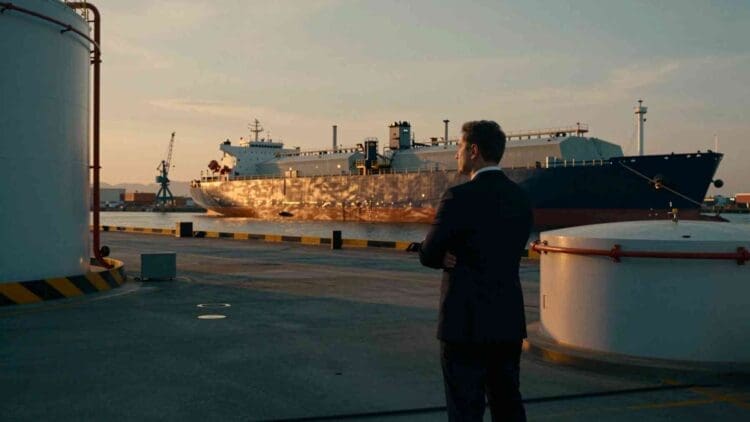

Securing long-term LNG supply contracts from US exporters has become significantly harder, according to the CEO of Atlantic SEE LNG Trade, a Greek importer positioning itself as a regional energy hub. Alexandros Exarchou said publicly in June 2026 that American suppliers — once eager for multi-decade deals — have grown reluctant to lock in prices over the long term.
The shift follows a sharp disruption to global LNG markets triggered by the Iran war and the closure of the Strait of Hormuz, which cut off roughly a fifth of the world’s supply.
Atlantic SEE CEO says long-term US LNG deals are harder to secure
Exarchou described the current environment as a clear reversal. Six months ago, US suppliers were actively seeking long-term agreements. Now they’re pulling back from committing to prices over extended periods.




Atlantic SEE is a joint venture between Aktor Group and Depa Commercial SA, Greece’s state gas supplier. Exarchou serves as chairman and CEO of Aktor in addition to leading the joint venture. The company has been central to Greece’s push to become a regional LNG distribution hub for southeastern Europe.
Strait of Hormuz closure and Qatar terminal damage drove the market shift
The Iran conflict closed the Strait of Hormuz, removing roughly one-fifth of global LNG supplies from the market. That single disruption intensified competition between European and Asian buyers for available US volumes, pushing spot prices sharply higher.
Damage to Qatar’s LNG export terminal — the world’s largest — added a second layer of uncertainty. With two major supply sources disrupted at once, forecasting long-term prices became considerably more difficult for US exporters. Supplier behavior has shifted in ways that are hard to miss.
According to Exarchou, some US suppliers are now offering buyers incentives to reduce the size of existing contracts rather than expand them. The direction of travel has reversed entirely.
Higher contract prices and tighter supply complicate Atlantic SEE’s expansion plans
The price of 20-year LNG contracts has increased dramatically, Exarchou said. That makes it harder for Atlantic SEE to lock in additional volumes at acceptable rates, even as demand from regional partners grows. Much of US LNG output is already committed under long-term European and Asian agreements, leaving limited room for new entrants.
Smaller buyers face particular barriers here. Building and financing US LNG projects demands large upfront commitments, and smaller buyers may struggle to meet the financial thresholds that American sellers require before signing long-term deals. Capital requirements, in other words, function as a quiet filter.
Exarchou also expects spot prices to climb significantly starting from September 2026 — an outlook that adds further pressure to Atlantic SEE’s efforts to secure affordable supply for its planned distribution network.
Atlantic SEE’s existing deal and regional supply ambitions
Atlantic SEE has one significant contract already in place: a 20-year agreement signed in November with Venture Global Inc. to import 4 billion cubic meters of LNG per year beginning in 2030. That deal provides a degree of insulation against market volatility, even as additional volumes become harder to secure.
Most of that supply is earmarked for regional distribution. Albania is set to receive 1 bcm per year and Bosnia-Herzegovina 0.5 bcm. Negotiations with Romania are expected to conclude by the end of summer, which would bring total supply agreements to 3.7 bcm per year. If deals with Bulgaria and Ukraine are reached later this year, Atlantic SEE plans to seek additional US contracts to bring total supplies up to 8 bcm. Serbia, Croatia, and North Macedonia are also under consideration.
EU gas supply risks and the phase-out of Russian LNG provide broader context
Atlantic SEE’s expansion push is unfolding against a larger European energy transition. The EU is phasing out Russian gas flows by the end of 2026, increasing pressure on member states and neighboring countries to find alternative supply quickly. Greece is positioning itself to fill part of that gap, giving Atlantic SEE a strategic function that extends well beyond its commercial interests.
Exarchou struck a cautionary note on EU preparedness. He warned that the bloc has not yet introduced targeted measures to address potential winter supply risks and that European gas inventories remain depleted and need to be replenished over the summer months.
The key dynamics are clear: US suppliers have shifted from actively pursuing long-term contracts to avoiding them, driven by the Hormuz disruption and Qatar terminal damage. Atlantic SEE holds one major deal with Venture Global but faces higher prices and tighter supply for any additional volumes. Regional distribution agreements are progressing, though the broader EU supply picture heading into winter remains uncertain.
Kelly is an experienced writer with 15 years of experience exploring the big stories that shape our world, from tech breakthroughs and space exploration to climate, energy, and the fascinating quirks of science. She has a talent for turning complex ideas into sharp, memorable insights that stay with readers long after they’ve finished reading.