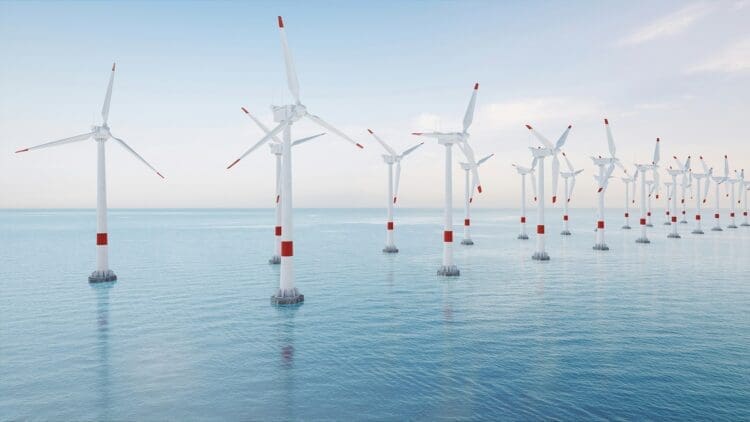

Britain is one of the European countries that is increasingly showing a desire to rely on renewable energy in order to eliminate carbon emissions. Recently, the country enjoyed major positive news after the Berwick Bank offshore wind project (1.38GW) won a Contract for Difference CfD support in the UK’s seventh allocation round.
The Berwick Bank wind project: Breaking barriers and breaking records
According to numerous reports, as of 2024-2025, the UK’s most common energy source for electricity generation was wind power. Furthermore, Britain’s energy usage tendencies are drastically transforming, with renewable energy now providing over half of the electricity for people in the country, which is significantly more than in previous years. Adding onto that trajectory, the UK’s Department for Energy Security and Net Zero announced that 8.4 GW of offshore wind capacity was gained in the Contracts for Difference (CfD). This is the biggest ever in both British and European history, conveying Britain’s desire to become the leading nation when it comes to clean energy generation in Europe. What exactly is a CfD?
A Contract for Difference is a financial agreement between people to exchange the difference in an asset’s price from when the contract opens to when it closes, which gives traders the luxury of speculating on price changes without owning the actual asset. Essentially, profit is made if the price moves in one’s favour, whereas a loss is made if it moves against you, meaning you have to pay the provider.



How does the Contract for Difference work in relation to the wind project?
When news broke about the Berwick Bank wind projects, there were many question marks regarding the CfD and how it’s set to work. Simply put, the CfD mechanisms assist developers to protect themselves from financial loss by balancing their investment against volatile energy prices. Ultimately, this means guaranteeing a fixed price for electricity that is generated over the entirety of the contract instead of pricing that changes with the market or the landscape for as long as the project is still ongoing.
In the case of the UK’s seventh allocation round, the CfD opened up over US$29 billion in private investment and supported projects that might generate electricity for a total of over 12 million houses. Importantly, the average strike price for fixed offshore wind in the seventh allocation round is lower than the cost of building a new gas plant.
The Berwick Bank Wind Farm emerges as one of the major winners.
The Berwick farm was part of the winning bidders and managed to secure a CfD for 1.38 GW of capacity. According to multiple projections, Berwick Bank is tipped to become massive not only from a European point of view, but it’s expected to fall among the largest wind farms in the world, with the potential to produce more than 4GW. The position of Berwick Bank in the North Sea is a massive advantage because the area has strong winds that are continuously present throughout the year. This makes wind energy production reliable and efficient during different periods of the year in the UK.
How does Berwick Bank compare to the rest of the beneficiaries?
RWE was the biggest CfD victor in the seventh allocation round after securing 6.9GW of offshore wind capacity. Following the victory, RWE strategically aligned with the KKR in the hopes of reaping benefits from the partnership in the future and providing electricity for a lot of residents, like in China.
As of now, countries like Sweden, Finland, and Norway are above Britain when it comes to overall clean energy production. However, the UK dominates all countries when it comes to wind energy production, which is a great positive considering wind energy has limitless potential. If the government is able to stick to its lane and convincingly dominate in the upcoming years, it will unquestionably begin to compete with the leading clean energy-producing nations.