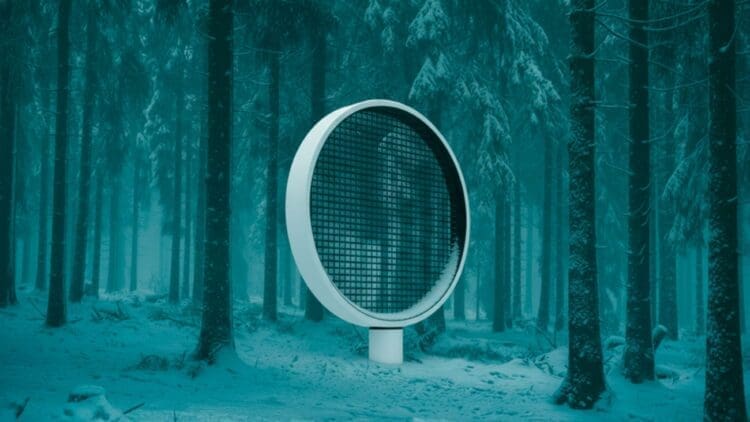

U.S. residents are certainly no strangers to the effects of climate change. While everyone faces different severe conditions, they can all be traced back to this one crisis. Adopting renewable energies is thus more crucial than ever, but what does a cleaner future truly look like? Some believe blade-free wind turbines could be the answer to change our perspective on clean energy solutions, as they at least address some of the disadvantages faced by conventional designs. However, a hidden “dark side” must be addressed first.
Redefining energy: A cleaner future
Fossil fuels are gradually being replaced by renewable energies worldwide. Yet, some people find it difficult to fully embrace renewable energy technologies, especially conventional wind turbines, or horizontal-axis wind turbines (HAWTs). According to the Department of Energy, several factors play a key role in this hesitant approach and integration, which include, but are not limited to:
- Impact on surrounding wildlife, especially bats and birds
- Flickering shadows, which may lead to health issues such as migraines
- Noise pollution due to low-frequency infrasound
- Visual pollution
So, while HAWTs are highly beneficial when it comes to efficiency, reliability, and high output, these negative factors can result in public backlash and slow the transition to this form of renewable energy. Fortunately, some pioneering minds have been contemplating how wind energy can be redefined by reimagining wind turbines’ design. The resulting designs are quite imaginative.
Blade-free wind turbines could help reshape the future
The turbine designs most of us have become accustomed to have one common feature: the blades. This feature is what causes the negative factors that make people so reluctant to support wind energy projects, despite other positive factors such as boosting energy security and local job creation. But what if wind turbines could work without the blades?
This may sound stranger than fiction, but several blade-free designs have been explored before, such as the 2,400 M Nemoi bladeless VAWT. However, a truly captivating blade-free wind turbine design is the vaneless ion wind generator, also referred to as an electrohydrodynamic (EHD) turbine. They have significant benefits, but also a “dark side” that must be overcome before they can be commercialized.
Vaneless ion wind generators consist of collector and emitter electrodes. The latter receives high voltage, which positively charges water droplets. An electromagnetic field is formed between the electrodes, and wind transmits the charged water droplets from the emitter to the collector across this field. This results in a direct electrical current that produces power.
Overcoming a “dark side” before potential can be realized
These blade-free wind turbine designs have great potential, but are presently still in the developmental stage. According to Grokipedia, they present great advantages compared to conventional HAWT designs, which are:
- Nearly soundless operations (31.4 dB noise level)
- Suitable for residential applications
- Low maintenance and high durability
- Potential lifespan of over 20 years
- Affordable operational costs
- Air purification potential
- Can operate in speeds as low as 1-5 m/s
Unfortunately, despite these advantages, the vaneless ion wind generators are still far from perfect. Their current maximum efficiency is only 7%, as energy is lost as light and heat. Scalability is limited due to high voltage needs, which present safety and costly insulation obstacles. It is also highly reliant on ideal weather conditions (low humidity).
The darkest obstacle that must still be overcome is that its byproduct is ozone. This byproduct can be highly disadvantageous to surrounding ecosystems and negatively impacts human health. Controlling the concentration levels of produced ozone is challenging, but it must comply with the OSHA limits. In conclusion, if we want this particular blade-free turbine to redefine the future of clean energy, this obstacle must be overcome first. For now, we could perhaps look at other innovations, such as the Spanish blade-free wind turbine that produces aeroelasticity.
Disclaimer: Our coverage of events affecting companies is purely informative and descriptive. Under no circumstances does it seek to promote an opinion or create a trend, nor can it be taken as investment advice or a recommendation of any kind.