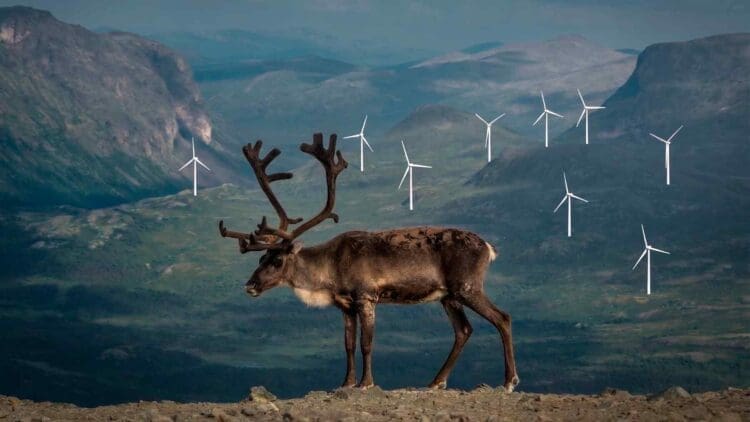

The Fosen peninsula’s biggest wind farm nearly ceased to exist due to cultural disputes.
The Norwegian energy landscape has significantly transformed over the years. Rising global demand for clean power encouraged the nation to pivot toward wind infrastructure.
Large-scale wind capacity expansion will ensure energy independence and provide the opportunity to become a major exporter.



But will the greater need for cultural preservation threaten to halt Norway’s green power goals?
How traditional power sources became strained
Norway is a nation with vast wealth, historically built on fossil fuels.
Nearly 57% of its goods exports are attributed to crude oil and natural gas.
Unfortunately, the daily extraction and exporting of millions of oil barrels directly oppose modern climate goals.
The Norwegian Climate Change Act requires lowering greenhouse gas emissions by at least 55% by 2030. The long-term goal is to achieve 90% to 95% reduction in domestic emissions by 2050.
These ambitious targets can only be met by actively decarbonizing domestic industries.
Regional hydroelectricity has been fundamental to providing clean power to the grid. It provided approximately 89% of the total national electricity supply.
However, this source has fallen short in meeting the nation’s shifting power demands.
Utility-scale wind projects are now essential for Norway’s goals. While capacity may have grown to 11%, rapid deployment is not without its challenges.
The ongoing obstacles of onshore wind
In Norway, sole reliance on hydropower has become challenging during prolonged drought periods.
Altered climate patterns have made seasonal weather more unpredictable.
Water reservoirs can drop drastically, impacting regional grid reliability.
This is why expanding alternative energy sources, such as wind capacity, is vital to protect critical infrastructure.
Unfortunately, these developments face major regional challenges.
The country has a rugged, mountainous landscape, which limits suitable sites for installation.
Furthermore, construction in remote areas will require substantial capital for a resilient network. Complex logistics also require skilled labor, which further increases costs.
Additionally, onshore projects often spark intense local opposition.
Communities generally worry about the impact on nature and the degradation of pristine wilderness.
US SIF analyzed a major corporate case study about the Storheia Wind Farm’s presence in a culturally sensitive area.
Statkraft is the primary project stakeholder and faced subsequent legal battles with the native Sámi herders.
The conflict with the Sámi reindeer herders
The Fosen Vind mega-project was key to achieving clean energy targets. The Storheia Wind Farm was the flagship of the project.
It became Norway’s biggest onshore wind facility, featuring 80 turbines generating 288 MW.
Unfortunately, it overlaps with territory used by the Sámi people for centuries. In this area, semi-domesticated reindeer herds were vital for cultural identity and economic livelihood.
But the turbines altered the quiet environment. The reindeer herds began actively avoiding the noise and sight of the spinning blades.
Critical grazing pathways were disrupted, and the reindeer refused to forage near the installations.
An escalated human rights dispute
The crisis was pushed into Norway’s Supreme Court in October 2021.
The judges unanimously ruled that the operating licenses violated Indigenous rights.
Despite being stripped of legal status, the turbine operations continued. This triggered significant public protests.
By March 2024, a settlement had resolved the friction. The Sámi herders were given replacement grazing lands and financial compensation.
They also received veto power over wind farms that want to operate past 2045.
These cultural disputes nearly led to the end of Norway’s biggest onshore wind project. The Fosen conflict emphasizes the fine line between climate action and human rights.
Meeting climate goals should not come at the expense of Norway’s ancestral lands and cultural heritage.
Future green projects should therefore follow strict guidelines to protect native inhabitants. Otherwise, we risk losing valuable Indigenous history and practices along with local wildlife.
Anke Maree is a writer with a clear and engaging editorial style. Her work focuses on making complex topics accessible, informative, and relevant for readers across different areas of interest.