
Manufactured in Chalon-sur-Saône, floated up a Somerset river by barge in January, and carried the final 6.4 miles by road over six hours, this 500-ton steel cylinder now sits at the center of something Britain has not attempted in 30 years
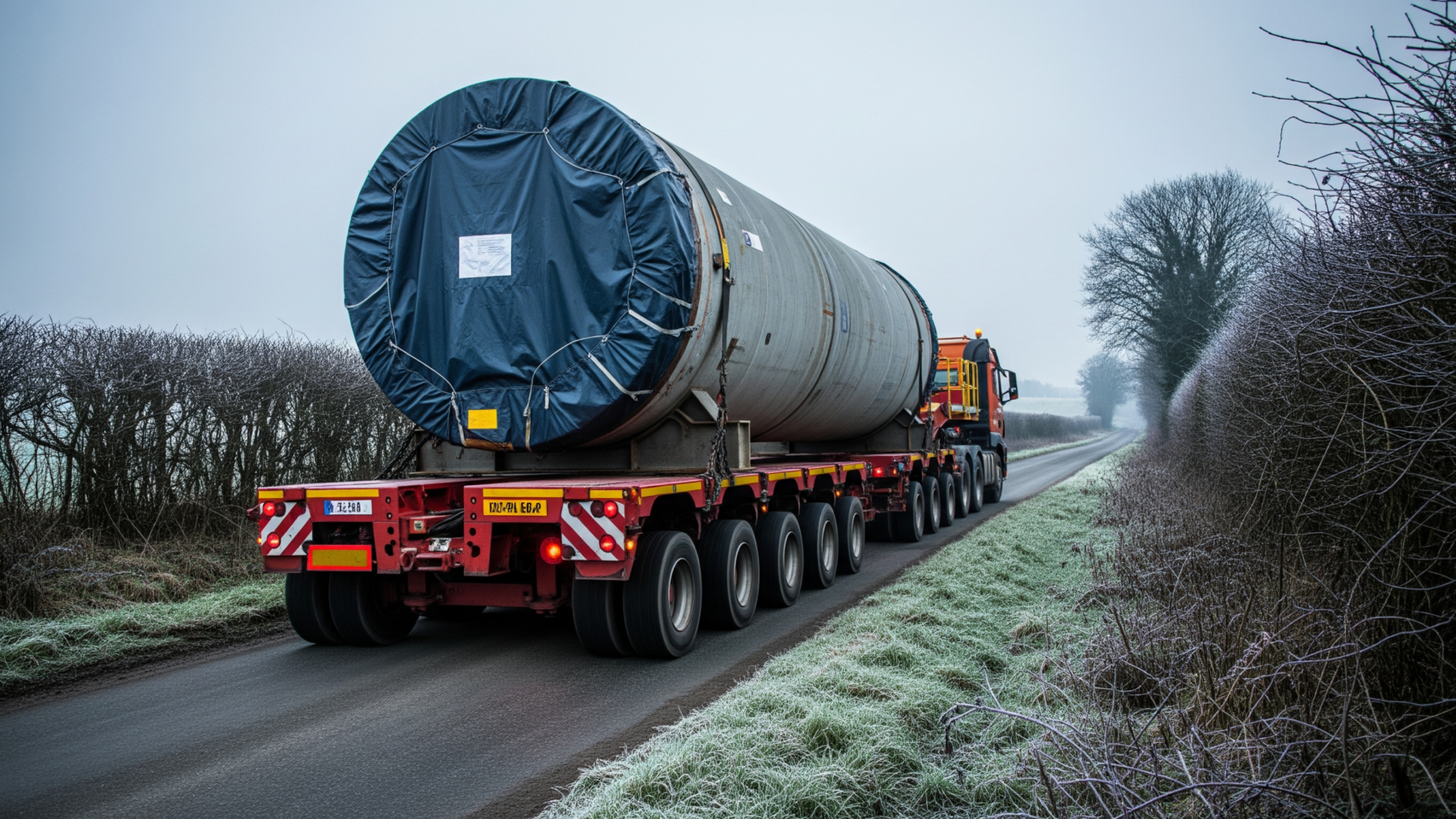
On a cold January Sunday in Somerset, England, something very large and very slow was crossing the countryside.
It moved at the pace of a cautious walker.
Six hours to travel 6.4 miles.
The vessel was shipped from the Saint-Marcel factory to Avonmouth Docks in Bristol, then transferred by barge to Combwich Wharf on the River Parrett in Somerset.
Drivers on the narrow lanes near the Bristol Channel had no idea what the heavy transporter was carrying, or where it was ultimately going.
They could see the wrapped steel shape, longer than a city bus, wider than a lane of traffic, but the full meaning of that object would only become clear months later, when a crane the height of a skyscraper lifted it into place.
A journey that began in eastern France
The object’s story starts in Chalon-sur-Saône, at a plant that has been manufacturing nuclear grade heavy components for decades.
Framatome finished manufacturing the reactor pressure vessel at its Saint-Marcel plant in Chalon-sur-Saône, eastern France.
The single component is 13 meters long and weighs 500 tons.
The vessel must hold the reactor core under enormous pressure and heat for decades without cracking so much as a millimeter.
Months of finishing work followed the initial manufacture before the vessel was judged ready to move.
Every weld is checked and every millimeter of wall thickness measured against tolerances most machine shops have never heard of.
Then came the question every engineer on a project like this eventually faces: how do you move something this heavy and this fragile across two countries and a stretch of open sea?
Down the River Parrett in the English winter
The answer began on the water.
The vessel was shipped from the Saint-Marcel factory to Avonmouth Docks in Bristol, then transferred by barge to Combwich Wharf on the River Parrett in Somerset.
The River Parrett is not the Thames.
It is a tidal, shallow, winding channel through flat Somerset farmland, the kind of river where herons stand motionless at the bank and curlews call across the reedbeds at dusk.
Getting a barge this size up that river on the right tide required weeks of planning and a narrow window of opportunity each day.
At Combwich Wharf the vessel came ashore and met its road transporter, a multi axle self propelled platform with more wheels than most people bother to count.
Every bridge, every bend and every overhead cable had been surveyed months in advance.
What the Somerset coast has been waiting for
The site this cylinder was heading for sits on a low headland above the Bristol Channel, where the wind rolls in off the water and the ground beneath has been under construction for years.
Workers here have built one of the deepest reinforced concrete basins ever poured in Britain.
They have installed fish screens on the cooling water intake, fine mesh barriers designed to protect the eels, salmon smolts and juvenile sea bass that drift through the estuary on every tide.
The site draws visitors from the engineering world, from energy policy offices and from neighboring towns where thousands of workers now commute every morning.
Somewhere in the reactor building for the second of the two units under construction, a space had been waiting for exactly the object now crawling up the road from Combwich.
The steel heart of Britain’s nuclear comeback
The reactor pressure vessel has been installed for the second of the two EPR reactors at Hinkley Point C in Somerset.
This is what those six slow miles in January were for.
Hinkley Point C is the first nuclear station to be built in Britain in 30 years, restarting a supply chain and an industry after a long pause.
The vessel was hoisted by the Sarens SGC-250 crane, known as Big Carl, then transferred through the equipment hatch to the internal polar crane for final positioning.
Inside that vessel, nuclear fission will one day turn water into steam, and that steam will spin turbines at a scale few power stations in Europe can match.
EDF says that once both units are fully operational they will supply enough carbon free electricity for six million homes.
The reactor pressure vessel is not the glamorous part of a nuclear plant, yet without it nothing else in the building makes any sense.
Lessons carried forward to the next build
Builders say lessons learned on Unit 1 and greater use of prefabrication are accelerating progress on Unit 2 by roughly 20 to 30 percent.
Prefabricated elements now make up around 60 percent of the build.
Experience gained here is expected to inform construction of the planned Sizewell C nuclear power station in Suffolk.
Across the Atlantic, states including Illinois are watching the same supply chain dynamics with growing interest as their own nuclear ambitions accelerate.
EDF baselined Unit 1 becoming operational for 2030, with costs revised to between £31 billion and £34 billion at 2015 prices, against an original 2016 estimate of £18 billion.
Those numbers are a real part of the story, and no one in the industry pretends otherwise.
But on the Somerset headland, the second reactor building now holds its steel heart.
The barge has long since returned down the Parrett, and the countdown to first power has moved one irreversible step closer.
Hugo is an engineer with strong technical expertise. Multilingual from an early age, his writing combines technical clarity with a strong interest in science and energy.
