
DOE selects 278 projects and commits $5 billion to Genesis Mission, with nuclear research receiving the largest individual award
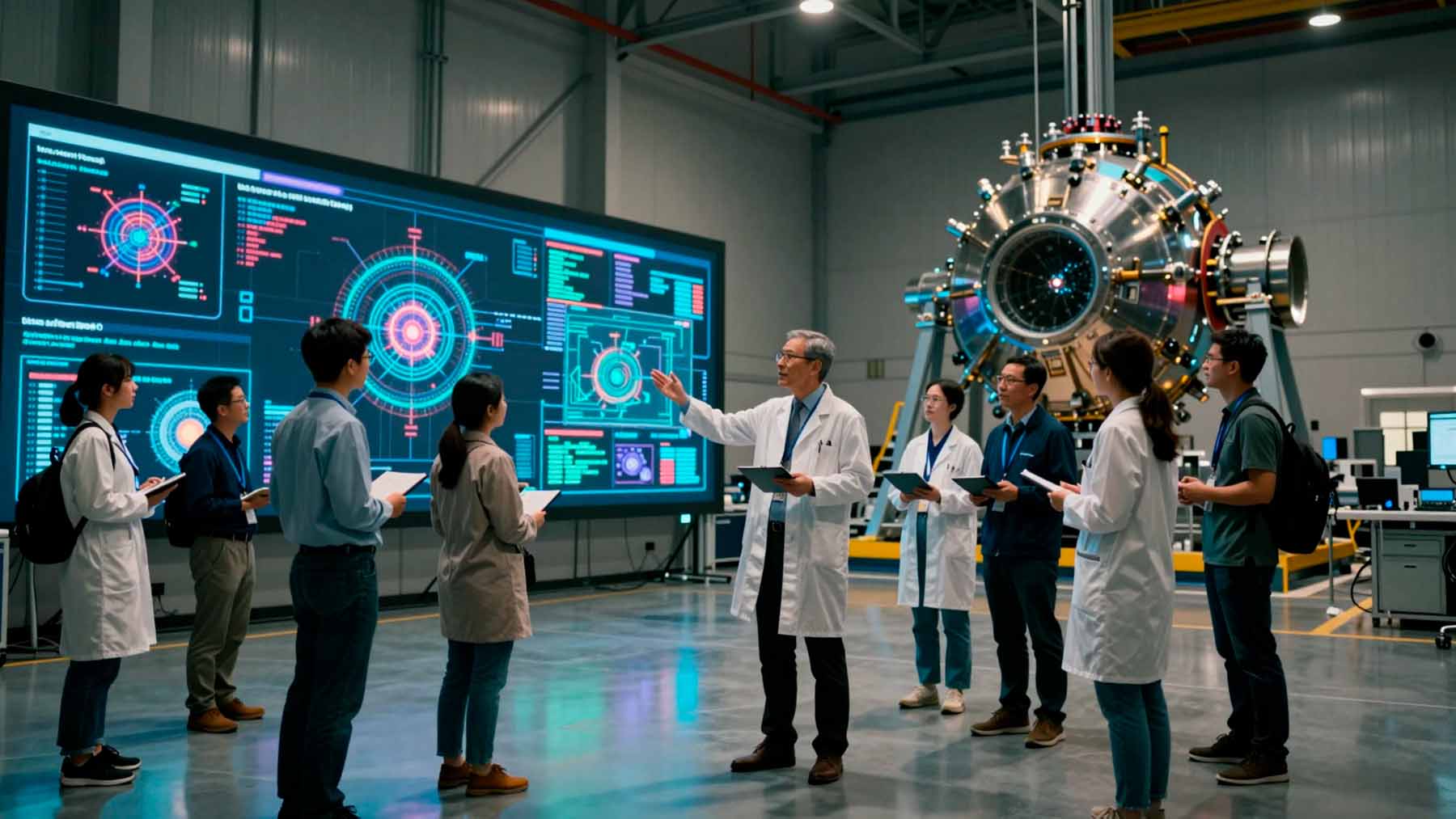 AI-made
The Department of Energy announced on July 22 that it’s selected 278 projects under its Genesis Mission initiative, backed by $5 billion in federal commitments. The response set a record for the DOE — the largest ever received for a funding opportunity.
Nuclear and fusion research emerged as a clear priority among the selections, anchoring the initiative’s most prominent awards.
DOE announces 278 Genesis Mission project selections
The July 22 announcement was a landmark moment in DOE funding history. Secretary of Energy Chris Wright noted that the Genesis Mission’s request for applications drew the largest response to any funding opportunity the department has ever issued. “America has no shortage of bold ideas or talented scientists, and the response to the Genesis Mission proves that,” Wright said.
Realta Fusion will lead an effort to build an AI-enabled digital twin for near-real-time optimization and decision support of fusion neutral beam injection systems.
The 278 selected projects span a wide range of institutions — 168 led by universities, 87 by DOE and National Nuclear Security Administration national laboratories, 19 by companies, and four by nonprofit organizations. The DOE didn’t disclose a total dollar figure for the individual project awards, only the broader $5 billion federal commitment to the initiative overall.
Genesis Mission launched to accelerate AI-driven scientific progress
The Genesis Mission got its start in February 2026, launched with a clear mandate: use AI tools to speed up scientific and technological progress across a range of fields.
At launch, the DOE outlined 26 specific challenges the mission was designed to tackle. These included using AI to accelerate nuclear power plant development and construction timelines, generating and assessing regulatory documents, building digital twins for fusion research, and digitizing historical nuclear records as reference resources. The scope has since grown considerably. At the Genesis Mission 2026 summit — held the same day as the awards announcement — Under Secretary for Science Darío Gil revealed the challenge count would expand from 26 to 33, with several new or restructured challenges focused on national security. Roughly half of those address nuclear threat detection, deterrence, and nonproliferation.
Nuclear research dominates the largest awards
If there’s a headline within the headline, it’s this: a nuclear announcement under the single largest individual award in the entire selection.
Idaho National Laboratory’s Prometheus project received $60 million over three years as a Phase II award — the top prize in the Genesis Mission portfolio. The goal is ambitious: cut reactor development times and operational costs in half by deploying AI across every major phase of the reactor lifecycle, from design and licensing through manufacturing, construction, and operation. Critically, the approach keeps humans in the loop throughout rather than fully automating decisions.
Beyond Idaho National Laboratory, a broad range of national labs received nuclear and fusion-related awards. Argonne, Oak Ridge, Los Alamos, Lawrence Livermore, Sandia, Lawrence Berkeley, Pacific Northwest, Savannah River, and Princeton Plasma Physics Laboratory all appear among the recipients. Project topics run the gamut — digital twins for molten salt reactors and fusion systems, additive manufacturing of fusion targets, development of fusion structural materials, and work spanning multiple stages of the nuclear fuel cycle, from supply and recycling to waste management.
Three private fusion companies among the award recipients
Not all the fusion awards went to national laboratories. Three private fusion companies will lead their own Genesis Mission projects, a sign of the initiative’s reach into the commercial sector.
Acceleron Fusion will head a project focused on developing a digital replica of a deuterium-tritium process loop, aiming to optimize the fusion fuel cycle. Realta Fusion will lead an effort to build an AI-enabled digital twin for near-real-time optimization and decision support of fusion neutral beam injection systems. Shine Technologies rounds out the group, leading a project on AI-guided fuel cycle facility optimization.
Their inclusion alongside major national laboratories reflects a deliberate strategy. The Genesis Mission isn’t positioned as a purely government-led research effort — it’s designed to engage industry broadly, from established institutions to emerging private players in the fusion space.
A record-setting response
The Genesis Mission, launched just five months before these selections were announced, has moved fast. From opening its request for applications in March to selecting 278 projects by July, it’s established itself as one of The White House DOE’s most ambitious AI-focused science programs.
The $5 billion in federal commitments provides the financial backbone, and the record-setting response to the funding opportunity points to strong demand across universities, national labs, and the private sector alike.
Nuclear and fusion research sit at the center of the initiative’s most prominent work. The Prometheus project’s $60 million award is the largest single grant; national laboratories across the country received additional nuclear and fusion-grant funding, and three private fusion companies secured awards that broaden the initiative’s reach beyond government institutions.
With the challenge count now expanding to 33 — including new national security-focused areas — the Genesis Mission looks set to keep growing. Secretary Wright’s comments at the summit pointed toward continued expansion of the portfolio, suggesting this first round of 278 selections may be just the beginning.
Kelly is an experienced writer with 15 years of experience exploring the big stories that shape our world, from tech breakthroughs and space exploration to climate, energy, and the fascinating quirks of science. She has a talent for turning complex ideas into sharp, memorable insights that stay with readers long after they’ve finished reading.
