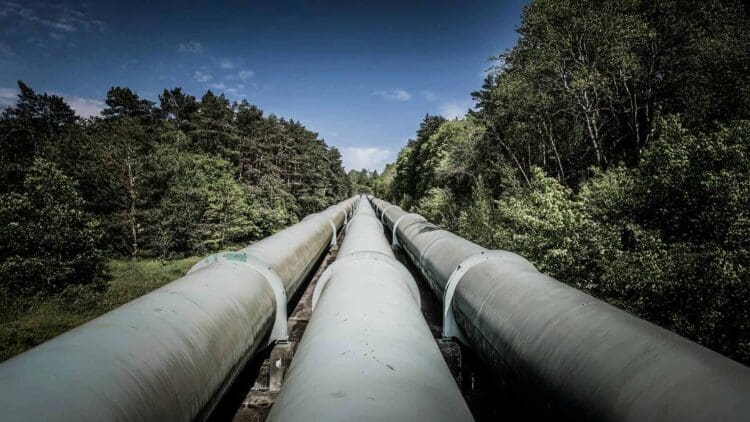

As transitions occur in energy demand trends, they are most commonly visible within the capacity constraints of existing infrastructure. The long-term planning process evolves into an immediate necessity when long-anticipated pipelines are no longer expected to meet projected demands. That situation currently exists in the U.S. Midwest for DT Midstream.
The U.S. Midwest: Gas demands change
DT Midstream is reviewing possible adjustments to its pipeline system as a result of what it refers to as a “generational” increase in demand.
For decades, DT Midstream’s pipeline system was developed based on electric and gas utility load growth. Today, these same areas are undergoing significant structural changes due to the retirement of many coal-fired plants and the construction of new gas-fired generation, along with increasing high peak demands from industrial and data center loads. Therefore, gas infrastructure will likely be viewed as a constraint, not an entitlement, going forward.


As a result of these developments, DT Midstream’s five-year organic growth backlog has grown by approximately fifty percent, to just under $3.4B. Furthermore, nearly three-fourths of that backlog consists of direct pipeline projects. This represents a significant focus on developing the company’s pipeline network to support its growth strategies.
Speculative builds are not the focus here, however. Rather, DT Midstream is focusing on building out its pipeline network to serve specific demand centers where demand is both committed or rapidly becoming so.
The opportunity size is difficult to ignore
There is no doubt about the size of the opportunity. DT Midstream’s management team believes that total Midwest demand could grow by numerous billion cubic feet per day through the decade, primarily due to the retirement of coal-fired generation and planned investment by electric utilities.
Pipeline supply tightness in the major distribution hub areas (such as Chicago) will make every additional inch of incremental pipeline capacity very strategic in terms of meeting additional demand.
DT Midstream is utilizing its existing pipeline expansion/upgrade projects to provide opportunity for additional volume increases in a reliable manner. The Company considers these upgrades as necessary to meet demand growth and believes it would be counterproductive to delay them or consider them as optional.
Case study – The guardian pipeline expansion
The Guardian Pipeline expansion project is one example of how DT Midstream is approaching this challenge. DT Midstream successfully completed a binding open season process, which allowed it to award over 328 million dekatherm/day (MDT) of new capacity to multiple shippers.
Awards were added to existing allocations made during a previous phase of the expansion
Total new capacity will be more than 536 MDT or nearly 40% more than the existing capacity. The expected in-service date for the new capacity is late 2028, which indicates DT Midstream is aggressively planning well beyond near-term cycles.
The strong response from shippers is an indication that utilities and end-users are willing to lock in their future access to gas supply in Wisconsin and the surrounding upper Midwest regions years in advance. Thus, while the Guardian expansion is certainly a standalone project, it also reflects the overall confidence in long-term gas demand. DT Midstream’s focus on expanding its pipeline network demonstrates a company that is proactively addressing structural changes versus reacting to near-term market fluctuations.
By continuing to grow its backlog and completing projects like the Guardian expansion, DT Midstream is solidifying a network capable of supporting higher, more reliable flow rates of natural gas. As energy systems continue to evolve in the Midwest, similar types of infrastructure responses across North America are beginning to illustrate how demand trends are converting into pipe in the ground, which is a theme explored further within our report analyzing regional gas corridor development.