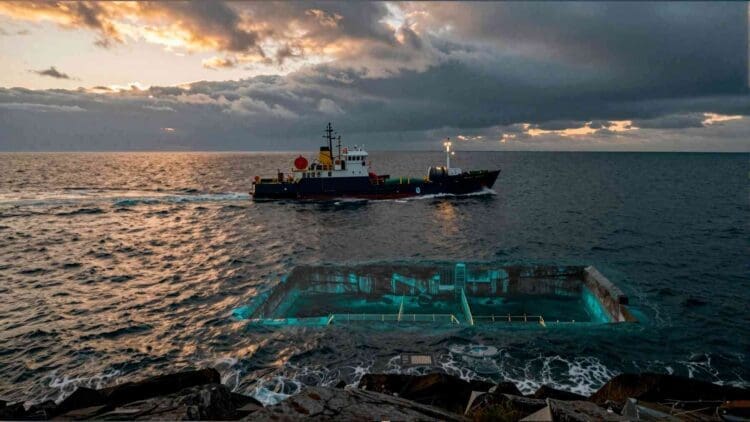

EnergyPathways has landed a gas storage license for its MESH project in the East Irish Sea. The North Sea Transition Authority formally granted the license, and the company says it’s already up and running on the associated work program. A site survey is lined up for Q3 2026, pulling together environmental, geological, and seabed data to feed the project’s next development phase.
The license area could hold up to 60 large-scale salt storage caverns—a scale that puts MESH at the center of the UK’s long-duration energy storage ambitions.
License awarded and survey scheduled
Formally accepting the North Sea Transition Authority’s license offer is what EnergyPathways calls a significant milestone for MESH. The company didn’t sit around after the award—it moved straight into the license work program.

The Q3 2026 survey covers a wide stretch of the East Irish Sea, collecting environmental, geological, and seabed data that feeds directly into regulatory, engineering, and subsurface workstreams as the project pushes toward its next phase. This isn’t a box-ticking exercise. It’s the foundation everything else gets built on.
Those survey results have to carry a lot of weight simultaneously. EnergyPathways needs the data to satisfy regulators, sharpen engineering designs, and make the subsurface case for the cavern network — and getting it right here shapes the entire timeline ahead.
Why the MESH project was developed and what it involves
The UK government designating MESH a project of “national significance” tells you something. That label doesn’t get handed out routinely. It means policymakers see MESH as strategically important, not just commercially interesting.
MESH brings together compressed air energy storage, natural gas storage transitioning over time to hydrogen storage, and hydrogen production for clean power and sustainable industrial uses. Three distinct but complementary pieces, designed to serve multiple energy system needs from a single integrated project.
The license area sits in the East Irish Sea, connected onshore at Barrow-in-Furness on the Lancashire coast. The subsea geology there can support up to 60 large-scale salt storage caverns, putting the project’s potential scale in the multi-terawatt-hour range—subject to consents and financing. EnergyPathways is targeting 2031 to go operational.
Expected effects on UK energy storage and grid resilience
One of MESH’s core jobs is capturing surplus renewable electricity that would otherwise get curtailed—wasted, basically, because the grid can’t absorb it at the moment it’s produced. By storing that energy and releasing it as dispatchable power over multiple days, MESH tackles a problem batteries simply can’t solve at the same scale.
That multi-day duration is the key distinction. Batteries run out after a few hours, whereas MESH could supply power across extended stretches of low wind or low solar output—the kind of resilience a renewable-heavy grid will need as fossil fuel backup gets phased down.
MESH also has the potential to more than double the UK’s gas storage capacity. Less import dependence means less exposure to volatile international gas markets, and both priorities got considerably more urgent after the energy price shocks of recent years. EnergyPathways also expects MESH to lower overall system costs and cut emissions compared with conventional gas-fired generation. The company plans to enter the CAES element into Ofgem’s second window of the Long Duration Energy Storage cap and floor scheme, which would provide a regulated revenue framework to help finance the project.
Ofgem’s LDES cap and floor scheme and broader policy context
On June 26, 2026, Ofgem published its “Minded to Decision” list of LDES projects under the first window of its cap and floor scheme. The announcement also confirmed that Ofgem intends to run a second window — a clear signal that government support for long-duration storage investment isn’t going anywhere.
The cap and floor mechanism exists to give investors in long-duration storage the revenue certainty they need to commit capital. Projects in this space have long build timelines and uncertain short-term market revenues, and without that kind of framework, financing large-scale storage infrastructure is genuinely hard.
CAES technology made it on a small scale in round one. EnergyPathways CEO Ben Clube called that inclusion notable, saying it “underlines the contribution that CAES technology can make alongside other LDES technologies in delivering a new flexible power supply.” That precedent matters for MESH’s shot at round two. Ofgem has said it’ll provide further direction on the second window before the end of 2026 — a timeline that lines up reasonably well with EnergyPathways’ own development schedule.
Hydrogen is on the way up
EnergyPathways now holds a gas storage license for MESH, has kicked off the work program, and has a site survey locked in for Q3 2026. That survey generates the environmental, geological, and seabed data the project needs to move through its next regulatory and engineering phases.
MESH is a government-designated project of national significance combining CAES, gas-to-hydrogen storage, and hydrogen production in the East Irish Sea, with a 2031 operational target. It could more than double UK gas storage capacity and deliver multi-day dispatchable power from renewable energy that would otherwise go to waste.
Ofgem’s confirmation of a second LDES cap and floor window — with more detail expected before year-end — gives EnergyPathways a clear path to pursue regulated revenue support for the CAES component of the project.
Kelly is an experienced writer with 15 years of experience exploring the big stories that shape our world, from tech breakthroughs and space exploration to climate, energy, and the fascinating quirks of science. She has a talent for turning complex ideas into sharp, memorable insights that stay with readers long after they’ve finished reading.