
Equinor just finished planting 277 steel foundations across the North Sea floor, completing the structural backbone of the world’s largest offshore wind farm
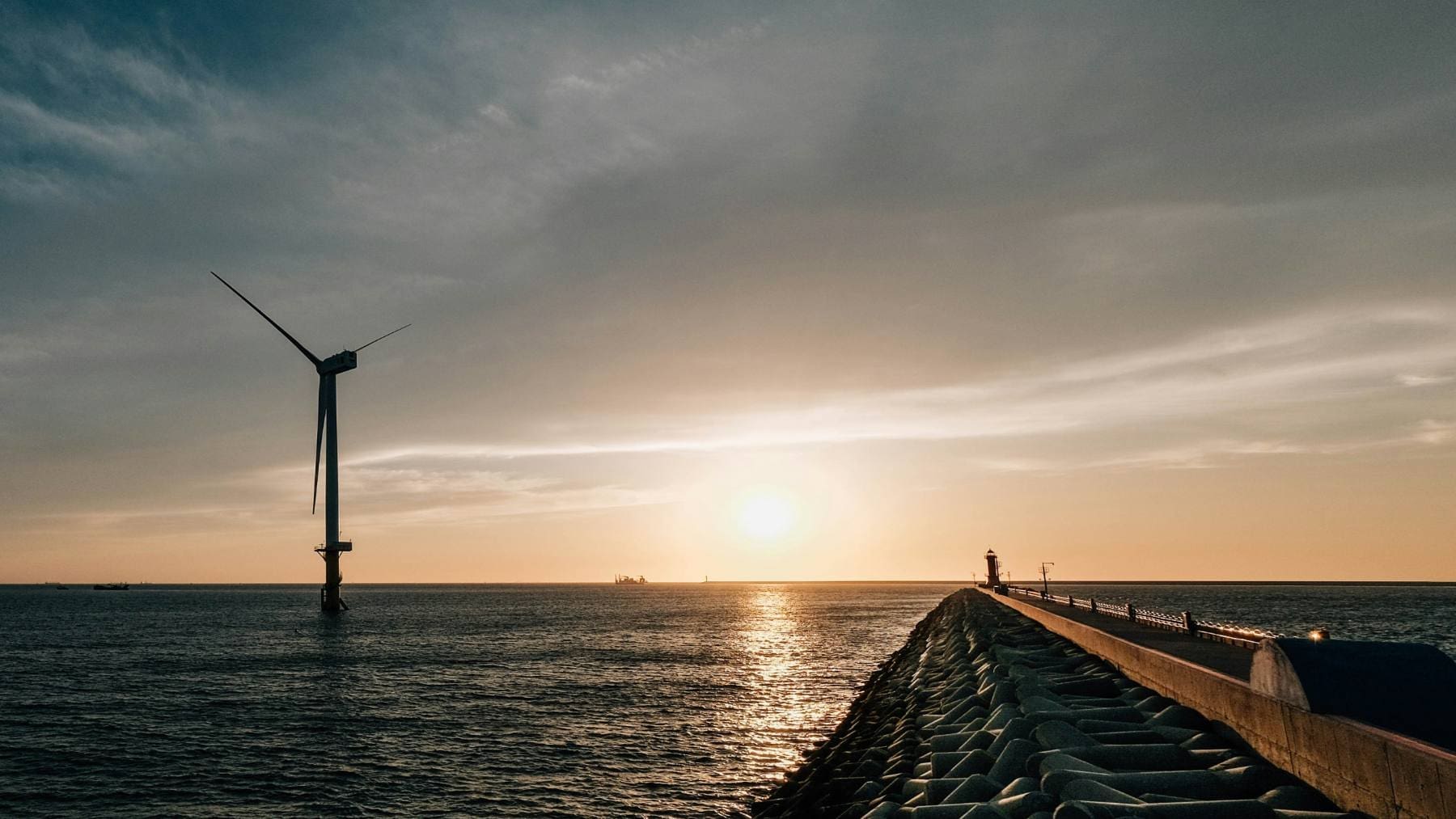
Somewhere in the grey North Sea, a heavy-lift vessel lowered the last piece of steel onto the seabed in late November — and with it, closed out three years of work spanning three separate construction phases.
The number behind that final lift: 277 foundations, 554 individual assets, more than a thousand offshore operations completed across one of the world’s most demanding stretches of open water. The structural backbone of Dogger Bank Wind Farm is now fully in place.
A three-year marathon of steel and sea
The final chapter was written by Seaway7’s heavy-lift vessel Seaway Alfa-Lift, which lowered the 87th transition piece at Dogger Bank C into position in late November. That single lift completed a programme stretching across all three project phases: 95 transition pieces at Dogger Bank A, 95 at Dogger Bank B, and 87 at Dogger Bank C.
The repetition involved — across years and phases — demanded consistent execution at a level few offshore construction programmes have attempted.
The numbers reflect sustained industrial effort. Seaway7 installed 554 foundation assets across the full programme — 277 monopiles and 277 transition pieces. Monopiles were driven into the seabed earlier in the construction sequence using a separate heavy-lift vessel, Seaway Strashnov, which gives some sense of the logistics operation underpinning this project.
What a foundation actually means in offshore wind
Each offshore wind foundation is a two-part structure. A steel monopile — a hollow cylinder — is hammered deep into the seabed first, then a transition piece is fitted on top, connecting the submerged pile to the turbine tower that rises above the waterline. Together, they anchor everything that follows.
Installing these components in the North Sea isn’t straightforward. The environment is cold and unforgiving, with weather windows that close quickly and seas that complicate every lift. Precision matters at every stage — a misaligned transition piece creates problems that compound further up the structure.
Across all three phases of Dogger Bank, more than a thousand individual crane lifts were required to complete the foundation programme, each carrying its own safety and precision requirements. The repetition involved — across years and phases — demanded consistent execution at a level few offshore construction programmes have attempted. Completing all 277 foundations isn’t just a milestone on paper; it’s a structural prerequisite. Turbine installation can’t proceed at scale until every foundation is ready to receive a tower section, and that condition has now been met across the entire project.
The partnership that made it possible
Projects of this scale don’t run on engineering alone. Seaway7 served as the primary delivery partner throughout, working alongside sub-suppliers across all three phases.
Alan Evans, Senior Project Manager at Dogger Bank Wind Farm, acknowledged the human dimension of what was accomplished. “Today we’re celebrating the safe and successful installation of more than 500 foundation assets across the three phases of Dogger Bank Wind Farm over the last three years,” he said. “During this time, we’ve enjoyed a strong partnership with Seaway7 and its sub-suppliers who together, have navigated a hugely demanding and complex engineering challenge.”
Bruce Willox, Project and Operations Director at Seaway7, pointed to both the scale and the collaborative nature of the work. “Installing the foundations for the world’s largest offshore wind farm is an enormous achievement,” he said. “Over the three years, hundreds of components and over a thousand lifts have been completed — representing a phenomenal scale in offshore construction.” He also noted that running the full scope across all three phases in sequence delivered a real operational advantage: “Installing the full scope across all three project phases enabled us to optimise safety, performance, and efficiency” — a point that speaks to how continuity of teams and processes can translate into measurable gains on a programme this long.
What comes next for the world’s largest wind farm
With all 277 foundations secured to the seabed, attention turns to what they were always meant to support. As Evans put it, the project now has “the solid foundations in place to support our 277 generating assets that will make a significant contribution to a cleaner, more secure and affordable renewable-led energy system.”
That means 277 turbines still to be installed and commissioned — the next major phase before Dogger Bank can begin generating power at the scale its record-breaking status implies.
The completion of foundation work carries a signal beyond this single project. Delivering 554 foundation assets across a three-phase offshore programme, in the North Sea, on schedule is exactly the kind of proof point the offshore wind industry points to when making the case for larger and more ambitious projects. What happens next at Dogger Bank will be worth watching.
Daniel García is an Editor-in-Chief with strong expertise in structural work and engineering principles. He combines this technical foundation with deep knowledge of energy, spatial design, and emerging technologies, bringing a forward-thinking and analytical approach to editorial leadership.
