
Grupo Enhol bets $100 million on Costa Rica wind energy, marking its first move into Central America
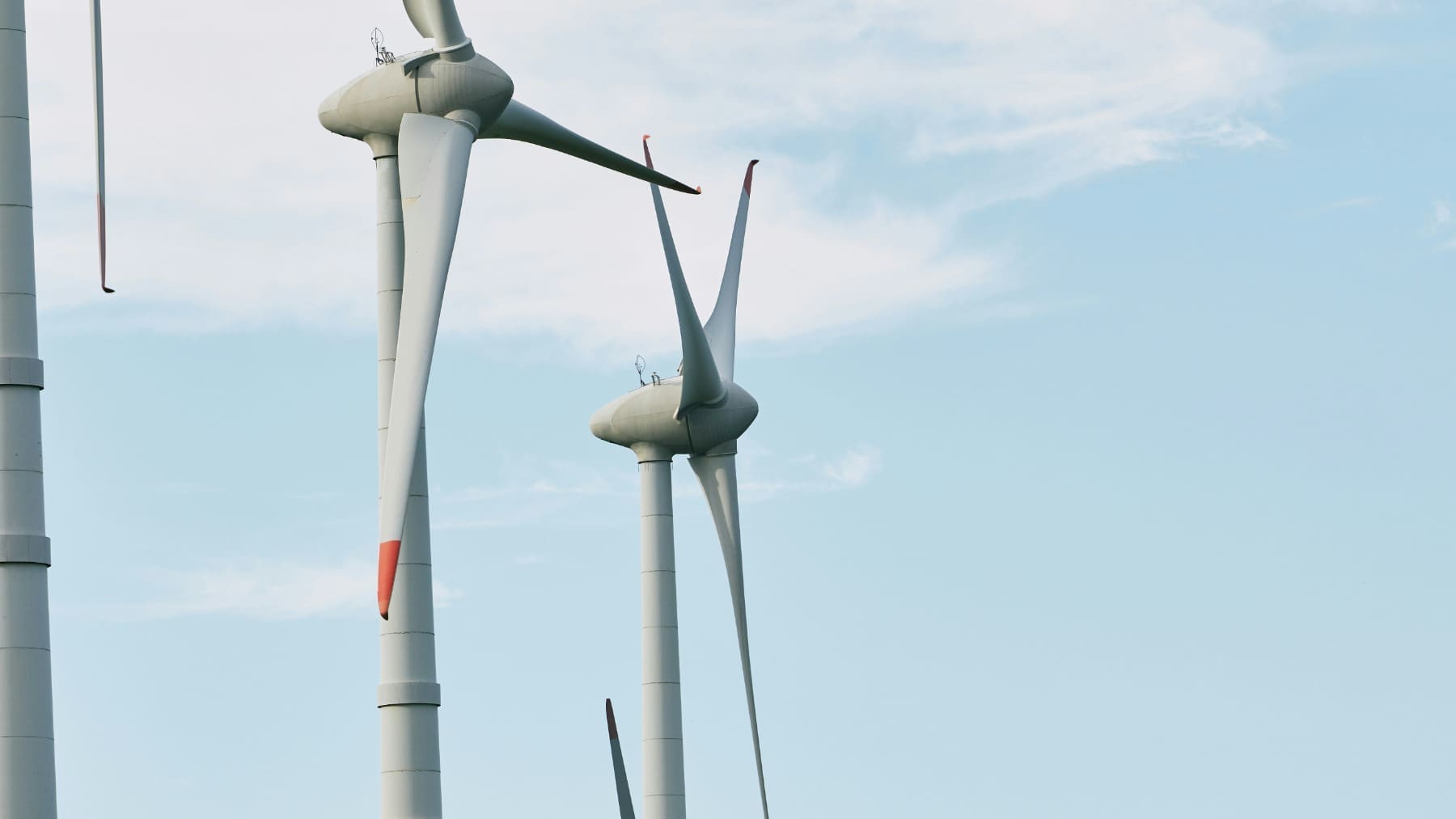
In the windswept province of Guanacaste, one of Costa Rica’s most productive corridors for wind energy, a 43.2 MW project called San Miguel is quietly moving forward. Behind it: a roughly $100 million bet placed jointly by Spain’s Grupo Enhol and NAIAD Renovables.
For Enhol — a family-owned industrial group with more than 90 years of history — San Miguel isn’t just another renewable asset. It’s the company’s first foothold in Central America, and the question worth asking is why a group of that age and profile would choose this particular market, and this particular moment, to make that move.
A $100 million debut in Guanacaste
The San Miguel wind farm represents Grupo Enhol’s first energy asset in Central America — and the group isn’t treating it as a test run. With a total estimated investment of approximately $100 million and a 43.2 MW installed capacity, the project carries the weight of a deliberate, long-term commitment rather than an exploratory position.
The remaining stake belongs to NAIAD Renovables, an independent renewable energy producer with a track record exceeding 1 GW developed across international markets.
Enhol holds a 55% stake, a majority share that establishes its role as a principal industrial investor rather than a passive financial backer. The remaining stake belongs to NAIAD Renovables, an independent renewable energy producer with a track record exceeding 1 GW developed across international markets.
Why Costa Rica? The logic behind the market choice
Costa Rica didn’t emerge as a default option. The country is widely recognized for its renewable energy leadership and has maintained a level of institutional stability that stands out across the broader Latin American context — qualities that translate directly into investment confidence for a group like Enhol.
The group’s managing directors, Diego and Gonzalo Oliver, have described Costa Rica as “a stable market, with a firm commitment to renewable energies and significant long-term growth potential.” Stability paired with runway. That framing reflects deliberate market selection logic, not opportunism.
NAIAD Renovables adds practical grounding to that reasoning. The company has previously developed and operated wind projects in Costa Rica, meaning the partnership brings direct in-country experience to a market that rewards familiarity with local regulatory and operational dynamics.
A long-term PPA anchors the deal
The financial architecture of San Miguel is built around a long-term power purchase agreement with Copelesca, covering 100% of the plant’s energy output — a structure that removes a significant layer of revenue uncertainty from the outset.
For a group like Enhol, which describes its investment model as oriented toward “stable, high-impact assets,” the PPA isn’t incidental. It’s load-bearing. It provides legal certainty and long-term revenue visibility, making the project bankable and reducing the risk profile for both partners. San Miguel is designed to function as a durable infrastructure asset, not a short-cycle development play, and the Copelesca agreement positions it as exactly that.
The Enhol–NAIAD alliance: shared values, bigger ambitions
The partnership between Enhol and NAIAD Renovables is structured to outlast San Miguel. A broader strategic agreement between the two groups covers multiple projects in Costa Rica and other countries in the region, framing the current deal as the opening move in a longer sequence.
What makes the alliance notable is the degree of cultural alignment both sides cite as foundational. NAIAD is backed by prominent business families and several family offices from the Balearic Islands — investors defined by a patrimonial, long-term outlook and what the company describes as “responsible, prudent, and sustainable” investment principles. That profile maps closely onto Enhol’s own identity as a family-owned industrial group.
Enhol has been direct about this: “The alliance with NAIAD Renovables is especially relevant because of the cultural fit and shared long-term vision.” When two organizations describe their investment philosophy in nearly identical terms, the structural compatibility tends to hold.
San Miguel as a launchpad for Central American renewables
Grupo Enhol has operated across agriculture, food, real estate, and renewables for over 90 years. San Miguel marks the first time that history extends into Central America — and both partners have been explicit that they intend it to be a foundation, not a ceiling.
The stated ambition is to become one of Costa Rica’s leading renewable energy generators over time, contributing actively to the region’s energy transition. That goal will require scaling well beyond a single 43.2 MW project. The strategic agreement between Enhol and NAIAD suggests the pipeline to do so is already taking shape.
The deal reflects a pattern worth watching: European family-backed capital, patient by nature and long-horizon by design, increasingly targeting Latin American clean energy markets where institutional frameworks are maturing and demand for new generation capacity is real. San Miguel may be the first visible data point from Enhol in this region — but it’s unlikely to be the last.
Daniel García is an Editor-in-Chief with strong expertise in structural work and engineering principles. He combines this technical foundation with deep knowledge of energy, spatial design, and emerging technologies, bringing a forward-thinking and analytical approach to editorial leadership.
