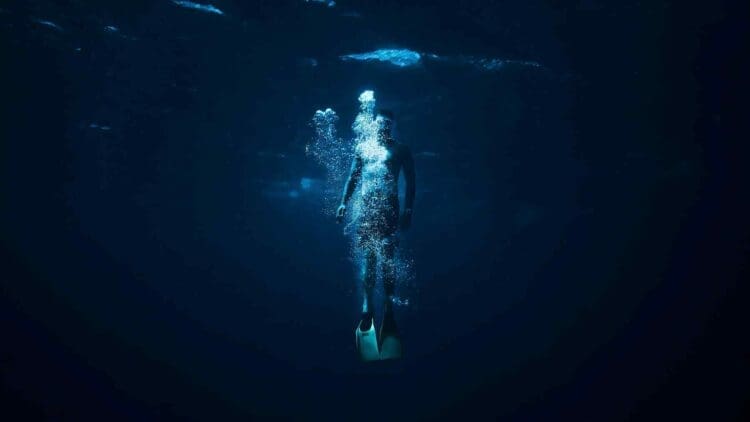

It is a never-ending phenomenon that continues to shape life. Evolution not only explains past events and life, but also helps to predict and refine the future. In the end, it all breaks down to the genes that enable us to adapt. A modern-day example includes a unique mutation that transformed a group into ‘super divers.’ This means some evolved genetic traits could turn some into literal ‘superhumans.’ What will the next superhumans look like?
From evolving to becoming “super”
As environmental conditions changed in the past, living organisms, including humans, had to adapt to overcome and survive. There are several ways in which organisms in variable populations evolve, and genetic traits are central to evolution. The following are seen as primary drivers of evolution:
- Natural selection
- Entails passing on advantageous “survival” traits
- Genetic drift
- Usually in small populations
- Some traits become more common or uncommon by chance
- Gene migration
- Genetic variation between populations
- Mutation
- Permanent genetic changes (structurally altered DNA sequences)
The latter has been of significant interest. In rare cases, these genetic mutations can turn organisms into “super beings,” including humans. However, it has not always been clear why these mutations occur that create the “super” traits in humans, until now. What’s more interesting is how these mutations lead to physical changes that allow adaptation. One group in particular has made headlines for its super ability.


Those genes don’t lie: Divers with super traits
Climate change has led to significantly extreme weather conditions and altered weather patterns. While some will now have to learn to adapt, others have adapted to extreme conditions long ago. Melissa Ilardo, a postdoctoral candidate at the University of Utah, has been fascinated by such people and their genetic makeup. Her interest was sparked by groups that genetically adapted to low oxygen levels at high altitudes, i.e.:
- South Americans
- Tibetans
- Ethiopians
The latest focus group adapted to unique and extreme conditions is the Bajau people in Indonesia. For over 1,000 years, the Bajau have lived on water, and divers spent the majority of their workday underwater. Humans have a “diving response,” which alters metabolic activity, such as a slowed heart rate and contracting spleen.
Research from the 90s indicated that Japanese divers’ spleens contracted above normal, which increased their blood-oxygen levels. Ilardo and her colleagues decided to investigate whether the Bajau divers also had any super-evolved traits.
The genetic mutation that led to the unique ability
An average human can hold their breath underwater for approximately one to two minutes. The Bajau divers, who are locally referred to as the “sea nomads,” can hold it for over five minutes. This could come in handy for other island nations, especially as rising sea levels threaten their existence. During an average, healthy human’s “diving response,” the heart rate will drop to approximately 50 beats per minute. A Bajau diver’s heartbeat was recorded at 30 beats per minute.
Ilardo’s team investigated the spleens of 59 Bajau and 34 land-based locals. Their findings indicated that the Bajau’s spleens were, on average, 50% bigger. Saliva swabs were taken from both groups to compare their DNA. The Bajau had 25 genes that differed, which they concluded were most likely responsible for the evolved traits. The PDE10A gene, which alters thyroid activity and spleen size in mice, was among these genes.
The researchers’ findings do not necessarily prove that the increased spleen size is behind their super diving abilities, but it opens the doors to further investigation. Edward Gilbert-Kawai from the University of London commented that one gene is unlikely to control spleen size alone. Ilardo believes further research may advance the understanding and treatment of oxygen-deficient conditions. For now, pollution harvesters will have to clear the air before we evolve.