
Holtec International takes over Palisades nuclear plant, launching a fleet-based decommissioning model built on 50 years of Michigan power history
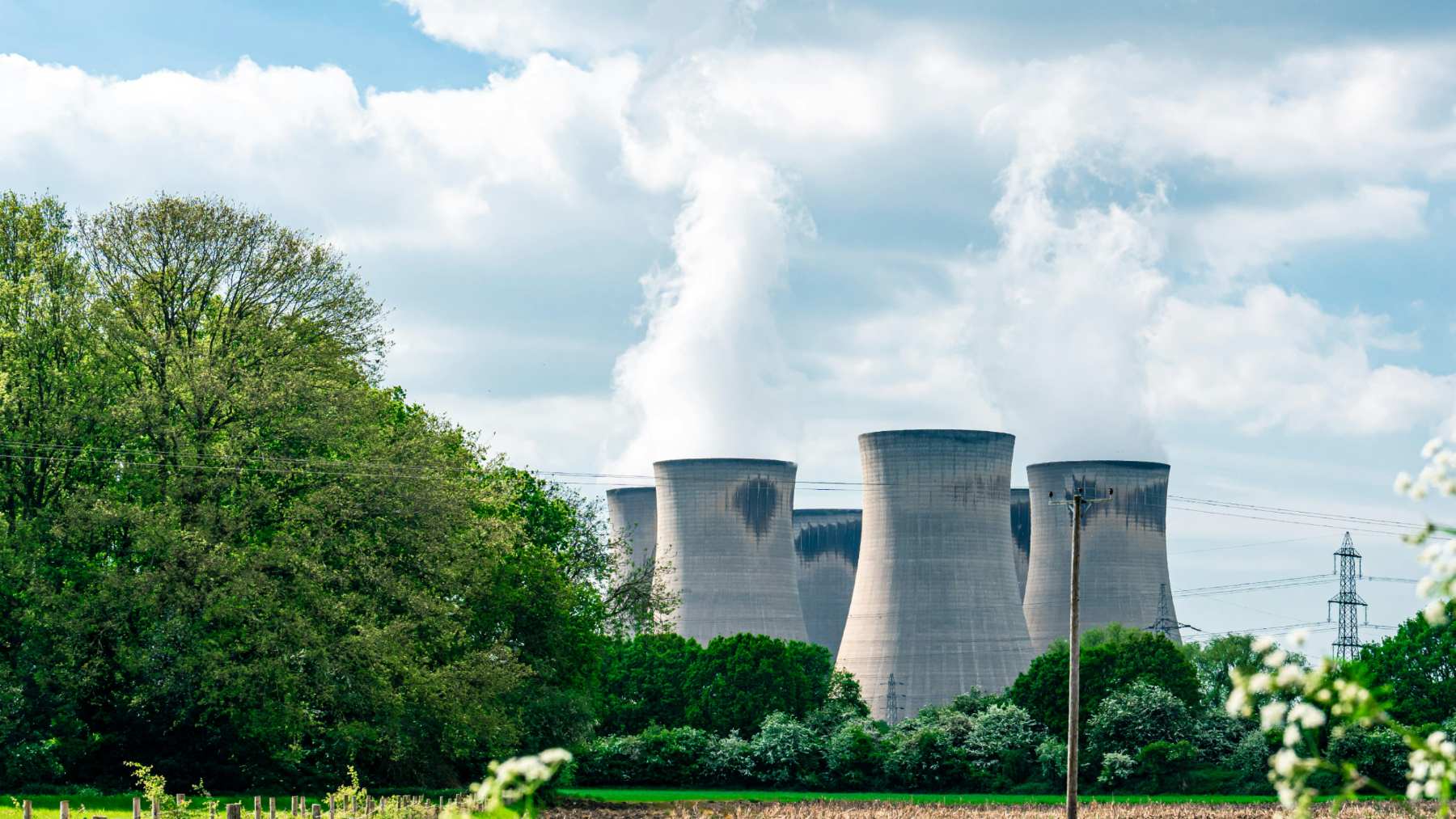
On May 20, 2022, the Palisades Power Plant in Covert, Michigan, went offline — not quietly, but after a site and world record 577 consecutive days of continuous operation. For more than 50 years, the plant had powered Southwest Michigan. Its final run finished strong.
Within the same transaction, ownership passed to Holtec International. It wasn’t an isolated handoff. Across the United States, a methodical pattern is taking shape: a single specialized company acquiring retired nuclear plants one by one, building a unified system to dismantle them.
A record run, then a handoff
Palisades didn’t simply age out. It closed after setting a site and world record: 577 consecutive days of uninterrupted operation. That final stretch capped more than 50 years of generating clean energy for Southwest Michigan — a legacy built by thousands of workers across multiple generations.
Under the agreement, Holtec Decommissioning International (HDI) now holds the operating license and serves as the prime decommissioning contractor for both sites.
After shutdown, the plant’s team defueled the reactor and moved spent fuel into the on-site spent fuel pool for interim storage. The transition was orderly. Christopher Bakken, Entergy’s Chief Nuclear Officer, credited the 600-member workforce directly: “The plant finished strong and proud, allowing us to successfully execute this transaction with Holtec on the planned date.” The enduring legacy, he noted, belongs to the thousands of men and women who operated the station since the 1970s.
What the acquisition actually means
Holtec’s acquisition of Palisades didn’t come alone. The deal also included Big Rock Point, a smaller nuclear site in Charlevoix, Michigan. Big Rock Point shut down in 1997 and was largely decommissioned in the early 2000s — but used nuclear fuel still remains on site, requiring continued oversight and eventual disposition.
The transaction was enabled by a Nuclear Regulatory Commission license transfer approved in December 2021. Under the agreement, Holtec Decommissioning International (HDI) now holds the operating license and serves as the prime decommissioning contractor for both sites. Bundling two Michigan plants into a single transaction isn’t incidental — it reflects a deliberate strategy of consolidating decommissioning responsibility under one experienced operator rather than managing each plant in isolation.
The fleet model: learning from every plant
What distinguishes Holtec’s approach isn’t ownership alone — it’s the system behind it. The company operates under what it calls the Holtec Management Model, an integrated fleet structure that unifies safety protocols, operational procedures, and quality assurance practices across every site it manages. The model isn’t static; it updates continuously as new lessons emerge from active decommissioning work.
That cross-site learning is already underway. Work at Oyster Creek, Pilgrim, and Indian Point feeds directly into planning and execution at Palisades, and each completed task at one plant informs the next decision at another. It functions as a compounding knowledge base — one that grows more refined with every decommissioning milestone reached.
For Palisades specifically, the first major step is transferring spent fuel from the wet storage pool into dry cask systems — robust, transportable canisters designed for long-term storage. Holtec projects that transfer will be complete by 2025. The full decommissioning timeline extends 19 years, with dismantling and remediation work structured to draw on the fleet model as it matures.
What happens to the land — and the fuel
When decommissioning is complete, the 400-plus-acre Palisades site is planned for commercial or industrial reuse — a meaningful outcome for a region that has organized part of its identity around the plant for half a century. Most of the land would return to productive use. One exception: a small parcel will remain dedicated to housing the dry storage casks, secured by personnel from Holtec Security International, a full-service subsidiary focused on both physical and cybersecurity.
The longer-term plan for the spent fuel points well beyond Michigan. Holtec hopes to eventually ship the used fuel canisters to its proposed HI-STORE Consolidated Interim Storage Facility in southeastern New Mexico, currently in the final stage of NRC licensing review. The vision behind HI-STORE is substantial: consolidating 75 scattered storage sites from across the country into a single, below-ground facility. Holtec argues that centralized storage would offer meaningfully better environmental conditions, safety margins, and security than most of the dispersed sites where spent fuel currently resides.
What to watch as this model matures
The Palisades acquisition marks a continuation, not a conclusion. Holtec’s fleet is growing, and the logic behind it — shared expertise, standardized procedures, centralized fuel management — will face its clearest test in the years ahead. How the Palisades decommissioning proceeds, and whether HI-STORE clears its final licensing hurdles, will shape the credibility of this approach for the broader industry.
Roughly 20 reactors are in various stages of decommissioning across the United States, with more expected to follow as plants age out of service. The question isn’t whether the nuclear industry needs a scalable decommissioning strategy — it clearly does. What remains unresolved is whether Holtec’s fleet model proves durable enough to become that standard. The next few years at Palisades will offer some of the clearest evidence yet.
Daniel García is an Editor-in-Chief with strong expertise in structural work and engineering principles. He combines this technical foundation with deep knowledge of energy, spatial design, and emerging technologies, bringing a forward-thinking and analytical approach to editorial leadership.
