
Bruce Power secures Ontario government backing to begin pre-development on a 4,800-megawatt nuclear expansion at the world’s largest operating nuclear site
Ontario’s electricity system is being pulled in several directions at once. Demand is climbing. Industry is returning. And the province has staked its clean-energy future heavily on nuclear power.
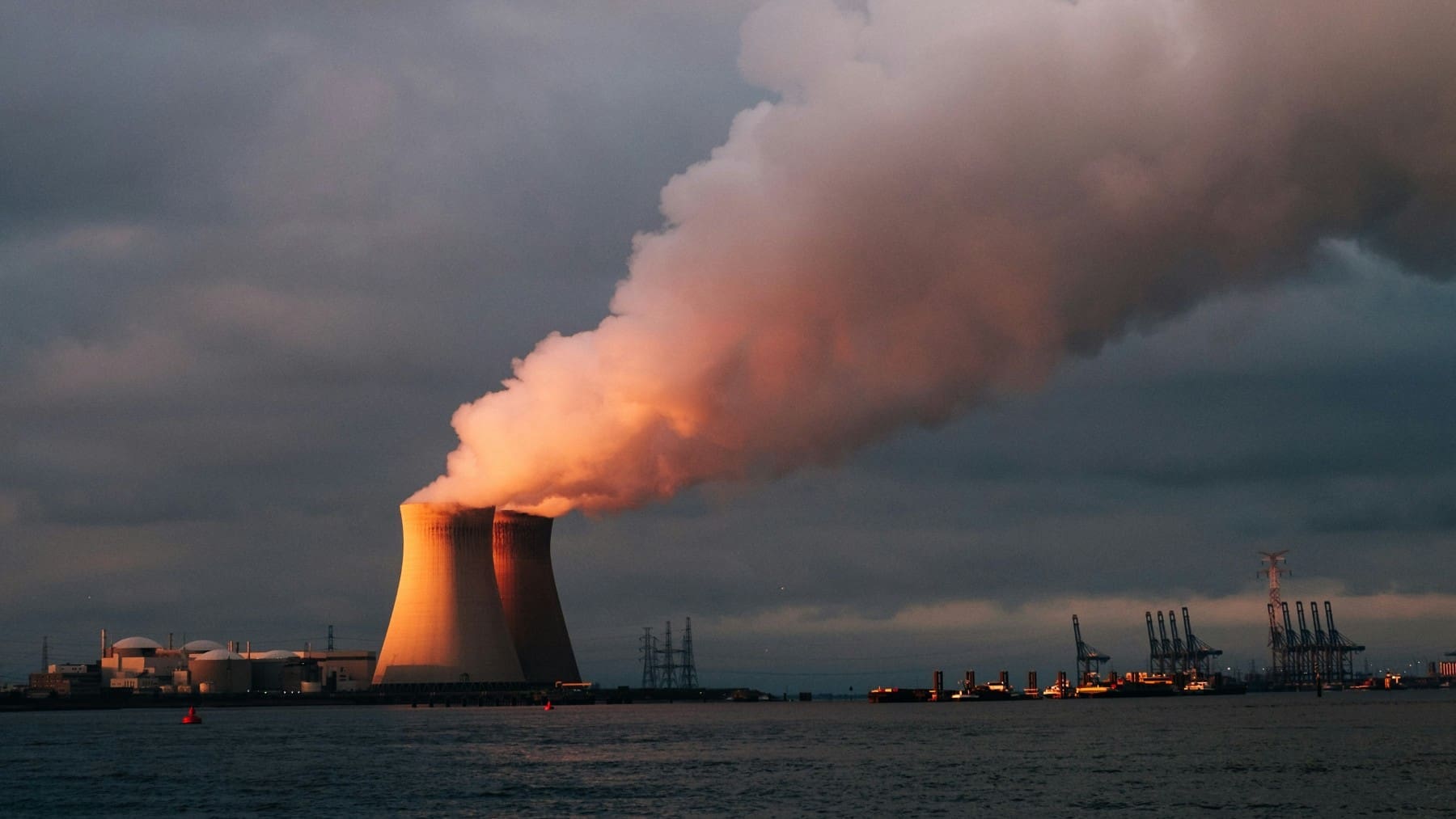
Against that backdrop, a site on the eastern shore of Lake Huron — already home to the world’s largest operating nuclear facility — is now being considered for something bigger still. Ontario’s government has just cleared the way for the next stage of planning on a proposed expansion that could reshape the province’s energy grid for generations.
A province under pressure to power its future
Ontario’s electricity demand isn’t just growing — it’s accelerating from multiple directions at once. Electrification of transportation and heating, the return of heavy industry, and sustained population growth are all adding load to a grid that was already running lean. Meeting that demand with clean, reliable power has become one of the province’s defining policy challenges.
Alongside that engagement, Bruce Power is entering into funding agreements with the Municipality of Kincardine, the Town of Saugeen Shores, and the County of Bruce.
Intermittent sources like wind and solar play an important role, but they can’t deliver the steady, around-the-clock baseload that a modern industrial economy requires. That gap has pushed nuclear back to the center of Ontario’s long-term energy planning. The Bruce Power site, which already holds the title of the world’s largest operating nuclear facility, is now being seriously considered as the place to close it.
What the Bruce C project actually involves
The proposal is substantial: up to 4,800 megawatts of new nuclear generation capacity added to the existing Bruce Power site in Bruce County, on the eastern shore of Lake Huron. If built, it would transform an already record-holding facility into something considerably larger.
Ontario’s Minister of Energy and Mines, Stephen Lecce, announced government support for the current pre-development stage. That work covers technology selection, workforce and commercial planning, cooling water strategy development, and estimating site preparation costs — all the groundwork required before any construction decision can responsibly be made. The project is also moving through a federal integrated Impact Assessment, led jointly by the Impact Assessment Agency of Canada and the Canadian Nuclear Safety Commission, currently in the Impact Statement phase. That phase includes structured engagement with the public, municipal governments, and Indigenous communities.
Economic stakes: jobs, GDP, and reindustrialization
The economic case for Bruce C is striking in scale. An economic impact assessment led by the Ontario Chamber of Commerce estimates the project could contribute more than $238 billion to Canada’s GDP over its lifespan — a figure reflecting not just construction activity but decades of sustained operation.
During site preparation and construction alone, the project is projected to create and sustain an average of 18,900 jobs per year nationwide. Broader supply chain effects could put up to 150,000 Canadians to work across the nuclear sector. Minister Lecce has framed the project explicitly as a “made-in-Canada” economic response to external trade pressures, positioning it as both an energy investment and an industrial strategy. Bruce Power’s Chief Operating Officer, James Scongack, described the pre-development phase as “taking the right steps in gathering information” before any final decisions are locked in.
Community and Indigenous engagement at the center of planning
The Bruce Power site sits on Saugeen Ojibway Nation territory, and meaningful engagement with SON is described as central to the project’s development — not a procedural formality, but an ongoing process aimed at earning community support and shaping the project to reduce environmental and other impacts.
Alongside that engagement, Bruce Power is entering into funding agreements with the Municipality of Kincardine, the Town of Saugeen Shores, and the County of Bruce. These agreements support local infrastructure assessments covering housing, roads, emergency services, and water and wastewater systems. A regional municipal assessment support fund has also been established for other municipalities across Bruce, Grey, and Huron counties, with an application-based process set to launch shortly. “Early planning is essential to getting it right,” said Kincardine Mayor Kenneth Craig.
Public support is high — but the hard work is just beginning
Independent Ipsos polling conducted in Bruce, Grey, and Huron counties found that 86% of residents support exploring the Bruce C project, with 91% believing it would be good for their community. That level of public backing is notable for a project of this scale and complexity.
Strong polling numbers don’t build a nuclear station, though. The project remains firmly in pre-development, and no final construction decision has been made. Technology must be selected. Environmental impacts must be rigorously assessed, and Indigenous engagement must continue in good faith through every subsequent phase — not just the current one.
What comes next will be closely watched: the completion of the federal Impact Assessment process, the outcomes of ongoing SON engagement, and whether the technical and financial analyses support moving forward. The decisions made in this pre-development window will determine whether Bruce C becomes the world’s largest nuclear facility — or remains, for now, the world’s most ambitious nuclear proposal.
Daniel García is an Editor-in-Chief with strong expertise in structural work and engineering principles. He combines this technical foundation with deep knowledge of energy, spatial design, and emerging technologies, bringing a forward-thinking and analytical approach to editorial leadership.
