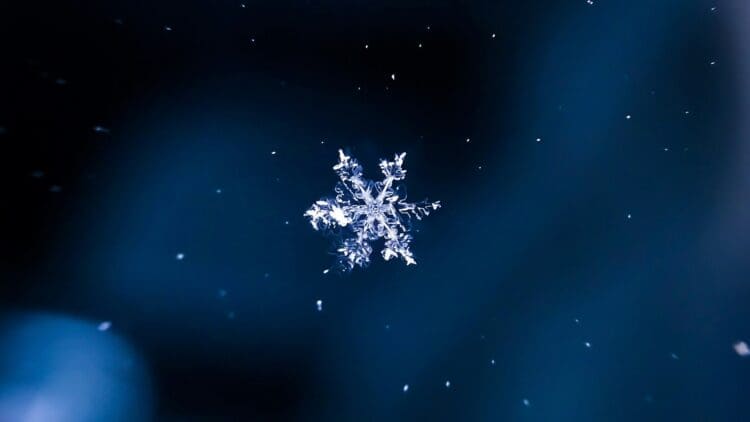

Saving the planet one small device at a time seemed like mere science fiction in the past, but in our day and age, anything is possible. Renewable energy technologies have made a great difference in mitigating climate change, but we still have obstacles to overcome. Now, hydrogen from snowflakes could be the answer to our problems, as UCLA tests a new device aimed to “turn snow into power for millennia.” This device could be a breakthrough for mankind on so many levels. Find out more below.
Powering the world with hydrogen from snowflakes
We are fortunate to live in a modern world filled with advanced technologies, especially renewable energy technologies. We are playing a much more active role in sustaining our planet thanks to these advanced technologies, even though we still face significant challenges each day. Some of the more concerning challenges include the dependency on weather conditions and the storage of excess energy.
Hydrogen is becoming more popular to store excess renewable energy, such as solar and wind energy, but producing green hydrogen is costly, time-consuming, and expensive and challenging to export. Solar energy production is not the best solution for regions that experience limited sun exposure throughout the year, especially where snowfall occurs more regularly.

Fortunately, our energy production and storage limitations could become a thing of the past. A research team has once again designed an ingenious device that can ultimately be utilised to produce hydrogen from snowflakes. Powering the world could be much greener, much sooner than we anticipated. Find out more below.
UCLA tests a new device that uses snow to produce power
Researchers worldwide have been working hard to improve the efficiency of solar panels, with designs including glass solar panels that utilise hydraulic heat capture. But even the most advanced designs have limited efficiency during snowfall, until now. Together, professor Richard Kaner from UCLA and researcher Maher El-Kady have created a range of unique devices. The latest device uses snow to produce power.
The thin, flexible, and small device is called a snow-based triboelectric nanogenerator (snow TENG) and is made from silicon. This particular TENG produces charges with static electricity. Charges are separated to produce power. According to El-Kady:
“Snow is already charged, so we thought, why not bring another material with the opposite charge and extract the charge to create electricity?”
Its benefits go beyond producing power
According to Kaner, who also has the Dr. Myung Ki Hing Endowed Chair in Materials Innovation, the device:
- Operates in remote areas
- Produces its own power
- Functions as a weather station
The snow TENG device offers other benefits, especially during the wintertime when solar panels experience reduced efficiency due to snowfall. This efficiency can be raised when integrating the device into existing solar panel systems, ensuring uninterrupted power generation despite snowfall. Other applications include winter sports monitoring, which could help athletes improve their performance.
Kaner and the team also engineered a clever device that utilises solar energy cost-effectively and effectively to produce and store energy. This energy is then used to power other devices, as well as to create hydrogen fuel. Now, imagine integrating this device with the team’s TENG device. We could effectively produce hydrogen from snowflakes, powering the world in a more eco-friendly manner!
If you are interested in reading more about the snow TENG, you can find the team’s paper published in the scientific journal called Nano Energy. Imagine the endless amount of possibilities in the renewable industry if these two devices are combined and scaled for commercial use. The course of the planet could be changed for good. In other hydrogen news, frozen hydrogen production has begun in the Arctic. Perhaps they should consider these two pioneering devices?
Disclaimer: Our coverage of events affecting companies is purely informative and descriptive. Under no circumstances does it seek to promote an opinion or create a trend, nor can it be taken as investment advice or a recommendation of any kind.
Anke Maree is a writer with a clear and engaging editorial style. Her work focuses on making complex topics accessible, informative, and relevant for readers across different areas of interest.