
Idaho National Laboratory presents MARVEL microreactor fabrication lessons at ANS Annual Conference, targets late 2026 / early 2027 dry criticality
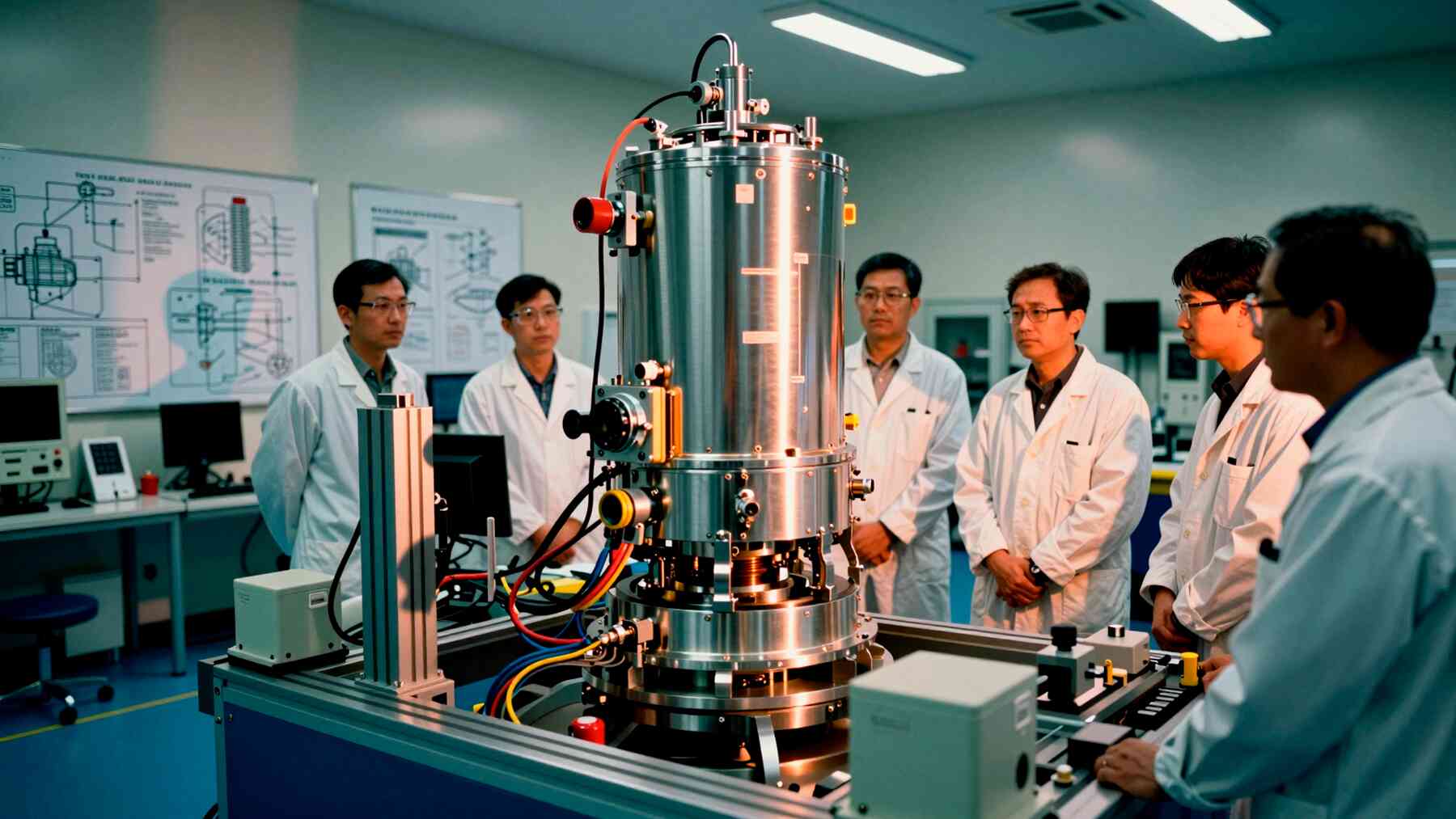 AI-made
On June 1, at the American Nuclear Society’s Annual Conference in Denver, engineers from Idaho National Laboratory laid out what it actually took to build MARVEL — the first new test reactor to be built at Idaho National Laboratory in more than 50 years.. The presentation covered fabrication challenges, engineering setbacks, and hard-won lessons from a project with no real precedent in the modern nuclear era.
The team confirmed the microreactor remains on track for dry criticality in late 2026 / early 2027.
INL Team Presents MARVEL Fabrication Findings in Denver
The session, titled “Lessons Learned from MARVEL Reactor Fabrication,” addressed reactor part fabrication, Stirling engine implementation, and reactivity control system development. MARVEL — Microreactor Applications Research, Validation and Evaluation — is a compact 10–15 kWe (85 kWth) reactor using sodium potassium natural circulation cooling and modified TRIGA fuel elements. Designed for a two-year operational life, the timeline can be extended, according to DOE officials.
The team had to evaluate the critical characteristics of each part individually and develop a systematic assembly process for the multitier control drum stack.
As the first new test reactor to be built at Idaho National Laboratory in more than 50 years, MARVEL is intended to serve as a platform for testing the operational characteristics unique to microreactors. John Jackson, national technical director for the DOE Office’s Microreactor Program, described it as a pathfinder for the commercial microreactor industry — a sector that currently has no comparable reference point.
Design-to-Manufacturing Transition Exposed Integration and Tolerance Challenges
One of the clearest lessons from the project: optimizing one component can create problems elsewhere. Jackson put it plainly: “You change one lever and 97 other levers change in unpredictable ways.” Changes that looked minor on paper produced significant execution setbacks in practice.
Tight tolerances were a persistent source of difficulty. Fuel core components had to be machined to within 0.0005 inches of their specified dimensions — roughly 1.5 times the diameter of a red blood cell. “This haunted us all over the place on this design,” said Chad Ryan, a design agent at Walsh Engineering Services.
The fuel core barrel warped during machining. High-temperature annealing, the team’s initial fix, made things worse — introducing oxidized scale and increasing distortion. They restarted fabrication from scratch, applying low-temperature thermalizations throughout the machining process and developing a combined TIG and MIG welding process to produce high-quality welds without surface distortion. Beryllium oxide reflector parts proved difficult to procure and machine precisely, requiring design allowances for cracks and chips.
Stirling Engine Integration Required Redesign After Vibration and Cooling Problems
MARVEL was originally conceived as a self-contained power system, with integrated Stirling engines enabling stand-alone electricity generation. Selected as off-the-shelf components with a proven reliability record in demanding environments, the engines seemed like a safe bet. “We were so happy with this, we thought to ourselves, maybe we won’t even test the Stirling engines. They’re just drop in, plug and play,” said Justin Johnson, a MARVEL program manager.
That confidence did not hold. Modifications to the cooling system brought flow meter failures, lead-bismuth eutectic leaks, and helium bubbling. Then vibration testing revealed something worse.
“The engineer on the floor during the test said he was worried that the building was going to shake apart,” Jackson said. The team decoupled the Stirling engines from the reactor, returned them to their original packaging — rubber bumpers included — and added two heat exchangers between the engines and the reactor core. Johnson’s takeaway: “Off-the-shelf does not mean ‘off-the-shelf’ when you don’t use it the way it was designed.”
Novel Control Drum System Required Custom Assembly Process
MARVEL’s reactivity control system uses four rotating control drums that moderate neutrons through reflection or absorption depending on the drum’s angle. Control drums with scram capability are rare — the only known precedent, according to INL researcher Anthony Crawford, is the SNAP 10A, a reactor that operated in space for 43 days as part of the System for Nuclear Auxiliary Power program. Crawford noted open questions remain about whether the SNAP 10A met the rigor required of a safety-related device for terrestrial use.
Bearings, springs, motors, switches — nearly every component in MARVEL’s control drum system lacked nuclear-grade off-the-shelf equivalents. The team had to evaluate the critical characteristics of each part individually and develop a systematic assembly process for the multitier control drum stack.
Project Milestones and Path to Late 2026 / Early 2027 Dry Criticality
The project is advancing through a structured series of milestones toward its late 2026 / early 2027 target. The team submitted its dry criticality documented safety analysis in May, DOE has approved the preliminary documented safety analysis, and five teams have been identified to demonstrate test cases on MARVEL once it is operational.
Reactor assembly is scheduled to begin in August. Fuel delivery is expected in October, with October and November reserved for readiness activities. Dry criticality is targeted for late 2026 / early 2027.
MARVEL represents more than a single reactor approaching a milestone. It’s generating a documented record of fabrication challenges, engineering decisions, and hard-won process improvements that didn’t exist before — covering tolerances, welding methods, control drum assembly, and systems integration. That knowledge base may prove as valuable to the broader microreactor industry as the reactor’s operational data itself.
Kelly is an experienced writer with 15 years of experience exploring the big stories that shape our world, from tech breakthroughs and space exploration to climate, energy, and the fascinating quirks of science. She has a talent for turning complex ideas into sharp, memorable insights that stay with readers long after they’ve finished reading.
