
Military bases are built to continue operating no matter what happens outside the fence line. Civilian structures may need to deal with power loss; those that house training, healthcare, and command center operations will lose functionality if their electrical supplies fail. As threats to the electric grid rise, many organizations are taking quiet steps to incorporate resiliency into their day-to-day activities.
Why energy resilience is becoming central to mission readiness
Modern military missions rely upon systems that cannot afford to go down. Communication networks, cyber infrastructure, logistical centers, and medical facilities all require uninterrupted access to electricity in order to perform properly. With greater dependence upon digital and automatic systems, even minor delays can have significant effects on readiness levels.
In the past, building resiliency relied on backup generators and stored fuel. Both types of measures remain important; however, neither was designed to support prolonged outages or to account for disruptions in the fuel and power distribution chain. Over the last few years, severe weather events, infrastructure strain, and rising geopolitical tensions have exposed the limitations of depending solely on commercially supplied power and fuels.




Therefore, energy resiliency has transitioned from a facilities management issue to an operational planning concern. Increasingly, military installations are being called upon to maintain their critical functions independently of outside support for longer durations than ever before. This places greater importance on on-site power generation, which can provide continuous and predictable power.
Assessing new approaches to on-site power generation
Implementing new sources of power on active military installations presents inherent complexities. Each installation has its own unique issues related to land availability, utility layout, environmental considerations, and mission requirements. Any proposed system must operate safely around personnel, comply with relevant regulations, and fit seamlessly into existing patterns of operation.
Due to these limitations, the U.S. Department of the Air Force initiated assessments of emerging energy technologies that would have practical applications at actual military installations. Rather than focus on experimental technologies, the early assessments focused on technologies that had proven paths towards practical integration.
Using this approach allowed planners to begin transitioning from broad exploratory efforts towards identifying individual installations where advanced power systems could be evaluated in detail. The objective was not the rapid deployment of new technology but to identify potential locations where such technologies could augment existing infrastructure and improve long-term energy resiliency.
JBSA’s role under the ANPI initiative
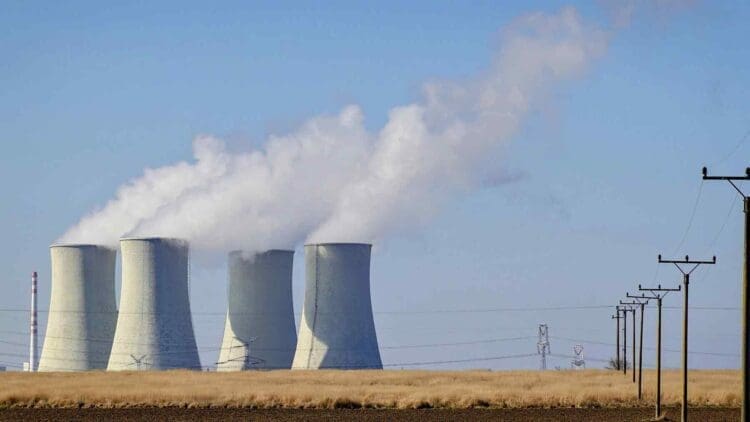
Joint Base San Antonio has been selected as one of several sites being considered under the Department of the Air Force’s Advanced Nuclear Power for Installations (ANPI) initiative. ANPI is a mechanism established to assess whether advanced nuclear technologies can create a stronger sense of energy resiliency through the provision of reliable on‑base electric power independent of the commercial power grid.
JBSA was chosen based on a number of criteria, including existing utility infrastructure, available land, and a diverse set of missions that include training, medical support, cyber operations, and logistics. All of these elements require continuous power; therefore, energy resiliency is viewed as a strategic component of overall base operations rather than simply a contingency plan.
It is also important to note that JBSA’s selection as a candidate location does not imply a decision to install a nuclear facility. Instead, it provides JBSA with the opportunity to participate in a structured assessment process that includes detailed technical analysis, compliance with applicable federal regulations, and environmental reviews conducted in accordance with the National Environmental Policy Act.
Being included in the ANPI evaluation process further illustrates that energy resiliency is evolving into an operational issue rather than merely a secondary function. As military installations start looking beyond short‑term emergency situations and focus on systems that run quietly, continuously, and autonomously, energy resilience is moving to the forefront.