
Kansas State University brought back its standalone bachelor’s degree in nuclear engineering in fall 2024 — nearly 30 years after the program was absorbed into mechanical engineering. The revived B.S. attracted roughly 50 students at launch, and the university saw that number surpass 100 by fall 2025..
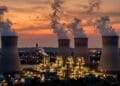
The return comes as industry demand for nuclear engineers continues to build, drawing on a 35-year partnership with Evergy’s Wolf Creek Generating Station — Kansas’s only nuclear power plant — which has long given K-State students access to real-world training through internships and co-ops.
K-State Restores Standalone Nuclear Engineering Degree
For nearly three decades, students pursuing nuclear engineering at K-State had to do so as a concentration within a mechanical engineering degree. That changed in fall 2024, when the university formally relaunched nuclear engineering as its own bachelor’s program.
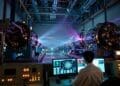

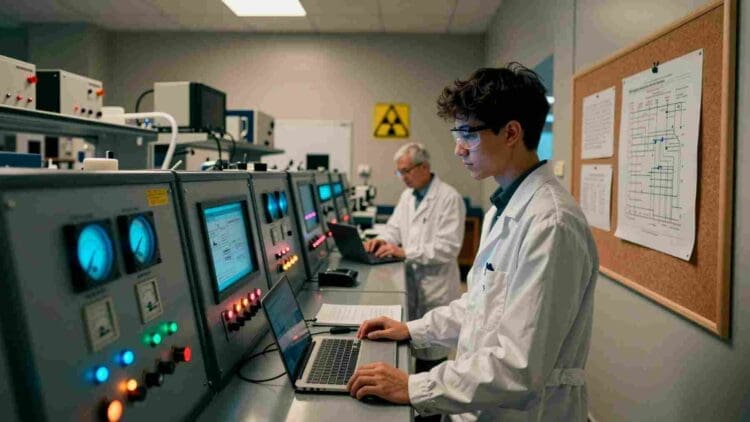
The curriculum covers nuclear energy fundamentals, reactor design and operations, radiation shielding, radiological regulations, and radiation sensing and instrumentation. Students now graduate with a degree that directly names their discipline — a distinction that carries real weight in a competitive job market.
K-State never fully stepped away from the field. Graduate and doctoral programs remained active throughout the hiatus, keeping faculty expertise and research continuity intact. “This allowed us to maintain expertise within the university and set us up well for restarting the B.S. NE program,” said program director Amir Bahadori. That foundation made the relaunch considerably smoother than starting from scratch.
Student Demand and Industry Pressure Drove the Reinstatement
The decision to restore the degree was not made in a vacuum. Bahadori pointed to student feedback, rising enrollment interest, input from the industry advisory council, and backing from university administration as the primary forces behind it.
The numbers support that account. The program launched with approximately 50 declared majors and surpassed 100 by fall 2025 — the kind of growth within a single academic year that reflects genuine demand rather than a short-lived spike.
Industry is pushing from the same direction. Companies are approaching K-State to use its research reactor for employee training, seeking hands-on reactor experience for workers who hold engineering credentials but have spent limited time inside nuclear facilities. Bahadori framed the broader situation plainly: a significant workforce expansion is needed to grow nuclear power capacity and meet rising energy demand. K-State also offers an accelerated five-year combined bachelor’s and master’s program in nuclear or mechanical engineering, giving students a faster route into the workforce or advanced research.
Wolf Creek Internship Program Feeds Nuclear Workforce Pipeline
Classroom instruction at K-State is backed by one of the region’s most established industry partnerships. Evergy’s Wolf Creek Generating Station has run an internship and co-op program for more than 35 years. Over 150 students have participated, and more than 40 have gone on to become full-time engineers at the plant.
In 2024 and 2025, nine K-State nuclear engineering students interned or completed co-ops at Wolf Creek. In 2025, K-State students accounted for 30 percent of all Evergy interns — a share that reflects both the university’s pipeline strength and Evergy’s deliberate recruiting strategy.
Students are embedded within operational teams and assigned substantive projects, not placed in observation roles. Past interns have worked on fire protection compliance, fuel handling procedures, and reactor engineering tasks. One student helped receive and offload new reactor fuel; another designed a bracket system for fuel inspection cameras.
Evergy also provides merit-based scholarships of $5,000 per semester, renewable for up to four semesters. In the years since the program launched in summer 2023, dozens of students have received scholarships, seven of whom went on to further internships or careers at Wolf Creek.
On-Campus Research Reactor Supports Both Education and Industry
Beyond the Wolf Creek partnership, K-State operates a TRIGA Mark II research reactor — one of only 25 university-operated research reactors in the United States. Licensed to run at thermal power levels up to 1.25 MW, it serves as a central resource for both coursework and applied research.
The reactor supports radiation detection courses, neutron radiography, tracer isotope production, trace element analysis, and medical radioisotope generation. Its applications span energy, health care, agriculture, and manufacturing. The facility is staffed largely by undergraduate students holding NRC operator licenses — a hands-on credential that sets K-State graduates apart in the job market.
In 2024, Bahadori established the Institute for Radiation Health Studies, which uses the reactor as a core resource for radiation expertise and biological irradiation research, extending its reach well beyond standard coursework.
What This Means for Students and the Field
K-State’s relaunched nuclear engineering degree, paired with its Wolf Creek internship pipeline and on-campus reactor, positions the university as a substantive contributor to the national nuclear workforce. The program offers a coherent path: foundational coursework, licensed reactor operation experience, and industry internships that regularly convert to full-time employment.
Enrollment is growing. Industry partnerships are expanding. The research infrastructure was never dismantled. For students weighing a career in nuclear energy, K-State now offers a standalone credential, practical training, and a job market that — by most available indicators — shows no signs of cooling.
Kelly is an experienced writer with 15 years of experience exploring the big stories that shape our world, from tech breakthroughs and space exploration to climate, energy, and the fascinating quirks of science. She has a talent for turning complex ideas into sharp, memorable insights that stay with readers long after they’ve finished reading.