
MOL commits $300 million to Delfin FLNG 1, the first U.S. floating LNG liquefaction project
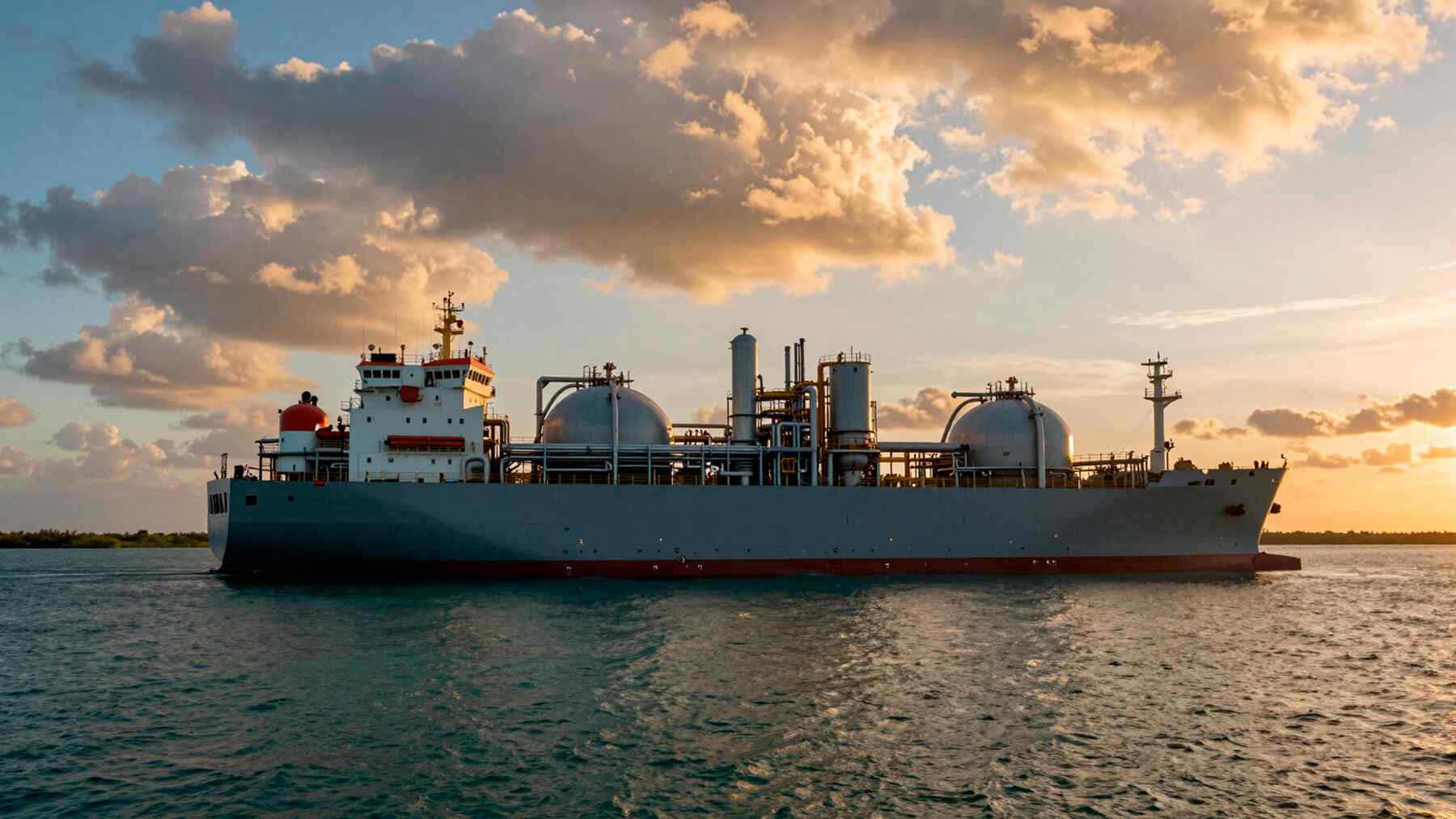 AI-made
Mitsui O.S.K. Lines (MOL) and partners including GIP/BlackRock, Vitol, and Delfin Midstream have reached a Final Investment Decision on Delfin FLNG 1 — the first floating LNG liquefaction facility in the United States and the largest FLNG project in the world. MOL will contribute approximately $300 million, representing roughly a 23% equity stake in a project with a total estimated cost of $5 billion.
Situated about 40 miles off the Louisiana coast, Delfin FLNG 1 is designed to produce 4.4 million tons of LNG per year, with first production targeted for 2030.
MOL Joins Delfin FLNG 1 as First Japanese Investor in an FLNG Project
MOL’s $300 million contribution accounts for roughly 23% of a total equity pool of approximately $1.4 billion. The remainder is held by Delfin Midstream, a group of investors led by GIP — now part of BlackRock — and Vitol. At an estimated $5 billion total, the project represents a serious long-term bet on offshore LNG production.
As part of the FID milestone, a construction contract for the FLNG unit will be executed with Samsung Heavy Industries, moving the project into its execution phase.
The investment also marks a notable first: MOL becomes the first Japanese shipping company to hold an equity stake in an FLNG project. For a company that has long been a dominant force in LNG transportation, this reflects a deliberate expansion of strategic ambition — not just incremental growth.
Why the FID Was Reached Now: Permits Secured and Sales Agreements Signed
MOL’s involvement with Delfin predates this decision. The company first invested in Delfin Midstream in 2023 and has supported development activities since, running a parallel commercial evaluation of the project’s viability.
Moving forward required satisfying every condition necessary to proceed. Critically, the project has obtained all permits and licenses needed for construction — a threshold that has stalled or outright derailed other U.S. LNG developments.
Long-term sales agreements are in place with four buyers: Vitol and Gunvor, two of the world’s leading LNG trading companies; Centrica, a major U.K. energy company; and Expand Energy, a significant U.S. natural gas producer. Those contracts provide the revenue certainty that large-scale infrastructure demands before capital is committed. As part of the FID milestone, a construction contract for the FLNG unit will be executed with Samsung Heavy Industries, moving the project into its execution phase.
What Delfin FLNG 1 Will Produce and How It Will Operate
The facility carries an annual nameplate LNG production capacity of 4.4 million tons, with first production targeted for 2030. Feed gas will come from the U.S. mainland, delivered through existing pipeline infrastructure to the offshore site roughly 40 miles off the southern Louisiana coast. Liquefaction takes place onboard the FLNG vessel itself, and once processed, LNG is loaded directly onto carriers for delivery to buyers — a relatively streamlined supply chain compared to onshore alternatives.
One operational characteristic worth noting: FLNG units can disconnect from their mooring systems and relocate to safer waters during severe weather events such as hurricanes. In a region with significant storm exposure, that flexibility meaningfully reduces the risk of damage and disruption.
Context: MOL’s LNG Strategy and the Broader Significance of Floating Liquefaction
MOL already operates the world’s largest LNG fleet and has gradually extended its presence into downstream LNG activities through assets such as Floating Storage and Regasification Units and power generation vessels. Delfin FLNG 1 moves the company in the opposite direction — upstream, closer to the point of production.
That positioning complements rather than duplicates MOL’s existing capabilities. Relevant technical experience from offshore floating facility projects carries over directly, as does operational and safety knowledge from ship-to-ship cargo transfer work — both of which translate well to an FLNG operation.
FLNG technology also carries structural advantages over onshore liquefaction. Processing gas at sea reduces impacts on coastal communities and sidesteps congested nearshore shipping lanes. On the U.S. Gulf Coast, where onshore LNG infrastructure is already heavily concentrated, that distinction has real practical weight.
Key Takeaways
Delfin FLNG 1 is the first floating LNG liquefaction facility in the United States and the largest FLNG project in the world. MOL is investing approximately $300 million for a roughly 23% equity stake, alongside partners GIP/BlackRock, Vitol, and Delfin Midstream, with total project costs estimated at $5 billion.
All required permits are secured, long-term sales agreements are signed with four buyers, and Samsung Heavy Industries will construct the FLNG unit. The facility is expected to begin producing 4.4 million tons of LNG per year by 2030, supplied by U.S. mainland gas delivered via existing pipelines to a site 40 miles offshore Louisiana.
Kelly is an experienced writer with 15 years of experience exploring the big stories that shape our world, from tech breakthroughs and space exploration to climate, energy, and the fascinating quirks of science. She has a talent for turning complex ideas into sharp, memorable insights that stay with readers long after they’ve finished reading.
