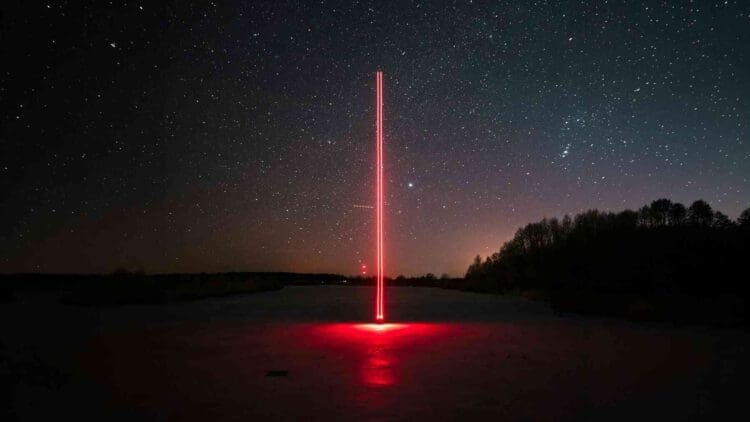

At a facility in Harwell, UK, scientists have been pointing a beam of X-ray light—10 billion times brighter than the Sun—at fragments of ancient rock collected from bubbling springs in the Philippines.
The target is the Diamond Light Source, the UK’s national synchrotron science facility. The rocks arrived carrying clues about a process happening quietly beneath the Earth’s surface. What researchers from the British Geological Survey and the Philippine Nuclear Research Institute are searching for inside them could change how the world locates its next clean fuel source.
A facility unlike any other
The Diamond Light Source sits on the Harwell Science and Innovation Campus in Oxfordshire. It accelerates electrons to near the speed of light, generating X-ray beams of extraordinary intensity—light 10 billion times brighter than the Sun. That brightness is not a marketing figure. It is what makes the facility scientifically indispensable.




Conventional laboratory equipment cannot resolve matter at the atomic scale. Synchrotron light can, allowing researchers to examine the arrangement and behavior of individual elements inside a rock sample and revealing geochemical detail that would otherwise remain invisible. For scientists studying natural hydrogen, that resolution is exactly what the work requires.
Three institutions drove this research: the British Geological Survey (BGS), the Philippine Nuclear Research Institute (PNRI), and the GFZ Helmholtz Centre for Geosciences. Each contributed different expertise to a shared question—how, exactly, does the Earth produce its own hydrogen?
Rock samples from one of Earth’s most active hydrogen seeps
The rocks at the center of this study came from the Zambales ophiolite system in the Philippines. An ophiolite is a section of ancient ocean floor thrust onto land through tectonic movement—geologically significant because the minerals it contains, particularly iron- and magnesium-rich rocks, are known to react with water in ways that generate hydrogen gas.
Zambales is not just any ophiolite. Surface hydrogen flux measurements taken at bubbling springs and seeps in that region rank among the highest natural fluxes ever recorded anywhere in the world, making it an exceptional site for studying the conditions that drive hydrogen generation.
PNRI scientists collected rock samples from several areas within the Zambales system as part of a broader project documented by Aquino et al. in 2025. Those samples were then shipped to the Diamond Light Source in Harwell for synchrotron analysis.
What scientists are actually looking for inside the rock
Natural hydrogen does not appear from nowhere. It forms through a combination of geochemical and biochemical reactions involving rocks, minerals, fluids, and microbes. Which minerals are present, how they interact with water, and what role microbial activity plays—these conditions together determine whether hydrogen is generated in quantities that matter.
Understanding those conditions at the atomic scale is the central challenge. Identifying which elements are driving the process, and in what configuration, could eventually allow scientists to pinpoint the precise geological signatures of a commercially viable hydrogen accumulation. That is the deeper purpose behind the synchrotron analysis.
Dr. Ruth Delina-Agillon, BGS experimental geochemist and principal investigator of the research, described the significance of the approach. Using the Diamond Light Source, she said, provided “a great opportunity to investigate the behavior of key elements in hydrogen seep systems at an unprecedented level of detail.” She called it “an important step towards understanding the drivers of natural hydrogen generation in ophiolitic environments, not only in the Philippines but worldwide.”
Why natural hydrogen is attracting serious attention
Hydrogen is already a working industrial material, playing an active role in metal treatment, fertilizer production, and chemical manufacturing. What is new is the growing recognition of hydrogen as a potential clean fuel—and the question of where it might be found naturally, without the need to manufacture it.
When hydrogen burns, it produces no carbon emissions. That separates it from fossil fuels and makes it relevant to the global energy transition. Most hydrogen today is made using fossil fuels, which largely cancels the emissions benefit. Natural hydrogen sidesteps that problem entirely, generated by the Earth through geological processes that require no industrial input.
A wave of discoveries in recent years—natural hydrogen accumulations and seeps identified across multiple countries—has elevated both scientific and commercial interest in finding and evaluating these resources.
What comes next—and why it matters beyond the Philippines
The atomic-scale datasets from the Diamond Light Source are still being analyzed. No final results have been published yet, and the findings should be treated as preliminary—conclusions will follow the data rather than precede it.
What the team anticipates, according to BGS, is that the new data will clarify the geochemical controls driving hydrogen generation. Once understood in the context of Zambales, those controls could be applied to geologically similar systems elsewhere, helping researchers and energy planners identify and prioritize exploration sites globally.
That prospect positions this research within a much larger story. The international push for clean energy depends on finding alternatives that are genuinely low-carbon at every stage. Naturally occurring hydrogen, if it can be reliably located and extracted, could complement existing renewable strategies. The rocks from Zambales, analyzed under the world’s brightest light, may have just made that search a little more precise.
Kelly is an experienced writer with 15 years of experience exploring the big stories that shape our world, from tech breakthroughs and space exploration to climate, energy, and the fascinating quirks of science. She has a talent for turning complex ideas into sharp, memorable insights that stay with readers long after they’ve finished reading.