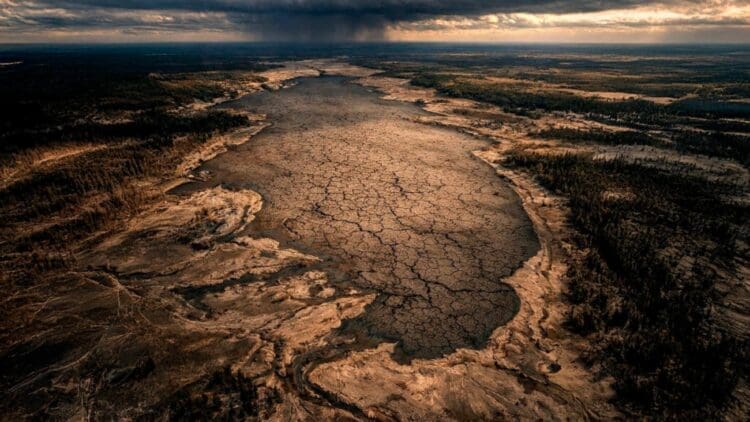
One could argue that we are presently living in one of the most exciting eras ever, marked by highly advanced medical and scientific technology and a higher standard of living. However, history has taught us that each era presents its own set of challenges. In fact, the UN has declared a new era of “bankruptcy,” and the Americas, or at least some parts of it, may be hit the hardest. Discover below what led to this new era’s most significant problem, and why it is officially a UN crisis.
Each era has its own set of problems
Scholars have always been fascinated by historical eras, and the categorization of each will vary geographically. When considering information collectively from sources such as Springer Nature Link, Pressbooks.pub, and The World Economic Forum, one could argue that there are three historical globalization eras.
The first era, dating between the 15th century and 1800, is known as the “Early Globalization” era. It was highlighted by colonization and exploration, and marked by problems such as inequality, conflict, and exploitation. The second era, between 1800 and 2000, is known as the “Industrial Globalization” era. Imagine global trade growth, increased international relations, and rapid industrialization, alongside problems such as wars, unemployment, rising poverty, and homelessness.

Scholars believe that we are presently in the third historical globalization era, known as “The Information Age” or “Hyper-Globalization.” Our technology and communication are more advanced and faster than ever, and we have access to integrated supply chains. But we are the generation left to face the consequences of climate change. Globally, we are now even facing a newly declared “bankruptcy” era, but it’s not what you think.
UN declares new “bankruptcy” era
Global warming has accelerated climate change, and while several nations worldwide have experienced the effects, such as extreme weather conditions and altered ecosystems, climate change is now threatening survival in this very century. According to the UN, one crucial resource, relied on by six billion people, has become irreversibly damaged.
This crucial resource is water. A UN report has analyzed global water systems and has found that nearly 75% of the population will be affected by “global water bankruptcy.” However, according to the UN University’s Institute for Water, Environment and Health’s director, Kaveh Madani, we must not give up just because bankruptcy has been declared. Madani added that:
“By acknowledging the reality of water bankruptcy, we can finally make the hard choices that will protect people, economies, and ecosystems.”
The Americas may be among the hardest-hit areas
According to a recent University of Utrecht study, while climate change may be a key driver of global water scarcity across 21 “hot spots,” other factors also played a significant contributing role, namely,
- Population growth
- Agricultural overuse
- Industrial demand
- Municipal consumption
According to the University of Pennsylvania’s The Water Center, the U.S. is not excluded from this crisis, despite what some may think, and some regions face significant water stress. The World Resources Institute adds that the U.S. may experience the hardest hit sooner rather than later. Figures from a report by the Water Center indicate that the following states are vulnerable to high water stress levels:
- California
- Arizona
- Texas
- New Mexico
- Colorado
- Utah
- Nevada
- Kansas
- Oklahoma
Madani cannot emphasize enough how important transparency and realism on the issue are, as it will be the first step to transformation. Major cities such as Cape Town and Tehran have survived “Day Zero” events, which is why protocols must be in place for emergencies. Scientific breakthroughs are also now needed more than ever, as renewable innovations can help drought-stricken regions in ways that certain protocols cannot. An example of such innovations is California’s solar panel-covered canals that save 63 billion gallons of water.