
Oregon’s North Fork Dam catches over 90% of young salmon and pipes them seven miles around hydropower barriers

Hydropower is becoming more environmentally friendly thanks to the integration of innovative passage technology.
For many years, hydroelectric energy has helped shape the American economy.
Today, the legacy infrastructure has become even more relevant, especially as rising power demand strains regional grids.
The hydropower facility’s surface collector and bypass pipeline are now operating continuously. It continues to achieve near-perfect passage success.
Unfortunately, modern dams also disrupt historical fish migration routes, requiring immediate intervention to save dwindling species.
Will Oregon’s latest aquatic bypass system serve as a framework for sustainable river management?
How legacy power generation is key to modern demands
For more than a century, the United States’ economic growth has been fueled by hydropower.
By the 20th century, major projects helped electrify rural regions and power industrial growth.
The 2,080-megawatt Hoover Dam and 6,809-megawatt Grand Coulee Dam were especially key projects.
Today, as the nation has rapidly evolved into a fast-paced modern society, legacy hydropower infrastructure has become even more relevant.
The adoption of digital networks, widespread electrification, and industrial manufacturing expansion are driving U.S. electricity demand to unprecedented highs.
In 2025, power consumption reached a record 4.20 trillion kilowatt-hours.
Between 2040 and 2050, the annual growth rate is predicted to average approximately 2% to 2.5%.
This significant surge is pushing regional grids to almost beyond capacity.
Legacy hydropower is crucial in providing baseload energy and grid flexibility as the national power supply gap grows.
Simultaneously, it is also essential to meeting federal and state climate targets.
From green ambitions to hidden ecological risks
Federal climate policies have been established to guide the nation’s renewable energy transition.
One target entails achieving 100% carbon-free national power by 2035.
Meanwhile, in Oregon, law pushes this even further.
A 100% reduction in greenhouse gas emissions from retail electricity sales is mandated by 2040.
That is why hydropower is a strategic asset, as it provides vast dispatchable capacity.
Major dams store potential energy. During peak demand periods, hydroelectric facilities’ water flow is adjusted to stabilize the grid.
Unfortunately, the operation of these massive power plants carries high ecological costs.
Natural river flow is altered by dams. This leads to water temperature shifts and also blocks historical migration routes for native fish.
In Oregon, utility providers like Portland General Electric are now under pressure to intervene.
Without intervention, fish experience spawning failure and reduced population numbers.
That is why North Fork Dam implemented an innovative approach to replenish native fish species.
Making hydropower facilities more ecologically friendly
North Fork Dam is situated on the Clackamas River near Estacada, Oregon.
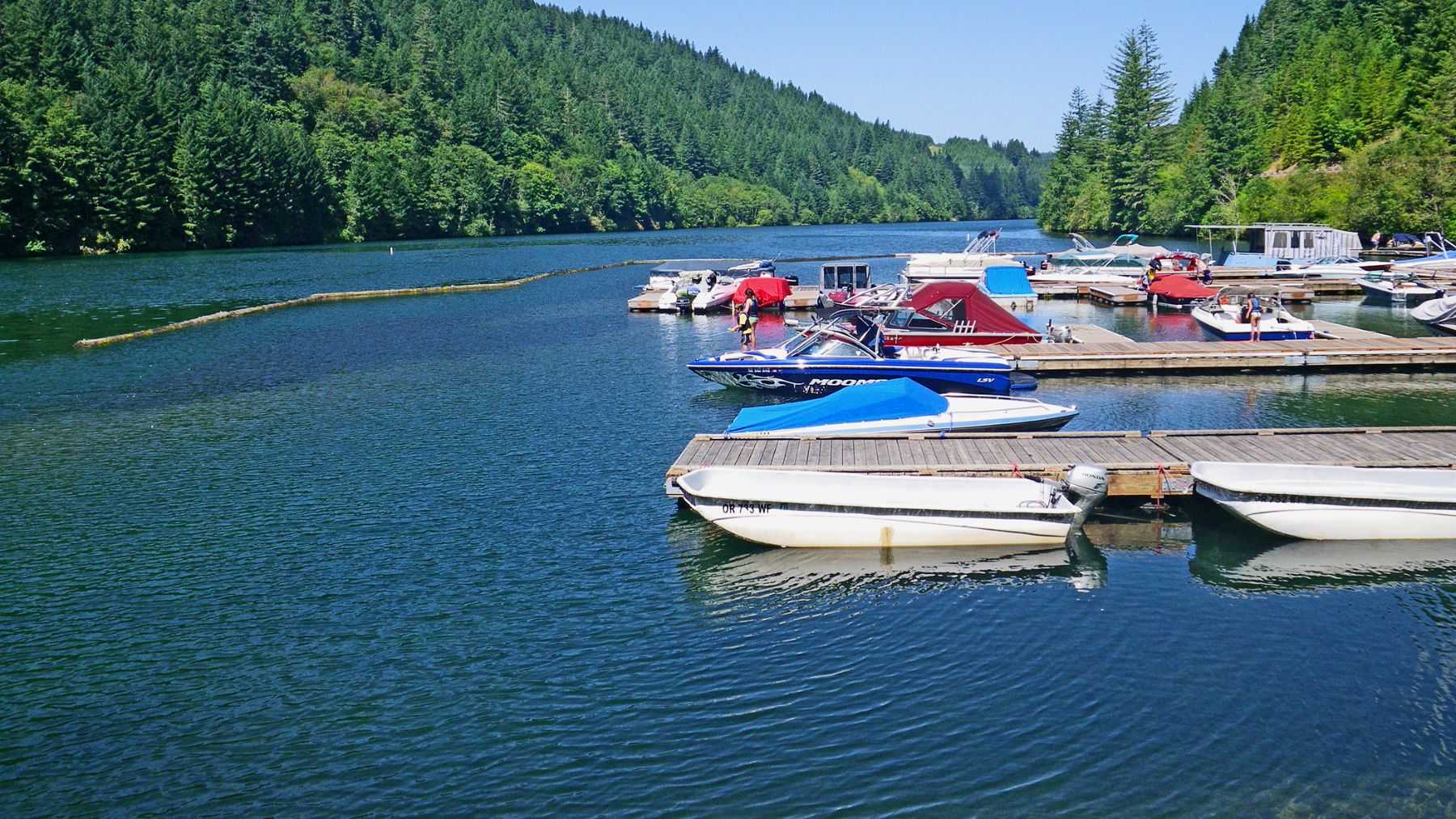
For years, the complex has blocked crucial migration routes for coho salmon, winter steelhead, Pacific lamprey, and spring Chinook.
As a result, young ocean-bound fish faced up to twelve days of travel delays through the reservoir.
Prolonged exposure raised mortality rates due to warmer water and river predators.
To resolve this issue, juvenile fish were collected and captured using a floating surface collector at North Fork Reservoir.
Restoring fish runs at Clackamas River
Over 90% of juvenile salmonids are captured by the collector.
They are then routed around three dams using a seven-mile bypass pipeline. This only takes two and a half hours.
Pipeline survival rates reach 99%.
Furthermore, a hands-free sorting system at adult ladders separates wild fish from hatchery stock.
Consequently, a record-breaking return of 9,000 early-run adult coho salmon was achieved at North Fork Dam.
The hydropower facility’s surface collector and bypass pipeline are now operating continuously. It continues to achieve near-perfect passage success.
This demonstrates that legacy hydroelectric plants can be modernized without compromising vital aquatic ecosystems.
By adopting similar modular bypass infrastructure and restoration methods, sustainable power can be secured across Oregon and the U.S.
Ultimately, innovative fish population restoration methods are key to balancing America’s future grid stability with ecological stewardship.
Anke Maree is a writer with a clear and engaging editorial style. Her work focuses on making complex topics accessible, informative, and relevant for readers across different areas of interest.
