
Oil and Gas Companies Add Renewable Fuels to Low-carbon Portfolio
The global energy landscape is steadily moving toward cleaner sources, with a gradual decline in fossil fuel dependence. The share of fossil fuels in the world’s energy mix has declined from 82% in 2022 to 81.5% in 2023, indicating a gradual shift. This transition is driven by the need to cut greenhouse gas emissions and combat global warming. Against this backdrop, biofuels are emerging as a low-carbon alternative in transportation, with their share in total liquid fuel demand expected to grow to 6.4% in 2030, forecasts GlobalData, a leading data and analytics company.
GlobalData’s Strategic Intelligence report, “Biofuels,” evaluates the role of oil and gas companies in the biofuels theme. It benchmarks the efforts of oil majors, such as TotalEnergies, BP, Shell, and ExxonMobil, in the biofuels value chain. It also identifies the key developments influencing this theme and provides an outlook for renewable fuels – an emerging category of biofuels.
Ravindra Puranik, Oil and Gas Analyst at GlobalData, comments: “The oil and gas industry—including producers, contractors—are relatively new entrants in the biofuels space. Despite this, they are making notable movements in the competitive landscape for renewable fuels, such as renewable diesel and sustainable aviation fuels (SAF). Prominent refiner Neste is leading the renewable fuels segment, particularly renewable diesel with four active refineries around the world.”
However, refiners like Neste, Valero, and Marathon Petroleum are making strategic investments to scale biofuel production and lower costs.
Despite their clean energy profile, biofuels face significant challenges related to production costs and competition with fossil fuels. Processing advanced biomass sources, such as agricultural and forestry waste, remains expensive, limiting large-scale viability. However, refiners like Neste, Valero, and Marathon Petroleum are making strategic investments to scale biofuel production and lower costs. Technological innovations in refining are also critical in improving biofuel affordability and availability.
Puranik continues: “Although biofuels contribute towards energy security while reducing emissions, their adoption remains nascent and restricted to certain markets globally. As a result, companies are cautious while pledging investments for new facilities, and even halting project development, as was seen in the case of Shell’s upcoming facility in Rotterdam.”
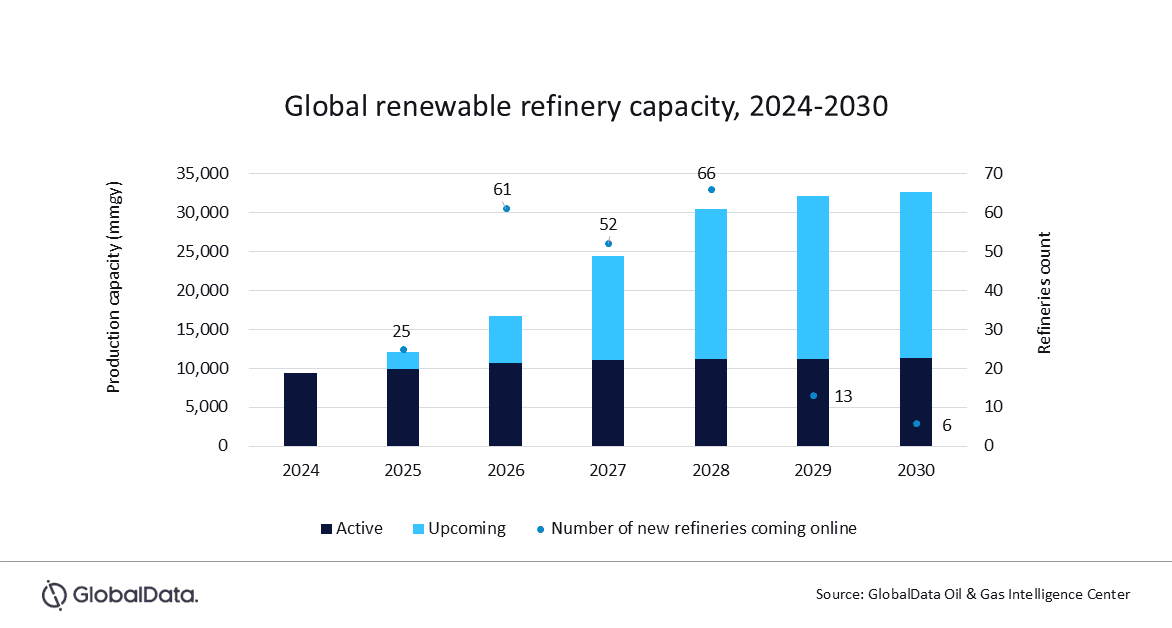
Global renewable refinery capacity is experiencing significant growth, with 15 new facilities under construction in 2025, while two are already operational this year. By 2030, an additional 218 facilities are expected to come online, expanding global capacity from 9,340 million gallons per year (mmgy) in 2024 to a projected 32,618 mmgy. The US currently accounts for a 51% share in global renewable fuel production, driven by policy incentives, but the recent political shifts, including Trump’s attempts to repeal parts of the Inflation Reduction Act (IRA), create uncertainty.
Puranik concludes: “Policy approaches vary widely around the world. While the European Union (EU) enforce strict mandates, such as the ReFuelEU Aviation initiative requiring a minimum of 2% SAF blending by 2025, some of the other regions lack such clear policies, leading to disparities in biofuel adoption and investment. The commitment of a nation to achieve interim net-zero objectives, availability of biomass, and affordability of petroleum fuels are critical factors influencing policy support for biofuels.”
