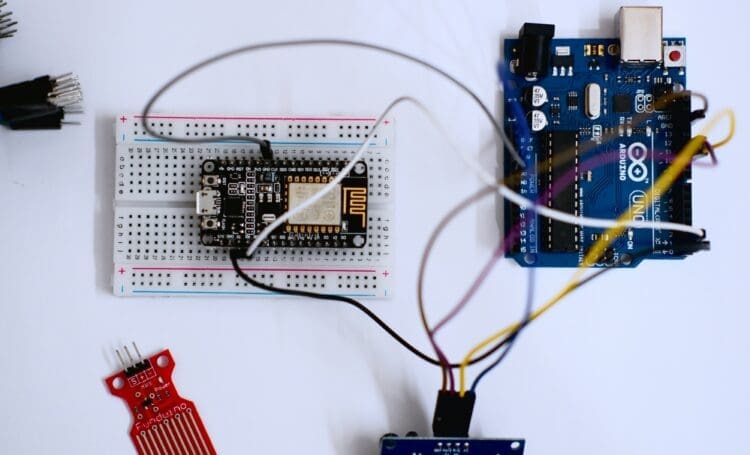

The Internet of Things (IoT) ecosystem is growing across many industries. It connects everything from industrial sensors to consumer smart devices, and always-on connectivity is becoming a basic requirement. As deployments grow, though, many teams still face problems with battery life, temperature limits, and higher operating expenses due to inefficient power use.
As a result, designing power-efficient IoT devices has become a top concern for engineers, especially for items that need to work consistently at the edge for long periods. This guide draws on the engineering expertise of industry leaders like Synaptics to help develop smart devices that are more efficient and reliable. Synaptics makes low-power, high-performance connectivity and processing solutions that can help.
Why Power Efficiency Is Critical for IoT Success
Power efficiency is a key factor in determining whether an IoT deployment can be scaled. Longer battery life lowers “battery anxiety” for both end users and operators. It also ensures that devices are always available when data is most needed, especially in edge environments where access may be limited or intermittent. Reliable uptime is a usability benefit, but it is also a must-have for apps like predictive maintenance and smart infrastructure.




Inefficient power design soon leads to greater life cycle costs from an operational point of view. In large deployments, even changing batteries regularly becomes a logistical nightmare.
For instance, a network of only 500 sensors with a battery life of five years may require companies to replace roughly 100 batteries per year starting in year three. They will also need extra time to find, service, and check each device in the field. As deployments grow to thousands of nodes, these maintenance intervals can significantly affect the total cost of ownership and workforce planning.
Better thermal behavior is also a direct result of more efficient power use. Devices that use less energy also generate less heat, making it easier to design enclosures. This allows smaller form factors and enables more flexible placement in tight or sealed spaces. As a result, developers can build IoT systems that last longer and use less space in industrial and consumer settings.
Core Strategies for Power-Efficient Design
Designing power-efficient IoT devices requires a coordinated approach across hardware selection, firmware behavior, connectivity choices, and system-level optimization.
1. Choose Your Hardware Wisely
Choosing the right hardware is a key factor in whether an IoT device can satisfy its long-term power budget goals. When using low-power microcontrollers (MCUs) that support various sleep and standby modes, devices can remain in ultralow-power states between sensing or communication cycles.
This capability is important for edge deployments that do not run continuously but only when needed. Many current MCUs are designed to operate with duty-cycled workloads common in IoT applications. This lets engineers find the right balance between responsiveness and saving energy.
Choosing the right sensors is just as crucial because peripheral parts frequently use lots of energy, leading to increased IoT device power consumption. High-precision sensors that support customizable sample intervals or event-triggered activities help teams better track the device’s power profile by reducing superfluous data collection and transmission. Connectivity parts also affect how people use smart devices, especially in apps that always need an internet connection or that need to sync often.
This is where connected platforms help. Companies like Synaptics make innovative connectivity and processing solutions that help touch, display, biometrics, multimedia, and wireless subsystems work together with less power. This lets development teams reduce the number of parts they need while making the entire system more energy-efficient.
Engineers may make integration easier and promote longer device lifespans and more reliable field performance by using hardware ecosystems designed with power optimization from the outset.
2. Optimize Software and Firmware
Strategies for software and firmware are very important for lowering the power use of IoT devices. They decide how long the system is active and how long it is not. One of the best things you can do is keep the device in its lowest power state for as long as possible and limit the number of times it switches to higher-energy processor and communication modes.
Recent studies indicate that enhanced low-power states, such as power-saving mode (PSM) and extended discontinuous reception (eDRX), enable IoT devices to remain inactive for prolonged periods. This can extend operational lifespans from months to years in low-transmission contexts.
Efficient firmware helps reduce CPU wake-up time and unnecessary processing cycles. Interrupt-driven operations, event-based sensing, and hardware acceleration are some of the ways that systems can wake up only when they need to and then swiftly go back to sleep.
Sending updates in batches instead of constantly can also help save electricity. Wireless communication consumes a lot of power, so buffering and sending data at different times help teams work more efficiently without sacrificing reliability.
3. Implement Smart Connectivity Protocols
Choosing the right wireless connectivity protocol is important for IoT device design, as it helps balance performance needs with battery efficiency. Wi-Fi, Bluetooth Low Energy (Bluetooth LE), and Thread are all technologies that can be used for different roles, depending on how much bandwidth is needed, how far you want to go, and how often you need to use them. Wi-Fi is better for jobs that need a lot of bandwidth, such as updating firmware. Bluetooth LE and Thread, on the other hand, are better for low-power sensing and mesh networking.
New interoperability standards like Matter add to the design challenges because many devices need to support multiple radios simultaneously. Wi-Fi, Thread, and Bluetooth all use the same 2.4 GHz spectrum — if coexistence management is not well implemented, interference, retransmissions, and wasted energy can result. According to Synaptics’ smart home connectivity guide, coordinated radio coexistence solutions help achieve lower latency and boost efficiency while making it easier for IoT devices that use multiple protocols to work together.
4. Use Edge AI for Smarter Decisions
Edge AI enables IoT devices to process data locally, so they do not need to keep sending it to the cloud. This reduces both latency and the energy required to transmit wirelessly. Instead of constantly streaming raw sensor information, devices can filter it or respond to events on the device and only send useful results when they are needed.
Moving inference closer to where data is generated reduces dependence on centralized processing infrastructure. This infrastructure has higher latency and requires more power due to continuous wireless communication. Synaptics says the industry is increasingly moving intelligence toward the sensor edge because cloud-dependent architectures can increase latency and energy consumption in real-time IoT environments.
Common Mistakes That Drain IoT Device Batteries
Sometimes, a well-designed IoT system can fall short of expected battery life when small architectural decisions accumulate into unnecessary power overhead. Reviewing common pitfalls can help engineering teams avoid inefficiencies early and maintain tighter control over long-term IoT device power consumption.
- Focusing only on active power draw rather than total system power use: It is common to optimize for peak operating consumption while overlooking energy use during idle and sleep states. Because many IoT devices spend most of their life cycle inactive, inefficient standby behavior can quietly become the largest contributor to battery drain.
- Selecting an overpowered processor for a simple workload: Using a high-performance MCU when a lower-power alternative would meet requirements increases baseline power consumption and unnecessarily reduces battery life. Matching compute capability to workload complexity is one of the most effective early-stage optimization decisions.
- Creating an overly “chatty” device that transmits too frequently: Wireless communication is typically the most energy-intensive operation in an IoT device. Sending nonessential updates too often can significantly increase energy use and shorten deployment intervals between battery replacements.
- Neglecting real-world connectivity testing conditions: Devices that perform efficiently in controlled lab environments may consume more power in the field. Physical distance, signal interference, and environmental obstructions often force radios to retransmit data or increase transmission strength, which raises overall energy consumption and reduces expected battery life.
Designing IoT Devices for Long-Term Efficiency and Reliability
To make IoT devices that use less power, you need to carefully plan how to select hardware, optimize firmware, connect devices, and leverage new technologies like edge AI. Engineering teams can make items last longer and perform better overall by focusing on low-power architectures early in development and avoiding common design mistakes.
Photo by Fahim Muntashir on Unsplash