
Ørsted’s Barrow Offshore Wind Farm reaches 20 years of commercial operation in the UK
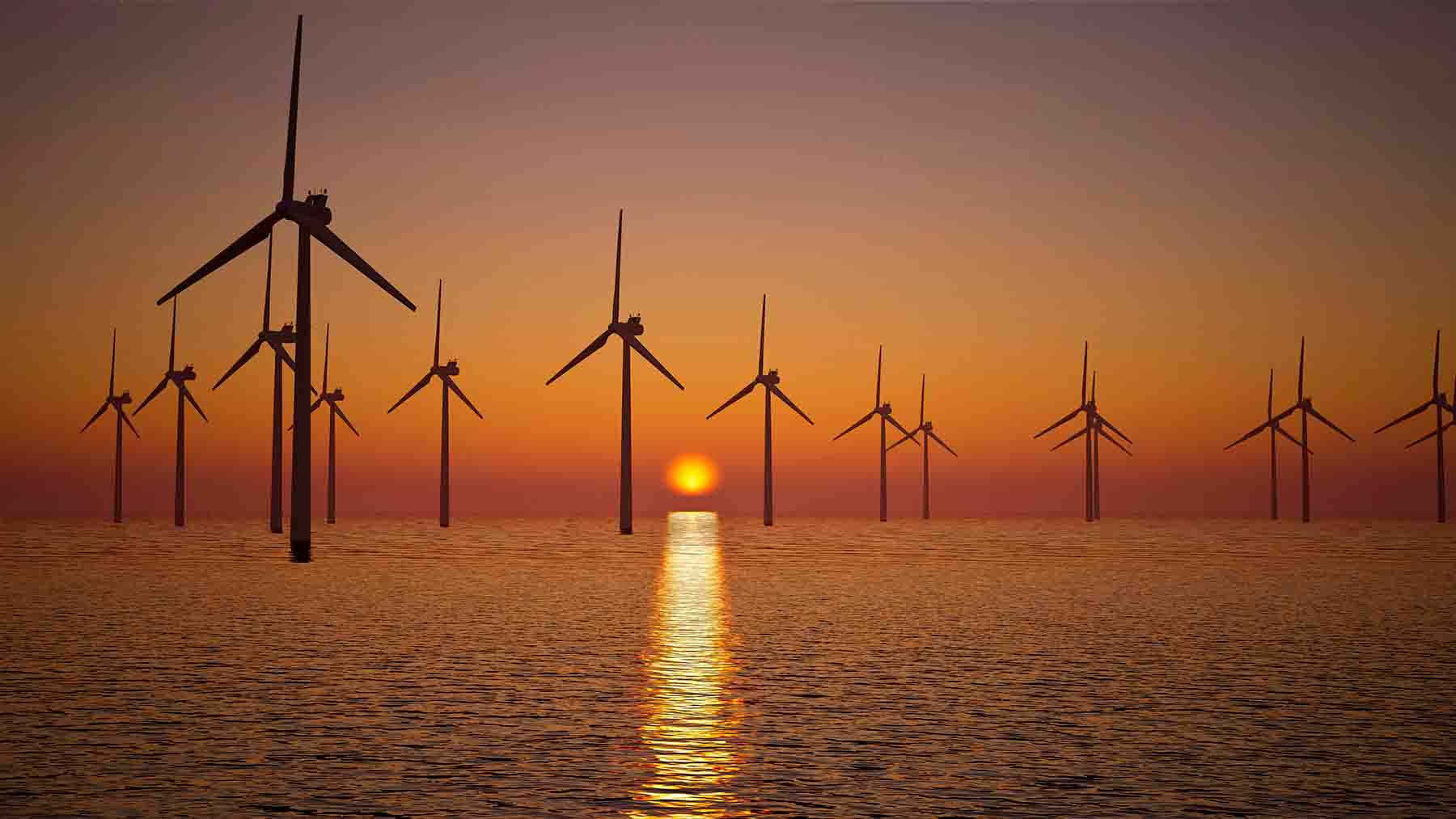
Ørsted’s Barrow Offshore Wind Farm just hit 20 years of commercial operation, two decades since its 30 turbines and 90 MW of capacity first started generating electricity in the Irish Sea, southwest of Walney Island. The anniversary also marks 20 years of Ørsted producing renewable power in the UK — a milestone that traces all the way back to the day Barrow switched on in 2006, one of the country’s earliest commercial offshore wind projects.
Barrow Offshore Wind Farm turns 20
Barrow started commercial operation in 2006, making 2026 its 20th anniversary year. It sits 4.3 miles southwest of Walney Island, off the Cumbrian coast in the Irish Sea. Each of its 30 turbines carries a 3 MW capacity, totaling 90 MW combined. Modest by today’s standards — but significant for its time.
The milestone carries a double meaning for Ørsted. It’s not just 20 years for the wind farm itself. It’s also 20 years since the company first generated power in the UK, a moment that traces directly back to Barrow’s first day online.
Lessons from keeping 30 turbines running safely in the East Irish Sea for two decades feed into how the company approaches much bigger, more complex developments.
Origins and early role in UK offshore wind
When Barrow came online in 2006, offshore wind was still largely unproven at commercial scale. It ranked among the UK’s first commercial offshore wind farms, built at a moment when the whole industry was trying to demonstrate that turbines could actually survive and perform reliably out in open water.
The project began as a joint venture between Centrica and DONG Energy — the company that would later rebrand as Ørsted. They shared ownership until 2014, when DONG Energy bought out Centrica’s remaining 50% stake. Ørsted now holds 100% of the project.
For Ørsted, Barrow carries a specific kind of weight. It was the company’s first UK offshore wind project, the foundation for what’s since grown into a major national presence. Without it, the rest of Ørsted’s UK story doesn’t have a starting point.
Two decades of output and industry growth
Over 20 years, Ørsted’s UK wind farms — with Barrow at the origin — have collectively produced more than 180 TWh of renewable electricity. Ørsted describes that as enough to power the entire London Underground network for almost 150 years.
The wider industry has grown dramatically alongside that output. Offshore wind was a niche technology still proving itself in 2006. By 2025, it generates 18% of the UK’s electricity — a shift that would’ve seemed pretty unlikely when Barrow’s turbines first turned.
The UK offshore wind sector now employs more than 40,000 people and has pulled in tens of billions of pounds in cumulative investment. What was once a marginal technology now sits at the center of the country’s energy system. Ørsted’s own UK portfolio reflects that trajectory: 12 offshore wind farms around the coastline, with a combined capacity of 5.7 GW. That includes Hornsea 2, which Ørsted describes as the world’s largest offshore wind farm — a long way from Barrow’s 90 MW.
Barrow’s role as a regional operations hub
The wind farm’s impact goes well beyond its turbines. Ørsted’s West Coast hub in Barrow-in-Furness has developed into what the company calls a centre of excellence for offshore wind operations, with most of the workforce drawn from the local area. That makes it a genuine community employer rather than an outside operation passing through.
Godson Njoku, Ørsted’s Chief Generation Officer, pointed to the human side of the anniversary. “Generating electricity for 20 years in an offshore environment takes highly skilled teams, a relentless focus on safety, and an enormous amount of dedication,” he said. He also noted that skills and expertise built at Barrow have gone on to support offshore wind projects across the UK and internationally.
Richard Bodal Hanson, Ørsted’s UK Country Manager, echoed that. “The legacy of Barrow is about much more than the 30 turbines offshore,” he said. “It’s about the knowledge, skills, and confidence that have been built here over two decades.” Colleagues from across Ørsted’s global portfolio have come to Barrow to develop and share expertise — turning a relatively small wind farm into something of an industry training ground.
What Barrow’s story tells us about UK offshore wind
Twenty years ago, offshore wind was an experiment. Today, it’s infrastructure. Barrow’s long operational run sits right at the center of that shift — not as the biggest project, but as one of the earliest, and one that kept running reliably while the industry scaled up around it.
Ørsted has pointed to Barrow’s operational experience as directly informing the next generation of larger UK offshore wind projects. Lessons from keeping 30 turbines running safely in the East Irish Sea for two decades feed into how the company approaches much bigger, more complex developments.
The UK is still investing in expanding offshore wind capacity as part of its broader energy transition. As that expansion continues, projects like Barrow — now heading into a third decade — serve as proof that offshore wind infrastructure can hold up reliably over the long haul.
Barrow is still fully operational today. Still generating renewable electricity, still employing local people, still contributing to the UK grid — just like it has every year since 2006.
Kelly is an experienced writer with 15 years of experience exploring the big stories that shape our world, from tech breakthroughs and space exploration to climate, energy, and the fascinating quirks of science. She has a talent for turning complex ideas into sharp, memorable insights that stay with readers long after they’ve finished reading.
