
BLM approves 60-megawatt Pearl Geothermal Development Project on public lands in southwestern Nevada
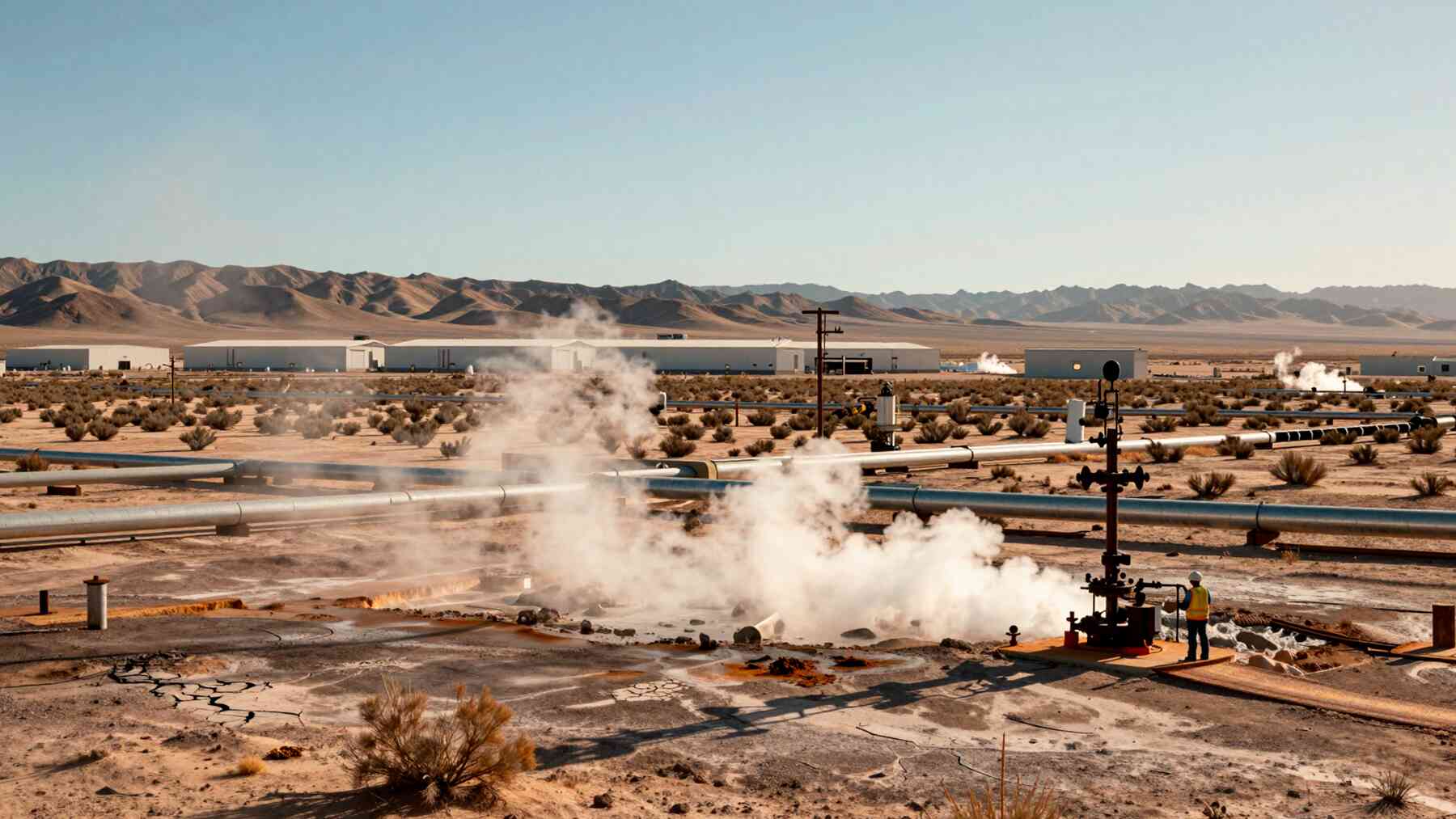 AI-made
The Bureau of Land Management has authorized the Pearl Geothermal Development Project on public lands in Esmeralda County, Nevada. Developed by Ormat Nevada Inc., the facility is designed to generate approximately 60 megawatts of geothermal electricity — enough, according to the U.S. Energy Information Administration, to power nearly 50,000 homes.
The approval came through an accelerated 14-day environmental review process, clearing the way for one of the region’s newest utility-scale geothermal projects.
BLM formally authorizes Pearl Geothermal project in Nevada
The Bureau of Land Management’s authorization marks a concrete step forward for utility-scale geothermal energy in the American West. The Pearl Geothermal Development Project will occupy BLM-managed public lands in Esmeralda County—a remote stretch of southwestern Nevada with significant geothermal potential.
The project also includes associated wells, surface facilities, and a 29-mile, 120-kilovolt electrical transmission line connecting the facility to the broader grid.
That 60-megawatt capacity carries real weight. The U.S. Energy Information Administration puts it plainly: that output is sufficient to power nearly 50,000 homes, a substantial contribution from a single facility on federal land.
Ormat Nevada Inc. is the developer behind the project. BLM is currently working with the company to finalize the required construction permits, after which Ormat will be cleared to break ground.
Accelerated environmental review enabled fast-track approval
The authorization moved through the process quickly — BLM completed the environmental review in just 14 days, using emergency permitting procedures that allow for an accelerated timeline under specific circumstances.
That compressed schedule stands in sharp contrast to typical federal environmental reviews, which can stretch for months or even years. The environmental assessment is now complete under those emergency procedures, satisfying the review requirement ahead of construction permit issuance. The expedited process allowed BLM to move directly from assessment to authorization, bypassing the extended waiting periods that frequently accompany large-scale energy projects on public lands. It signals a deliberate push to reduce administrative friction for geothermal development in the region.
The project will consist of two power plants and a 29-mile transmission line
At its core are two 30-megawatt air-cooled binary geothermal power plants, each contributing equally to the facility’s total 60-megawatt output.
Binary geothermal systems work by passing hot geothermal fluid through a heat exchanger, which heats a secondary fluid with a lower boiling point. That secondary fluid drives a turbine to generate electricity — a process considered efficient and one that produces minimal emissions compared to fossil fuel alternatives.
The project also includes associated wells, surface facilities, and a 29-mile, 120-kilovolt electrical transmission line connecting the facility to the broader grid. Land disturbance across the full site is capped at 1,257 acres of public land. Any areas disturbed during construction must be restored as close as practicable to their pre-construction conditions once they are no longer needed for project operations.
Geothermal development on BLM lands contributes $2 billion annually to Nevada’s economy
The Pearl project joins a broader portfolio of energy development taking place on federal public lands across the American West. Geothermal and other energy sources developed on BLM-managed lands contribute approximately $2 billion per year to Nevada’s economy — a figure that reflects cumulative extraction, development, and operational activity across the state’s federal land base.
The BLM oversees roughly 245 million acres of public land, located primarily across 12 western states, including Alaska, and administers 700 million acres of subsurface mineral estate throughout the country. That underground resource base includes the geothermal reservoirs tapped by projects like Pearl. Nevada’s geology, shaped by volcanic and tectonic forces, has long made it a center of geothermal activity in the United States, and the Pearl project adds another facility to that existing network.
Emergency permitting procedures to streamline the process
The Pearl Geothermal Development Project represents a 60-megawatt addition to Nevada’s renewable energy capacity, authorized by the BLM on public lands in Esmeralda County. Developer Ormat Nevada Inc. is working with the agency to finalize construction permits before breaking ground.
Fast-track approval—completed through a 14-day accelerated environmental review—reflects the use of emergency permitting procedures that can shorten the path from assessment to authorization.
Once built, the facility will consist of two 30-megawatt air-cooled binary geothermal power plants, a 29-mile transmission line, and associated infrastructure, with a maximum land disturbance of 1,257 acres. Disturbed areas will be restored when no longer needed. The project contributes to a broader pattern of energy development on BLM-managed lands, which collectively support approximately $2 billion in annual economic activity in Nevada. Additional project details are available through the BLM National NEPA Register, and inquiries can be directed to the BLM Battle Mountain District Office.
Kelly is an experienced writer with 15 years of experience exploring the big stories that shape our world, from tech breakthroughs and space exploration to climate, energy, and the fascinating quirks of science. She has a talent for turning complex ideas into sharp, memorable insights that stay with readers long after they’ve finished reading.
