
A Canadian startup buried a giant underground “radiator” beneath a Bavarian town, and what happened next rewrote the rules of geothermal energy
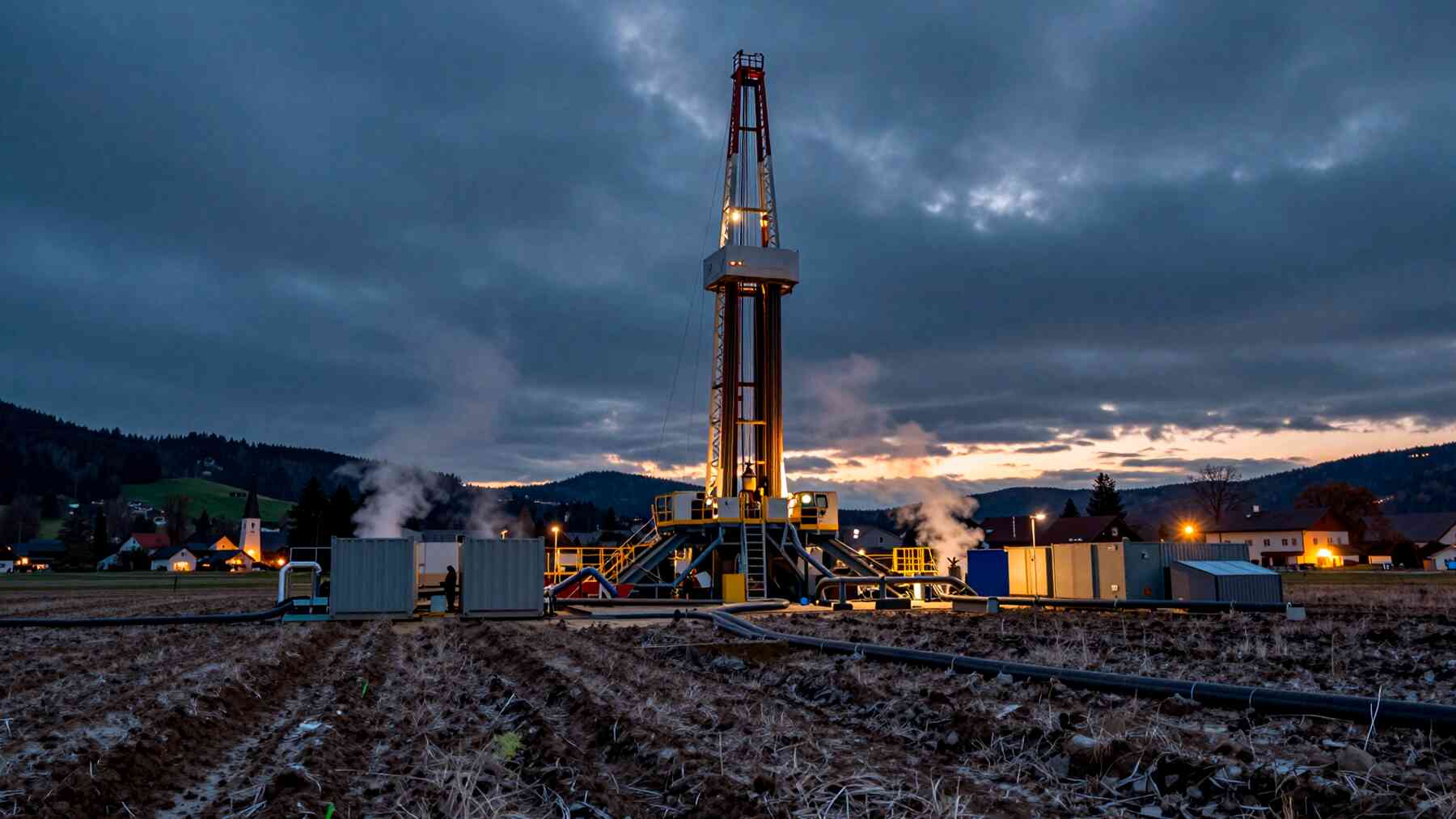
Miles beneath a small Bavarian town south of Munich, a Canadian startup spent years attempting something the energy industry had never pulled off at scale: a closed-loop geothermal system — essentially a giant underground radiator — designed to deliver clean heat and electricity without relying on natural steam or hot water reservoirs.
Late last year, Eavor Technologies reached the milestone it had been drilling toward. Its first completed loop began sending power to Germany’s grid. The road to get there, though, turned out to be far harder than the company had planned.
A novel idea drilled into reality
Eavor’s system works like a radiator buried miles underground. Two vertical wells connect through a series of horizontal lateral wells, forming a sealed loop. Water circulates through this network, absorbing heat from surrounding rock, then carries that heat to the surface. Crucially, the fluid never contacts the rock directly — the loop stays completely closed.
Enhanced geothermal systems, or EGS, represent the dominant competing approach — using fracking and horizontal drilling to create artificial underground reservoirs.
Traditional geothermal plants depend on natural steam or hot water reservoirs, which limits them to geologically active zones like Iceland or California. Eavor’s closed-loop design sidesteps that constraint. In theory, it can work almost anywhere the earth holds sufficient heat at depth.
The Geretsried project aimed to deliver 8.2 MW of electricity and 64 MW of district heating to nearby towns, backed by a €91.6 million grant from the EU’s Innovation Fund. At full scale, four complete loops would make up the system.
When the drilling went sideways
The problems started early. Eavor’s first boreholes became unstable, raising the risk of stuck pipes. Hard rock slowed progress, and broken equipment added further delays — serious setbacks, though not entirely unexpected for a first-of-a-kind project at this scale and depth.
The most consequential problem involved the cement casing on the motherbores, the primary vertical wells from which the lateral wells extend. Poor cementing allowed fluid and drilling mud to flow between the two rigs operating in parallel, which were supposed to be sealed off from each other. To manage it, the team switched to running one rig at a time — a fix that roughly doubled both the time and cost for completing the first loop.
Eavor also stopped at six lateral well pairs instead of the planned twelve, choosing to halt and redesign rather than keep building on a flawed foundation. Emily Pope, a geologist and senior fellow at the Center for Climate and Energy Solutions, was not surprised. She had previously worked on the Iceland Deep Drilling Project, which struck magma on its first well and lost its second to collapse. “The setbacks were real, but also understandable and predictable,” she said, noting that geothermal developers “are going to have to learn by doing.”
Learning to drill straighter and faster
Eavor’s response was methodical. After the early borehole instability, the team switched drilling-fluid systems and refined techniques across successive lateral well pairs. The results were measurable: average drilling time dropped by more than 70% from the first four lateral well pairs to the last.
A new “active magnetic ranging” system for precision steering underground drove much of that improvement. Co-founder Matt Toews described the difference vividly — early wells looked like “wet noodles,” while the later ones came out “gun-barrel straight.”
The loop now produces roughly half a megawatt, exactly what Eavor projected for a loop of its current size. That alignment between expectation and output confirms the underlying technology performs as designed. The real deliverable, though, is operational knowledge that simply did not exist before.
Closed-loop vs. the competition
Enhanced geothermal systems, or EGS, represent the dominant competing approach — using fracking and horizontal drilling to create artificial underground reservoirs. Fervo Energy’s 500 MW project in Utah, the largest of its kind in the world, is set to begin producing power this fall and stands as the field’s leading example.
EGS is generally considered more advanced and less costly for power generation than closed-loop systems. It carries its own risks: induced seismic activity and strain on local water supplies. Closed-loop systems avoid both through their sealed design, which Pope suggested makes them a potentially better fit for dense urban areas and water-scarce regions. In the United States, XGS Energy, GreenFire Energy, and Vero Geothermal are each pursuing closed-loop projects in California and New Mexico.
What Loop 2 needs to prove
Eavor is now seeking project partners and investors — specifically those with multilateral drilling expertise — before beginning its second loop. The timeline Toews had originally hoped for has slipped. He described the path forward carefully: “We’re looking to make Loop 2 happen as soon as practical and in the best form that we can.”
Pope called on Eavor and other companies to stay transparent about where they genuinely stand in their development — not to manage investor narratives, but to keep public expectations grounded and help other developers avoid repeating costly mistakes.
Loop 2 carries specific technical targets: validate the corrected cementing design, scale toward full capacity, and demonstrate that the model can be replicated commercially. If it succeeds, Eavor will have transformed a painful first attempt into a genuine proof of concept. The industry — and the towns waiting for cleaner heat — will be watching.

Carlos is an engineer with strong expertise in technical and industrial topics. He previously worked at international companies such as Siemens and is multilingual.
