Crews drill pressure-relief holes at Washington’s Priest Rapids Dam to stop a spillway leak and lift emergency restrictions
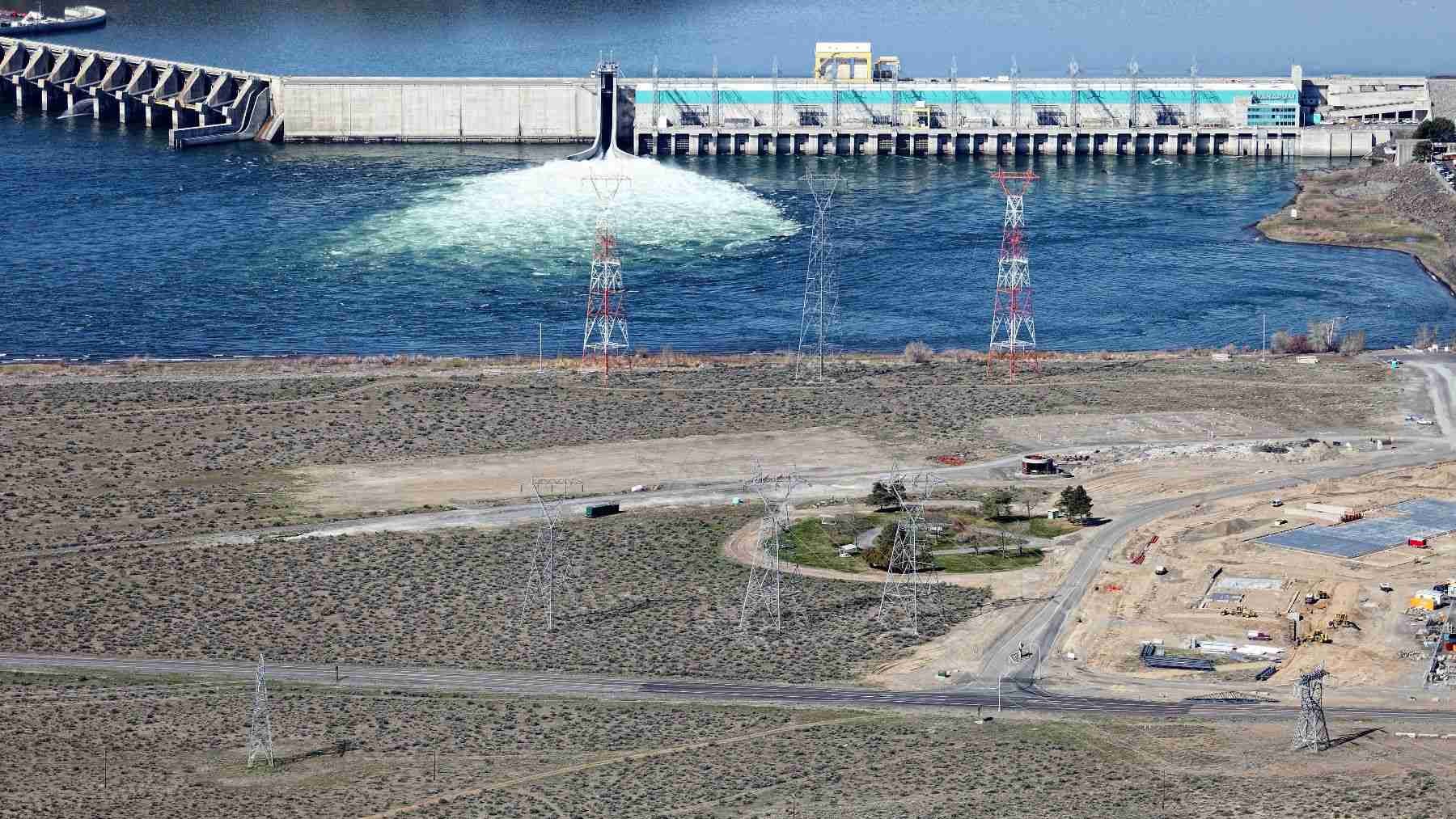
Yes, a dam can look calm from the shore.
But that isn’t an accurate representation of what’s going on beneath the surface. And it can be hiding a problem.
An unexpected trickle at Washington’s Priest Rapids Dam led to months of monitoring and investigation. But this episode was a good example of why noticing clues inside can help to keep energy infrastructure dependable.
This gave the water a controlled route to follow while at the same time relieving pressure around the faulty joint, which helped to stabilize the condition.
So, what exactly happened inside this concrete giant?
A little leak, a lot of questions
On 28 March, 2018, the problem was first detected.
During an investigational drilling program, it was discovered that water was leaking through the dam’s spillway monoliths.
As these monoliths are meant to support the spillway, it raised concerns about the structure’s condition when water started appearing where it shouldn’t.
Investigations were soon underway to figure out how the water was getting through the concrete, with the reservoir being lowered and kept within its normal minimum operating range.
The incident was classified by Grant PUD as a non-failure emergency, as it posed no risk to the public or employees. This was just a precaution rather than preparing for an imminent collapse.
The aim? To manage water pressure and establish where it was travelling, with the response involving drilling, inspections and monitoring.
This was no ordinary drip
The source of the leak was eventually found: a disbonded lift joint.
When that joint became separated, water was able to move through it and create pressure in an area engineers needed to understand.
The normal minimum operating range for the dam was between 484.5 to 481.5 feet above sea level, with a maximum elevation of 488 feet.
To create a safety buffer, operators kept it below full level during the investigation.
According to Grant PUD, it took crews six months of drilling to identify the leak and relieve the pressure.
This work also allowed staff to monitor the joint and assess the spillway.
The ultimate exit strategy
Most people might think that the solution would be to simply plug the leak. But in reality, it was more complicated than that.
A different kind of fix
Extra drain holes were drilled into the spillway monoliths.
This gave the water a controlled route to follow while at the same time relieving pressure around the faulty joint, which helped to stabilize the condition.
These new holes also made it possible to monitor the situation, with personnel from Grant PUD looking out for any changes in the joint and surrounding concrete.
Concrete evidence was needed
The completion of the drainage drilling was announced at a commission meeting on 10 July, 2018.
During this process, an estimated 230 core samples had been collected from the the dam’s grout gallery to help investigators assess the concrete and plan for the repairs.
To detect any future movement in the monoliths, additional instruments were planned.
With the monitoring, officials were hoping to persuade the Federal Energy Regulatory Commission to lift the lower operating-level restriction on the Priest Rapids pool before any restriction could be reconsidered.
Back in business
The emergency designation had been lifted by October.
The federal regulator and Grant PUD analyzed the spillway across its full operating range and determined that the reservoir could operate normally.
But the investigation as to why the joint had separated and if any further action was needed continued.
The closing of a leaky chapter
This is an example of how a small leak can require a massive response.
And the response by those working at the Priest Rapids Dam Drilling helped officials move towards operation as usual.
But this isn’t the only dam where managing the water can come with serious consequences. What happened when another huge hydropower project transformed an entire river into a lake?


Helen is based in sunny Cape Town, South Africa, and has been writing for over 12 years, covering a wide range of topics. A lover of animals, she cares deeply about recycling, minimizing her impact on the planet and finding new ways to bring old things to life.